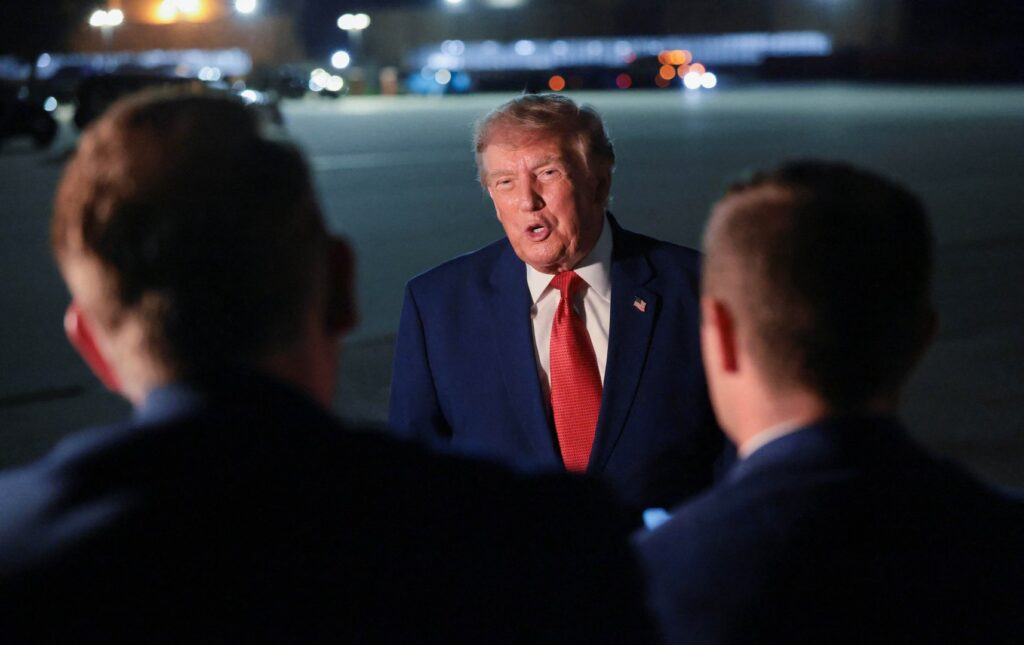
In a recent development following the NATO summit in Turkiye, US President Donald Trump addressed the media regarding the decision to make a secret plane switch. Trump stated that the decision was ‘up to the Secret Service,’ effectively placing the responsibility for the secret plane switch on the agency rather than on himself.
The incident involved a change of aircraft after the NATO summit in Turkiye, the details of which were kept under wraps for security reasons. Such measures are typical for high-profile political figures to ensure safety and operational security.
The Secret Service, tasked with protecting the President and other key officials, periodically makes arrangements to alter transportation plans as a precaution against potential threats. This particular plane switch has sparked curiosity and debate among political analysts and the public alike.
Critics of Trump have questioned the transparency of the operation, suggesting that the lack of information might indicate larger underlying issues. On the other hand, supporters argue that the Secret Service’s protocols are essential for preserving the safety of the President.
This event comes amidst a series of high-stakes international engagements, reinforcing the necessity for unpredictable and secure travel arrangements for presidents and world leaders.
While President Trump declined to provide further details on the plane switch, his acknowledgement of the Secret Service’s role underscores the trust placed in this federal agency for presidential protection.
Experts remind the public that such security tactics are not unusual and have been part of presidential protocols for decades across administrations.
The decision to withhold certain travel details corresponds with standard security practices to prevent threats and ensure the safety of the nation’s leader.
The plane switch, executed discreetly by the Secret Service, is seen as a preventive step against any potential security breaches during the President’s international trip.
Despite the secrecy, the operation highlights the complexity and challenges involved in securing high-profile government officials during international events such as NATO summits.
The NATO summit itself was a significant international gathering focusing on territorial security, defense collaborations, and geopolitical strategies, marking an important milestone during Trump’s presidency.
The President’s discussions during the summit and subsequent travel arrangements reflect the intertwined nature of diplomacy and security.
As the public awaits further information, the emphasis remains on the effectiveness and professionalism of the Secret Service in managing presidential security.
This incident has prompted renewed discussions on the balance between transparency in government operations and national security imperatives in sensitive situations.
Ultimately, the President’s deferral to the Secret Service on this matter reinforces the agency’s pivotal role in the administration’s operational decisions involving security logistics.
The steady protection of the President amidst volatile international landscapes remains a paramount concern for the Trump administration and security agencies involved.
As investigations and inquiries into the plane switch continue, officials maintain that the safety guidelines and choices were in strict accordance with established protocols.
The international community watches closely how such security measures are handled, reflecting broader concerns about the safety of world leaders in times of geopolitical uncertainty.
In conclusion, President Trump’s statement emphasizes the delegation of security decisions to the Secret Service, reaffirming their crucial function in safeguarding the nation’s top officials during complex international engagements.