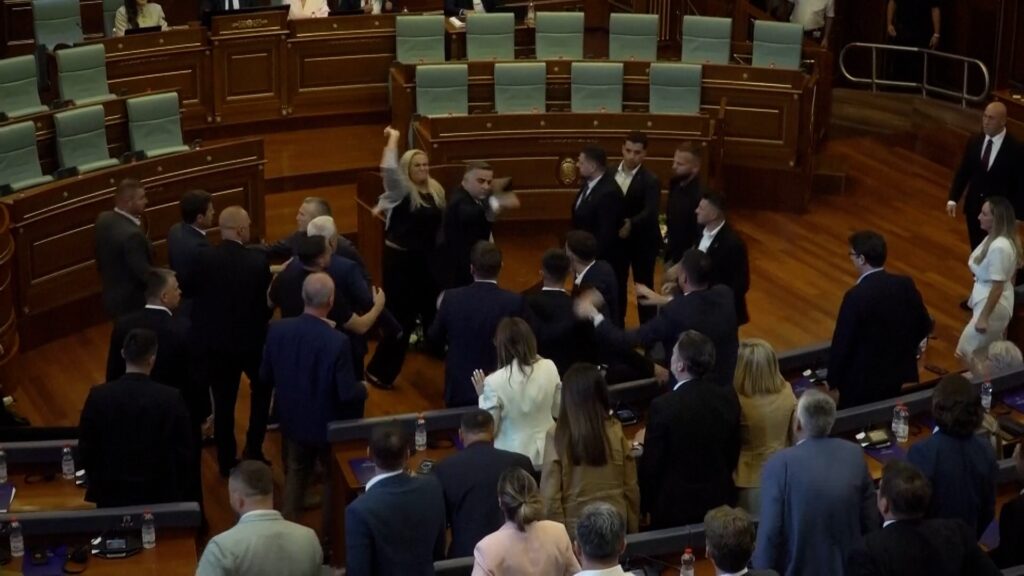
In a dramatic and unprecedented event during a recent parliamentary session in Kosovo, an opposition Member of Parliament (MP) threw eggs at the acting Prime Minister Albin Kurti. This incident took place amidst heightened political tensions in the country. The act of aggression shocked both lawmakers and the public, drawing widespread condemnation and raising concerns about the state of political discourse in Kosovo.
Albin Kurti, a prominent political figure and the acting Prime Minister, was addressing the parliament when the incident occurred. The opposition MP, who has not been named officially, launched the eggs in protest, signalling strong dissent against the Prime Minister’s policies or actions. The precise reasons behind the protest were not immediately clear, but sources suggest it was linked to recent legislative decisions or ongoing political disputes within the government.
The parliamentary session was briefly disrupted after the eggs were thrown, causing a commotion and forcing lawmakers to intervene in calming the situation. Security personnel quickly removed the offending MP from the chamber to restore order. Despite the disruption, Prime Minister Kurti continued with his address, maintaining composure throughout the incident.
Political analysts have commented that this event underscores the volatility within Kosovo’s political environment. Kosovan politics have been marked by intense rivalry and division among parties, often leading to heated debates and public demonstrations. However, direct personal attacks such as this are rare in the parliamentary setting and signal a worrying escalation in confrontational tactics.
Public reaction to the egg-throwing incident has been mixed. Supporters of Kurti viewed it as an unacceptable display of disrespect towards the office of the Prime Minister and a blemish on the democratic process. On the other hand, some opposition supporters justified the act as a dramatic statement reflecting the frustration with the current government’s policies.
Following the incident, various political factions called for calm and stressed the importance of maintaining dignity and respect in political engagement. Efforts are underway to investigate the circumstances leading to the event and to establish measures that prevent such occurrences in the future.
In the broader context, Kosovo continues to face numerous challenges including governance issues, economic development, and international recognition. The political climate remains sensitive, and incidents like this highlight the complexities and high stakes involved.
The egg-throwing episode is a potent reminder of the deep divisions in Kosovo’s political landscape. It emphasizes the need for dialogue and constructive engagement among political actors to uphold democratic norms and ensure stability.
As the country moves forward, the incident may serve as a catalyst for reflection on the conduct of political representatives and the health of parliamentary democracy in Kosovo.