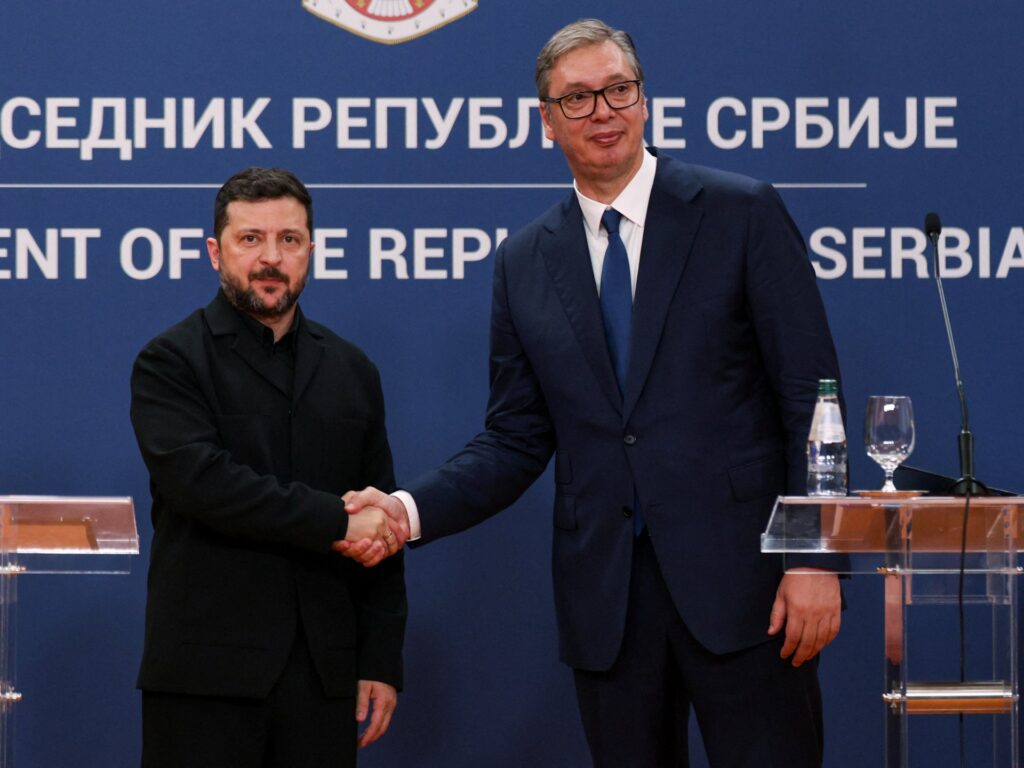
Serbia and Ukraine have recently committed to deepening their economic cooperation, with an eye on establishing a free trade agreement that would benefit both nations. This move represents a significant step in strengthening bilateral relations amid the ongoing geopolitical challenges in the region.
In a series of meetings and agreements, representatives from both countries emphasized their mutual interest in expanding trade and investment, as well as enhancing collaboration in various sectors such as agriculture, energy, and infrastructure. The prospective free trade deal aims to reduce tariffs and non-tariff barriers, facilitating smoother and more cost-effective exchange of goods and services.
Beyond economic cooperation, Serbia has also expressed willingness to assist Ukraine in rebuilding its cities affected by recent conflicts. This includes providing humanitarian aid, technical expertise, and resources necessary for urban reconstruction and development projects. The commitment underscores Serbia’s support for Ukraine’s recovery and stability.
Officials from both sides highlighted that the economic partnership would not only foster growth but also contribute to regional stability. The enhanced linkage between the western Balkans and Eastern Europe could pave the way for increased foreign investments and joint ventures, benefiting businesses and communities in both countries.
Trade between Serbia and Ukraine already includes key products such as machinery, food items, raw materials, and manufactured goods. With the advent of a free trade agreement, these exchanges are expected to increase substantially, allowing for diversification and resilience in supply chains.
The Korean Peninsula’s ongoing tensions have also been noted as a factor indirectly influencing economic realignments in Eastern Europe. Greater interconnectedness and economic mutual assistance are seen as tools to counterbalance broader geopolitical pressures.
While negotiations on the free trade agreement are still in the preliminary stages, both nations have expressed optimism about reaching mutually beneficial terms by the end of the year. The deal is expected to include provisions that address standards, customs procedures, intellectual property rights, and dispute resolution mechanisms.
Experts believe that this agreement could serve as a model for other countries in the region seeking to bolster economic ties and stabilize their economies amid uncertainty. It may also promote greater integration of Ukraine with European markets through Serbia’s connections.
The cooperation extends to areas such as energy security, where both countries face challenges related to supply diversification and renewable energy development. Joint projects in these sectors are anticipated to enhance energy independence and promote sustainability.
Cultural and educational exchanges form another pillar of the strengthened relationship, with plans to increase student exchanges, joint research initiatives, and tourism promotion to foster people-to-people ties.
This bilateral engagement reflects a strategic approach to diplomacy that balances economic pragmatism with humanitarian concerns, showcasing how countries in the region are adapting to the evolving geopolitical landscape.
Overall, the Serbia-Ukraine partnership signals a proactive effort to build economic resilience and support each other through collaboration in uncertain times, emphasizing unity and shared prosperity as key priorities moving forward.