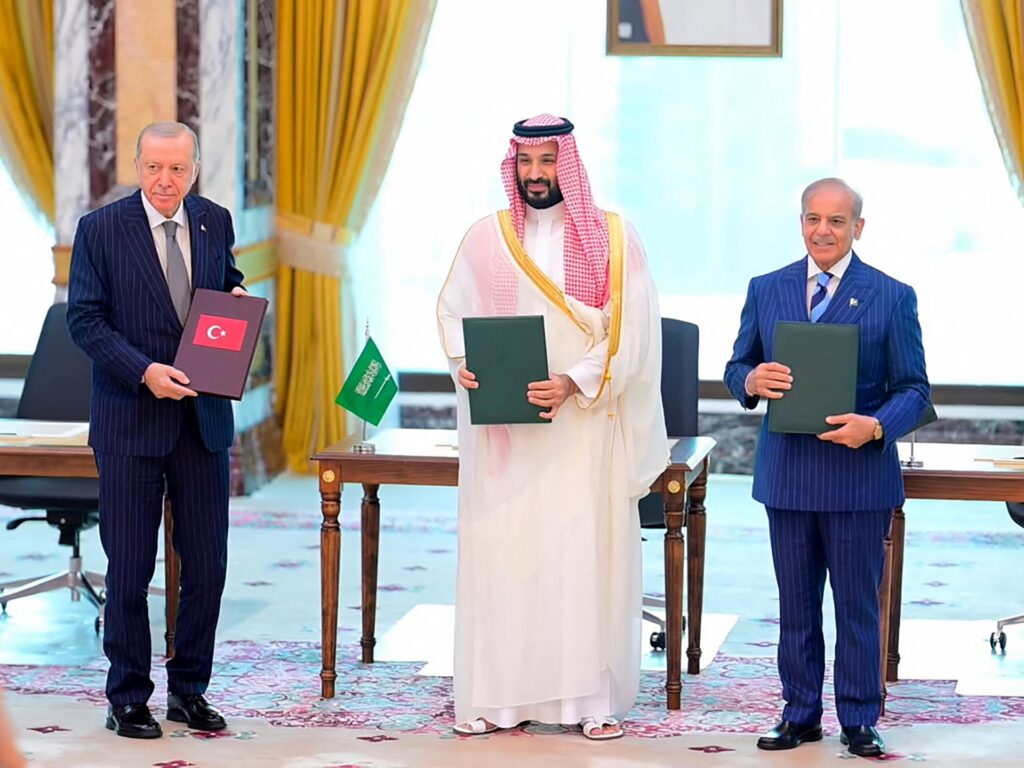
In a historic move aimed at strengthening regional security, the Saudi Crown Prince, Turkish President, and Pakistani Prime Minister have signed a trilateral defence pact in Mecca. This agreement comes at a time of escalating tensions in the Gulf, with growing concerns over Iran’s military activities and the strategic Strait of Hormuz.
The pact marks a significant step towards enhanced cooperation among the three key Muslim-majority nations. It focuses on mutual defence, intelligence sharing, and joint military exercises to fortify their collective security. The signing ceremony, held in the holy city of Mecca, underscores the symbolic and strategic importance of this alliance.
The trilateral defence pact is seen as a response to Iran’s increasing influence and military presence in the region. The Gulf countries have expressed apprehensions about Iran’s intentions, especially regarding the security of vital maritime routes such as the Strait of Hormuz, through which a significant portion of the world’s oil supply is transported.
Alongside the defence agreement, there are ongoing discussions about a potential Hormuz security deal aimed at ensuring the free and safe passage of vessels through the strait. This deal is expected to involve cooperation not only among the Gulf countries but also with external powers interested in maintaining stability in this strategically critical waterway.
The Saudi Crown Prince emphasized that the trilateral pact is a “defensive and peaceful agreement” intended to safeguard the sovereignty and stability of the member nations. He called for diplomatic solutions and dialogue but reiterated the necessity of readiness in the face of any aggression.
The Turkish President highlighted the importance of regional unity and collaboration to counteract any threats that undermine peace and economic stability. He stated that this alliance is a “turning point” in fostering trust and cooperation among the signatories.
The Pakistani Prime Minister expressed his country’s commitment to the pact, emphasizing Pakistan’s role as a bridge between the Middle East and South Asia. He advocated for increased military and economic collaboration, which he believes will contribute to long-term regional security.
This trilateral pact has drawn varied reactions internationally. Some analysts see it as a strategic balancing act against Iran, while others view it as a move that could complicate the already fragile security dynamics in the Gulf.
Experts highlight the economic implications as well, noting that stability in the Strait of Hormuz is crucial for global energy markets. Any disruption could lead to significant fluctuations in oil prices and impact the global economy.
The pact also symbolizes a broader geopolitical realignment, with traditional alliances being tested and new partnerships forming in response to changing regional dynamics.
As the trilateral defence pact takes effect, the world watches closely to see how this alliance will influence Iran and the broader security landscape in the Middle East. The coming months will be critical in determining whether this agreement brings lasting peace and stability or further escalates tensions in an already volatile region.