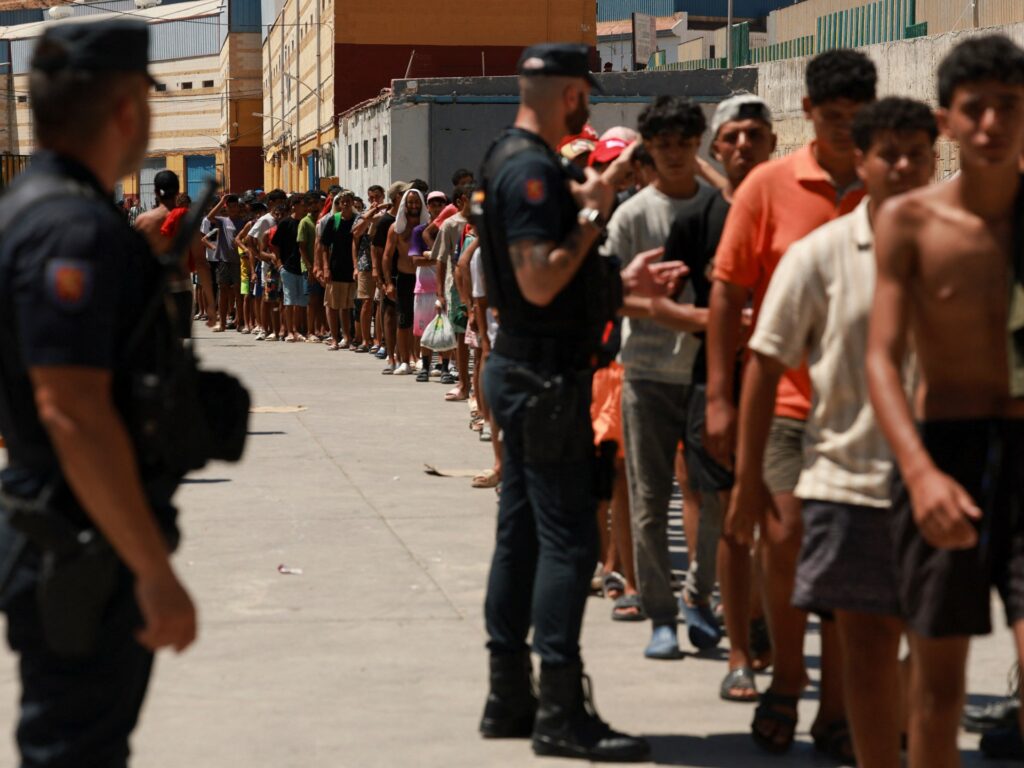
Italy has firmly committed to maintaining border checks despite warnings from Spain, which has threatened to take “proportional measures” unless Rome halts these controls. The tension arises in the aftermath of the Ceuta migrant crisis, a significant event that has strained relations between the two European Union neighbors.
The Ceuta migrant crisis saw a sudden influx of migrants entering the Spanish enclave from Morocco, raising concerns over border security and immigration policies. Italy’s decision to uphold border checks is seen as a measure aimed at managing similar migration pressures and securing national borders.
Spain’s warning underscores the diplomatic friction between Madrid and Rome, as the issue of border controls touches on broader themes of EU cooperation, migration management, and the balancing of national sovereignty with collective European interests.
Madrid’s message is clear: if Italy refuses to end its border checks, Spain will respond with measures deemed proportionate to the situation. This warning reflects Spain’s strong stance on maintaining open and cooperative borders within the EU framework while addressing security concerns.
The dispute highlights the ongoing challenges faced by EU countries in coordinating responses to migration and border security. Italy’s position emphasizes the need for robust border controls in the face of migratory flows, while Spain’s response stresses the importance of diplomatic solutions and regional solidarity.
Analysts suggest that this confrontation may lead to increased negotiations within the EU to find a balanced approach that respects both national security imperatives and the principles of free movement within the Schengen area.
The Ceuta crisis has acted as a catalyst, exposing underlying tensions and prompting countries to reassess their border policies amid changing migration patterns.
European leaders are closely monitoring the situation, aware that unresolved conflicts over border checks could complicate broader EU strategies on migration and security.
As Italy stands by its decision, it also calls for enhanced EU support and cooperation to manage migration more effectively. Rome argues that unilateral actions are sometimes necessary to address urgent security challenges.
Spain, on the other hand, advocates for multilateral dialogue and collective mechanisms to handle such crises, warning that unilateral border checks undermine EU unity and the Schengen agreement.
The situation remains fluid, with potential implications for future EU policies on border security, migration, and interstate cooperation.
This ongoing dispute illustrates the complexities of balancing national interests with EU-wide commitments in an era marked by increased migration and security concerns.
The coming weeks are expected to see diplomatic efforts intensify, with European institutions possibly playing a mediating role to de-escalate tensions.
Ultimately, the Italy-Spain disagreement over border checks amid the Ceuta migrant fallout reflects broader challenges facing the EU in maintaining open borders while ensuring security and solidarity among member states.