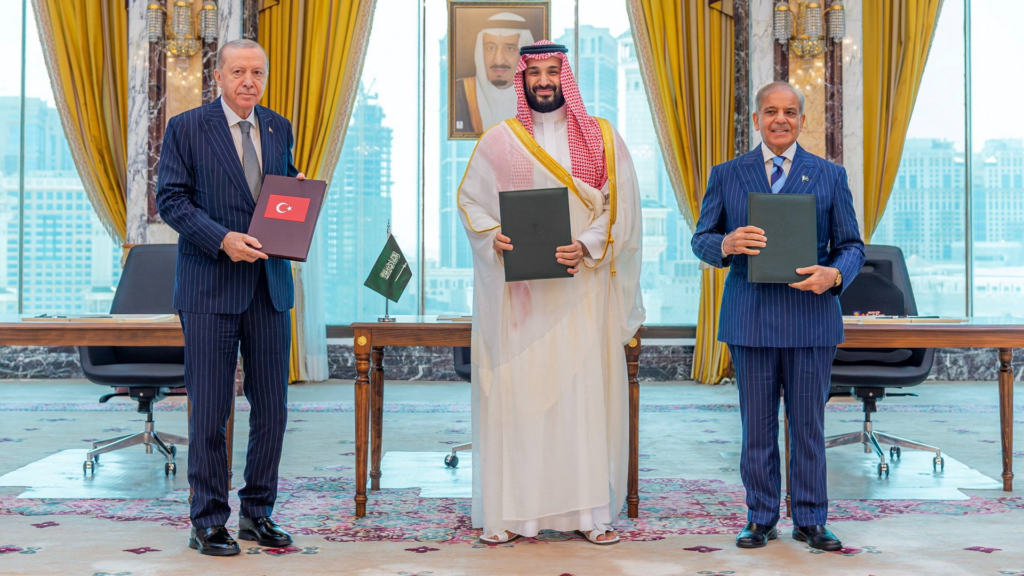
In a significant development aimed at strengthening regional security and cooperation, Saudi Arabia, Turkiye, and Pakistan have signed a joint defence agreement in Mecca. The historic pact was endorsed by Saudi Crown Prince Mohammed bin Salman, Turkish President Recep Tayyip Erdoğan, and Pakistani Prime Minister Shehbaz Sharif during a high-profile meeting in the holy city.
This tripartite defence pact marks a strategic alliance between the three nations, reflecting a shared commitment to enhancing military collaboration, intelligence sharing, and coordinated responses to common security challenges. The agreement is expected to bolster the defence capabilities of all three countries, promoting stability in an increasingly volatile geopolitical landscape.
The joint defence agreement encompasses several key elements including joint military exercises, technology transfer, arms cooperation, and intelligence cooperation. By pooling resources and defence expertise, the pact aims to create a unified front against threats such as terrorism, regional conflicts, and transnational crimes that affect the Middle East and South Asia.
Saudi Arabia, with its significant economic and military resources, will play a central role in supporting the alliance. Turkiye brings its strategic geographical position bridging Europe and Asia along with a modern and capable military force. Pakistan, with its strategic location and experience in counter-terrorism operations, adds a valuable dimension to the partnership.
This trilateral defence cooperation is seeing close alignment of foreign policy and security interests among the three countries, allowing them to coordinate more effectively on defence and security matters. It also signals a move towards deeper political and economic cooperation, which may include collaborations in energy, infrastructure, and trade.
Experts view this pact as a potential game-changer in regional geopolitics. It may serve as a counterbalance to the influence of other regional powers and create a new axis of cooperation between the Arab world, Anatolia, and South Asia. The pact also aligns with broader global security trends where countries seek multilateral alliances to enhance their security frameworks.
The announcement in Mecca also highlighted the symbolic importance of the location — the spiritual capital for Muslims worldwide — underscoring the shared cultural and religious ties binding the trio beyond just strategic interests.
Leaders of the three countries emphasized their commitment to joint defence as a means to achieve peace, stability, and prosperity for their peoples and the broader region. They underscored the importance of unity in the face of global security challenges and pledged to work collaboratively to address emerging threats.
Further plans include establishing a joint supreme defence council, coordinating defence procurement, and expanding military training programs among their armed forces. The pact is anticipated to pave the way for long-term strategic partnerships, joint defence industry initiatives, and enhanced diplomatic cooperation.
The international community has reacted with cautious optimism to the new alliance. Many analysts believe this trilateral pact could redefine security dynamics in the Middle East and South Asia, contributing to a more balanced power structure.
Saudi Arabia, Turkiye, and Pakistan are expected to hold regular summits to monitor progress and address any obstacles in implementing the pact. The collaboration could also facilitate more robust responses to humanitarian crises and disaster relief through coordinated efforts.
In summary, the joint defence agreement signed in Mecca marks a milestone in regional diplomacy and military collaboration. It reflects a renewed determination among Saudi Arabia, Turkiye, and Pakistan to face common challenges collectively and to build a safer and more stable future for their nations and neighbors.