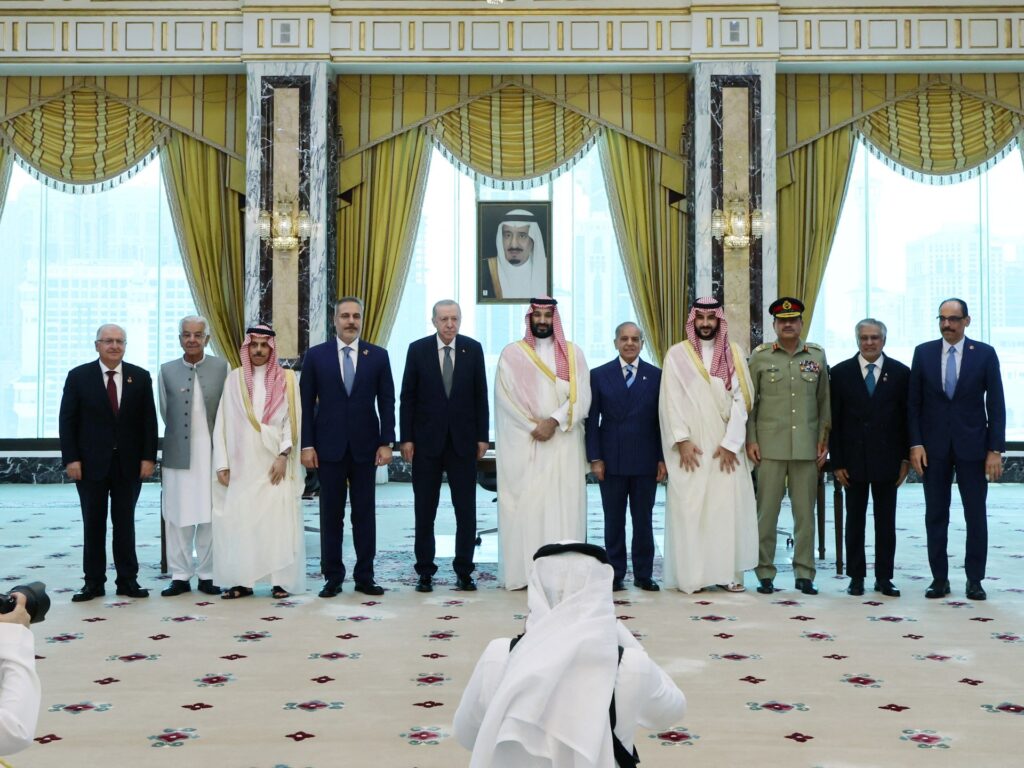
In a landmark move that promises to reshape the security landscape of the Middle East and beyond, Turkey, Saudi Arabia, and Pakistan have officially signed a joint defence agreement. The pact marks a significant development in regional cooperation, bringing together three influential Muslim-majority countries with strategic geopolitical interests.
The agreement aims to enhance collaboration in defence matters, intelligence sharing, joint military exercises, and coordinated responses to regional threats. By fostering closer military ties, the three nations seek to bolster their collective security amidst a backdrop of complex regional conflicts and shifting alliances.
Experts have pointed out that this trilateral defence pact could serve as a counterbalance to other regional blocs and military alliances, promoting stability through cooperation rather than confrontation. The framework established will likely facilitate more seamless coordination in addressing terrorism, cyber warfare, and maritime security.
Beyond military cooperation, the agreement also emphasizes technological exchange, joint research and development in defence capabilities, and fostering deeper diplomatic ties. This multidimensional approach aims to create a more robust security architecture that can adapt to evolving threats.
From a geopolitical perspective, the pact reflects a shared interest among Turkey, Saudi Arabia, and Pakistan to assert a more influential role in regional affairs independently. It enables these nations to collectively safeguard their economic corridors, energy routes, and political interests.
The deal also highlights a growing trend of regional partnerships transcending traditional alliances, with each country bringing unique strategic advantages. Turkey offers a strong military-industrial base, Saudi Arabia provides significant financial resources and regional influence, while Pakistan contributes experienced armed forces and strategic geographic positioning.
Critics caution that the agreement could alter the balance of power, potentially escalating tensions with rival states who may view the pact as a threat. However, proponents argue that a unified defence approach is essential for peace and stability, ensuring that emerging challenges are met with coordinated strength.
In summary, the joint defence agreement between Turkey, Saudi Arabia, and Pakistan signifies a proactive step towards solidifying a new security order in the region. By combining their resources, expertise, and strategic vision, these countries aim to construct a resilient defence framework capable of addressing 21st-century security dynamics effectively. Observers will be closely watching how this alliance shapes regional politics and influences broader international relations in the coming years.