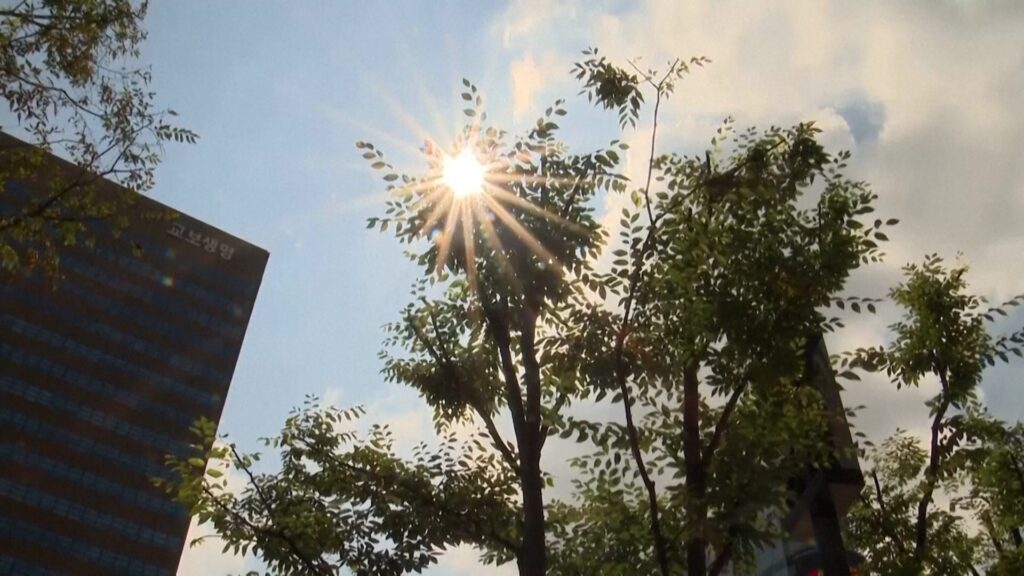
South Korea is currently experiencing an unprecedented heatwave as temperatures soar to record-breaking levels across the Korean Peninsula. The mercury has spiked up to an astonishing 42.5°C, pushing the country into a state of alert as communities grapple with the extreme weather conditions.
This intense heatwave has shattered previous temperature records, marking one of the hottest days ever recorded in South Korea’s history. Meteorologists attribute this surge to a combination of high-pressure systems trapping hot air masses over the region, exacerbated by climate change impacts.
The soaring temperatures have triggered widespread concern among health officials and local authorities due to the risks posed to vulnerable populations including the elderly, children, and those with preexisting health conditions. Heat-related illnesses such as heatstroke and dehydration have become more prevalent, leading to increased hospital visits.
Government agencies have issued heat advisories and are urging citizens to take precautionary measures such as staying hydrated, avoiding strenuous outdoor activities during peak heat hours, and seeking cool shelters. Emergency response teams are on high alert to assist those affected by the extreme heat.
The heatwave is also causing disruptions in various sectors, from agriculture to transportation. Crops are suffering under the relentless sun, impacting food production and farmers’ livelihoods. Meanwhile, public transport systems are experiencing operational challenges as infrastructure faces stress due to the soaring temperatures.
Experts warn that such extreme weather events are likely to become more frequent and intense due to global climate change. They emphasize the need for long-term strategies to mitigate heat risks, including urban planning improvements, increased green spaces, and better public health preparedness.
Communities across South Korea are adapting in different ways, with some cities implementing cooling centers and water distribution points to help residents cope. The energy demand has surged as more people rely on air conditioning, putting additional strain on the power grid.
This heatwave serves as a stark reminder of the urgent challenges posed by a warming climate. As South Korea confronts this record-breaking heat, it highlights the importance of resilience and preparedness to safeguard public health and maintain societal function amid extreme weather conditions.
Authorities continue to monitor the situation closely and provide updates to keep the public informed. With temperatures expected to remain high in the coming days, ongoing vigilance and community cooperation are essential to navigate this extraordinary climate event safely.