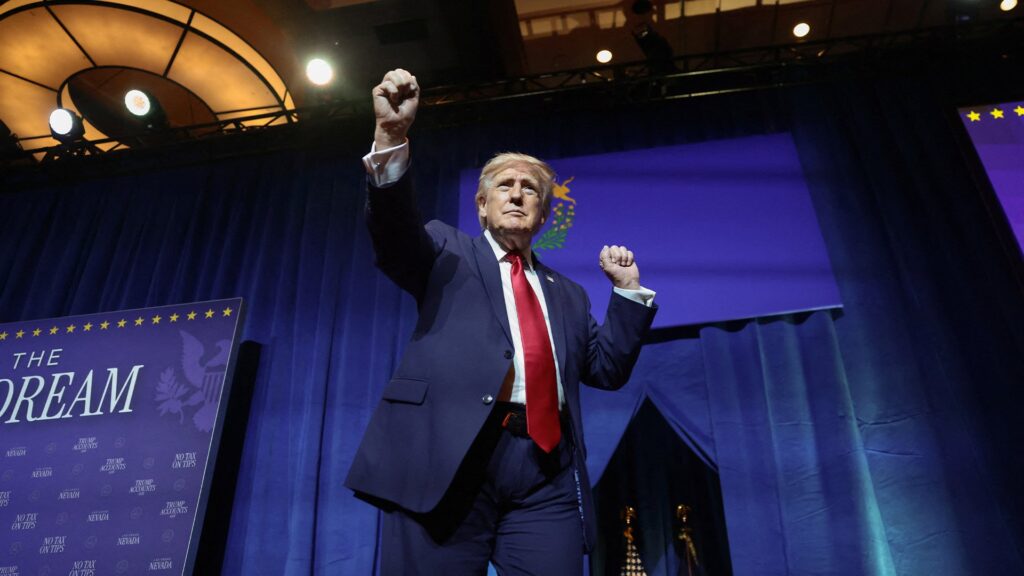
In a recent political development touching on the U.S. Senate race in Michigan, President Donald Trump launched a sharp attack against Democratic candidate Abdul El-Sayed. Following El-Sayed’s victory in the Michigan Senate primary, Trump publicly denounced him, labeling El-Sayed a ‘hater of Jews.’
Abdul El-Sayed, a physician and former health director of Detroit, won the Democratic primary in Michigan, positioning him as a key contender in the upcoming Senate election. His progressive platform, advocacy for universal healthcare, and emphasis on social justice have earned him significant support among Democratic voters.
President Trump’s accusation came amidst tense and highly polarized political climates. The Trump administration and its supporters have frequently targeted progressive candidates, often attempting to question their loyalty or integrity through aggressive rhetoric.
The charge that El-Sayed is a ‘hater of Jews’ is a serious allegation, particularly in the context of American politics where anti-Semitism is a sensitive and heavily condemned issue. Such accusations can have far-reaching implications on a candidate’s public image and campaign.
Political analysts note that Trump’s statement may aim to rally his base in Michigan by appealing to concerns among voters about social division. It also reflects the ongoing bitter exchange between Trump’s camp and Democratic progressives, who often challenge his policies and governance style.
El-Sayed has not been officially accused of anti-Semitism in any verified report or incident. His campaign and supporters have condemned Trump’s remarks, labeling them as unfounded and politically motivated attacks meant to distract from the Democratic platform and agenda.
This incident underlines the increasing intensity and divisiveness of election campaigns in the United States, where personal attacks and controversial statements have become commonplace tools used by candidates and their supporters.
Experts warn that this kind of rhetoric can deepen societal divides and distract from substantive policy discussions that are crucial for the democratic process.
As the Michigan Senate race heats up ahead of the general election, the impact of these accusations remains to be seen. Voters will be observing not only the candidates’ policy positions but also how they navigate and respond to such controversies.