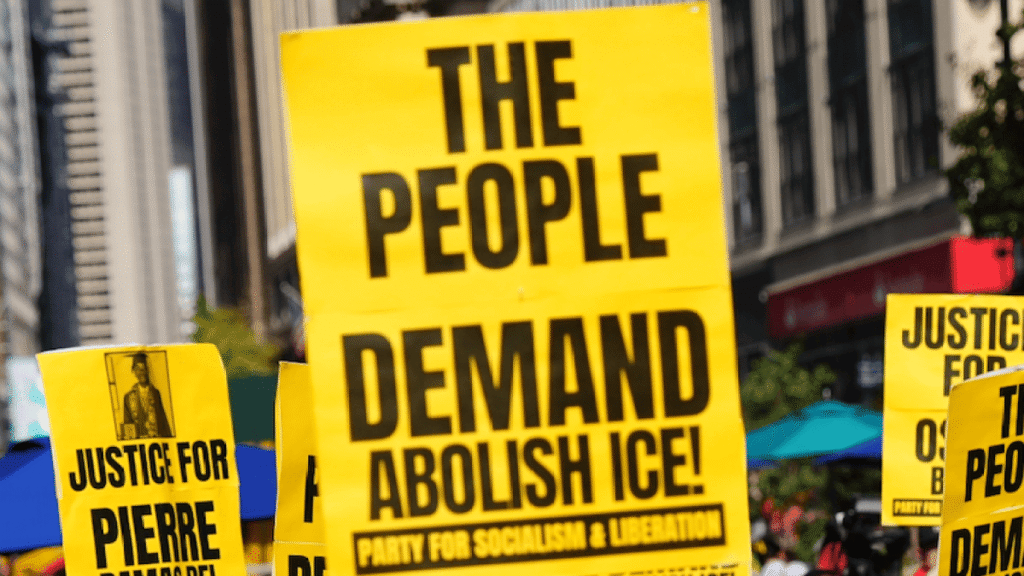
In New York City, significant protests have erupted in response to a recent incident involving Immigration and Customs Enforcement (ICE) officers. Oscar Belgal was shot by ICE agents while he was in a car in the Bronx. The situation has intensified public debates about the role and practices of ICE, especially related to community safety and immigration enforcement.
The incident occurred when ICE officers approached a vehicle in which Belgal was present along with a child. Details surrounding the shooting are under investigation, but the event has sparked immediate outrage among local residents and activists. Protesters have gathered in various parts of the city demanding the abolition of ICE, citing concerns over aggressive tactics and the threat to immigrant communities.
Demonstrators argue that ICE’s presence instills fear rather than protection in neighborhoods with large immigrant populations. The movement calls for reallocating resources away from ICE to community-based programs that support immigrant integration and security without violence.
Local leaders and human rights organizations have joined the protests, emphasizing the need for accountability and reform within immigration enforcement. They stress that incidents like the shooting of Oscar Belgal highlight ongoing issues of excessive force and racial profiling.
The New York City Police Department and ICE have stated they are cooperating with federal and local authorities to investigate the circumstances leading to the shooting. Official statements remain cautious as investigations continue.
This event has fueled a broader national dialogue about ICE’s role and the need for comprehensive immigration reform. Advocates argue for alternatives that prioritize human rights and community safety.
The protests in New York City are expected to continue as activists mobilize to raise awareness and push for systemic changes in immigration enforcement policies.
This critical moment reflects growing tensions in the U.S. around immigration, law enforcement, and community trust, highlighting the urgent need for constructive dialogue and policy reevaluation.