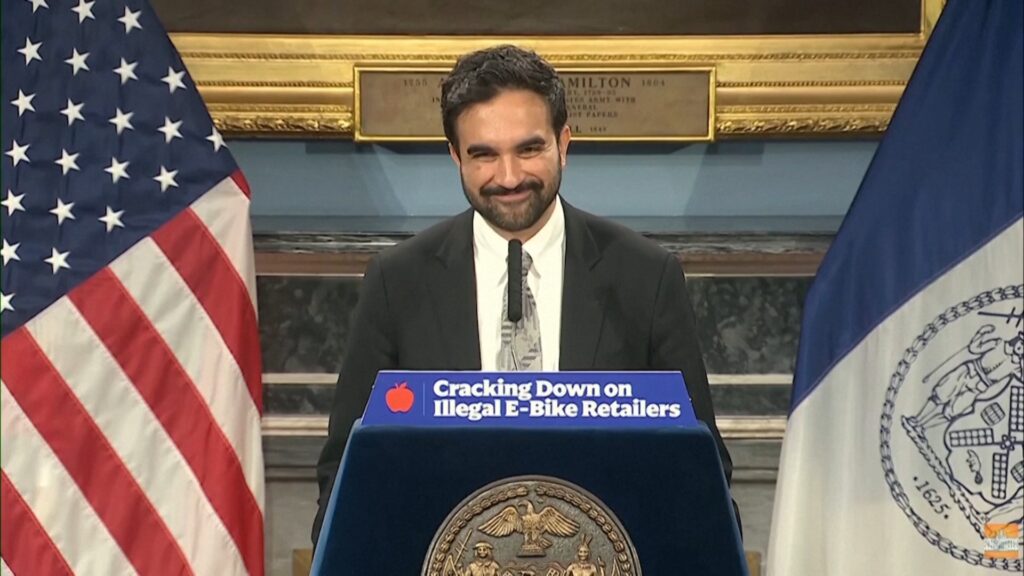
Zohran Mamdani, the Mayor of New York City, has publicly congratulated Abdul El-Sayed on his significant win in Michigan’s Democratic Senate primary. Mamdani applauded El-Sayed’s achievement, emphasizing his respect for El-Sayed’s dedication and vision in the political arena. This victory marks a notable moment within the Democratic party in Michigan, signaling a movement towards progressive leadership.
Mamdani, a prominent progressive figure himself, took the opportunity to address a common narrative that sometimes emerges in political circles—the tendency to label rising politicians as diminutive or lesser versions of established figures. Specifically, he rejected the frequent trope of referring to El-Sayed as a “mini Mamdani.”
In a statement, Mamdani expressed that such comparisons undermine the unique qualities and contributions of emerging leaders like El-Sayed. He underscored that every politician brings their own ideas, style, and approach to public service, which should be recognized on their own merits rather than viewed through a reductive lens.
The congratulatory message from Mamdani is seen as a boost for El-Sayed, highlighting the camaraderie and mutual respect among progressive leaders who aim to bring substantial change within their communities and beyond. This public support also signals solidarity within the progressive wing of the Democratic party, reinforcing the importance of diverse leadership and fresh perspectives.
El-Sayed’s victory in the primary is part of a broader trend where younger, more progressive candidates are gaining ground in key races across the United States. His campaign focused on issues such as healthcare reform, economic justice, and environmental sustainability, resonating with a wide base of voters seeking transformative policies.
Observers note that Mamdani’s endorsement could also serve to encourage voter engagement and enthusiasm, especially among younger and more diverse constituencies looking for representation that aligns with their values and aspirations.
The rejection of the “mini Mamdani” label also addresses a larger cultural issue within political discourse—recognizing and respecting individuality rather than casting emerging politicians as replicas of established figures. This approach promotes a healthier political environment where new ideas can flourish without being confined to existing narratives.
Both Mamdani and El-Sayed represent a new wave of leadership defined by progressive ideals, grassroots activism, and a commitment to addressing systemic inequities. The interaction between two influential leaders highlights the ongoing evolution of the Democratic party as it navigates contemporary social, economic, and environmental challenges.
In summary, Zohran Mamdani’s congratulations to Abdul El-Sayed go beyond mere politeness; they are a meaningful affirmation of El-Sayed’s accomplishments and potential. By rejecting limiting labels, Mamdani invites us all to appreciate the unique contributions of every leader working towards a more just and equitable future.