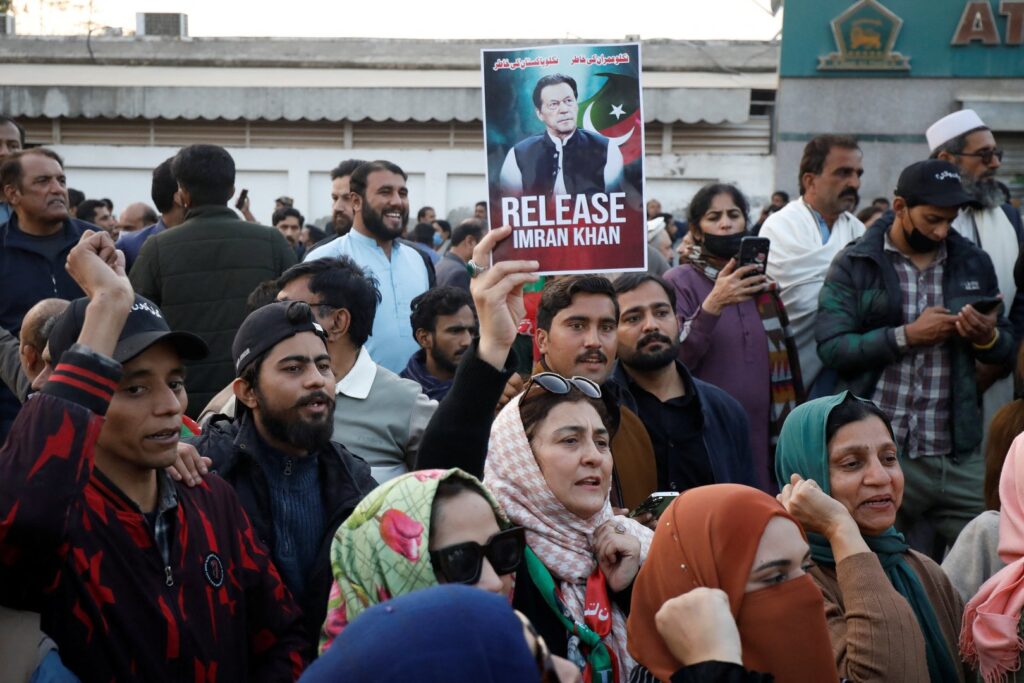
On the anniversary of the imprisonment of former Prime Minister Imran Khan, tensions escalated in Rawalpindi, Pakistan, leading to clashes between police and Khan’s supporters. The police resorted to firing tear gas to disperse crowds gathered in solidarity with the jailed political leader. Imran Khan, a prominent figure in Pakistan’s political landscape, was imprisoned in a case that has been widely disputed by his party and supporters.
The demonstrations marked a significant moment of protest against Khan’s detention, with thousands of supporters rallying to express their discontent. The use of tear gas by law enforcement officials was reported as a measure to prevent the protests from turning into violent unrest.
Rawalpindi, known for its political activism, saw streets blocked and heightened security as the anniversary approached. Supporters carried banners and chanted slogans demanding Khan’s release, highlighting their continued loyalty and the divisiveness of his imprisonment.
This incident reflects the deep political polarization in Pakistan, where opposition figures often face legal challenges that their followers argue are politically motivated. The government’s stance on Khan’s imprisonment and the subsequent police response to protests have drawn both national and international attention.
Observers note that such confrontations may influence Pakistan’s political climate in the coming months, especially with elections and political reforms on the horizon. The aftermath of the clashes is likely to further intensify debates around democracy and rule of law in the country.
The anniversary has not only been a flashpoint for demonstrators and authorities but has also sparked discussions on the future trajectory of the Pakistan Tehreek-e-Insaf (PTI) party, led by Imran Khan. As the political drama unfolds, the situation remains dynamic, with both supporters and critics of Khan closely monitoring developments.
In conclusion, the clashes on this significant anniversary underscore ongoing instability and the contentious nature of Pakistani politics, where legal actions against prominent leaders often trigger public unrest. The event serves as a stark reminder of the challenges facing Pakistan’s democracy and the resilience of its politically engaged citizenry.