Former Prime Minister of Pakistan and leader of the Pakistan Tehreek-e-Insaf (PTI), Imran Khan, has been sentenced to three years in jail, sparking widespread outrage and protests across the country. The PTI party and Amnesty International have vehemently condemned the treatment of Khan, specifically criticizing the use of solitary confinement during his imprisonment.
Imran Khan, a prominent and influential political figure in Pakistan, was taken into custody after the court delivered its verdict. The reasons for his imprisonment are entangled in ongoing political disputes and legal challenges, which have polarized the nation.
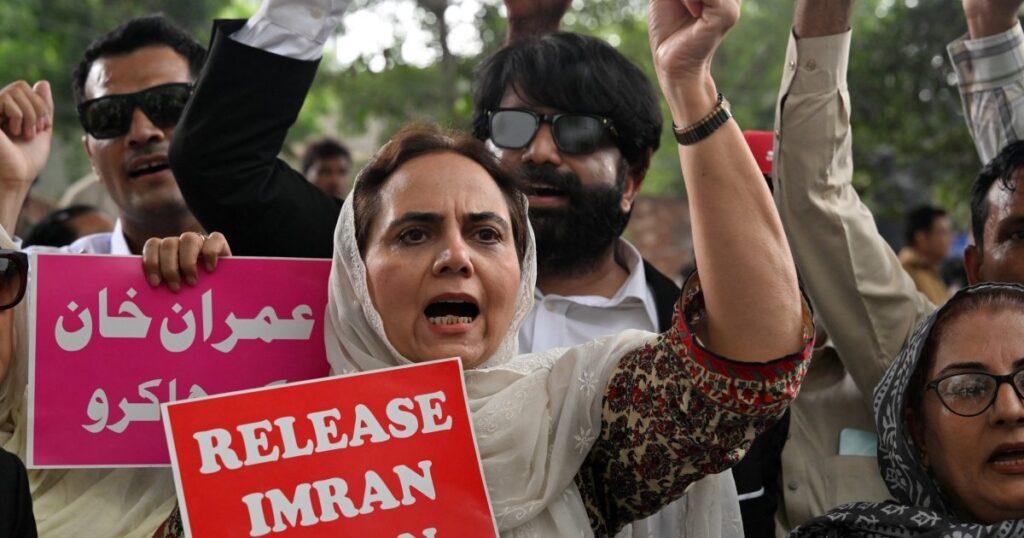
Thousands of supporters from the PTI rapidly mobilized, staging demonstrations in various cities nationwide. The protesters are demanding Khan’s immediate release, expressing concerns about the legitimacy of the charges against him and the political motivations behind the sentence.
The PTI party leaders and activists have labeled Khan’s detention as politically motivated and called for solidarity among citizens to resist what they describe as authoritarian measures designed to silence dissent.
Amnesty International, an influential human rights organization, issued a strong statement condemning the use of solitary confinement, describing it as a form of psychological torture that violates international human rights standards. They urged the Pakistani authorities to ensure humane treatment of Khan and to uphold justice that is transparent and fair.
Solitary confinement, often criticized worldwide for its harsh conditions, has been a focal point in the debate over Khan’s imprisonment. Human rights advocates argue that such practices can have severe negative consequences on mental health and are considered inhumane.
The political fallout from Khan’s sentencing has further intensified an already volatile situation in Pakistan, which has faced political instability and economic challenges in recent years.
Political analysts fear that continued unrest fueled by Khan’s supporters could impact the nation’s governance and social cohesion adversely. The government has called for calm and warned against violence, emphasizing the importance of lawful and peaceful expression of dissent.
Khan’s legal team has announced plans to appeal the verdict, seeking to overturn the sentence and challenge the conditions of his imprisonment.
The situation remains fluid, with ongoing protests and international attention focusing on Pakistan’s political dynamics and human rights practices.
The developments mark a critical juncture in Pakistan’s political landscape, illustrating the deep divisions within the country and highlighting the challenges faced by democratic institutions amid competing interests and pressures.
Observers worldwide are closely monitoring the impact of these events on regional stability and the broader implications for democratic governance in Pakistan.
As the nation navigates this tense period, the calls for justice, transparency, and respect for human rights continue to resonate among citizens and global watchdogs alike.
The coming days are expected to see significant political activity as the PTI and other stakeholders strategize their next moves in this high-stakes political drama centered around one of Pakistan’s most high-profile figures.