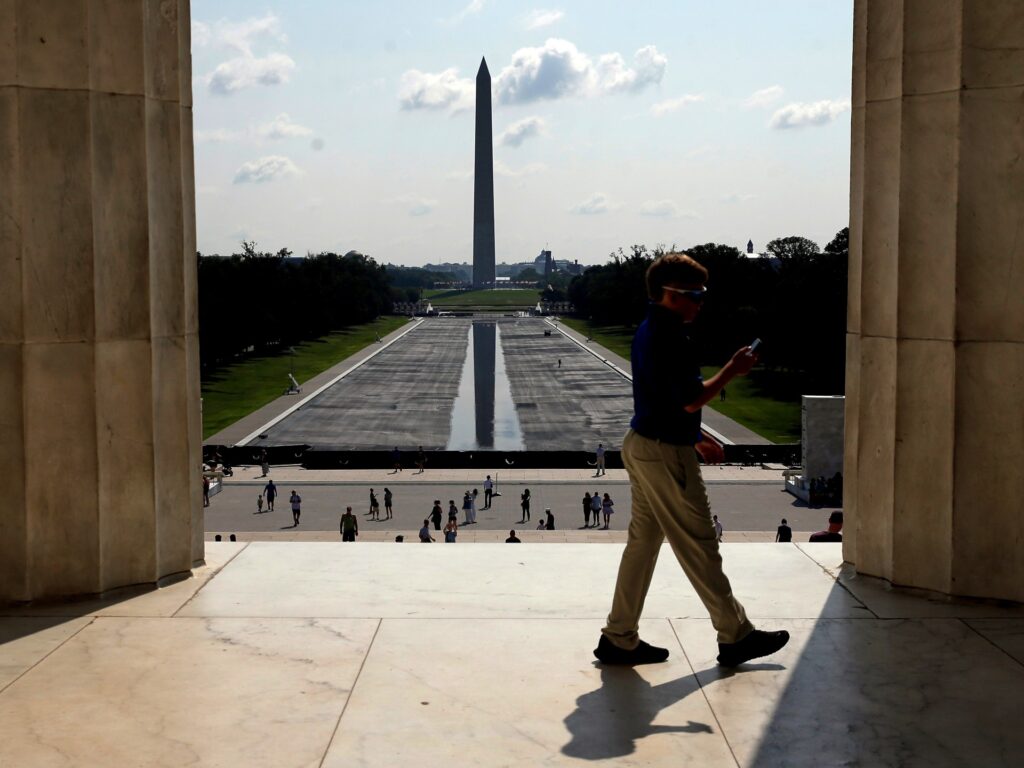
Former US President Donald Trump has strongly criticized the Justice Department’s recent decision to drop charges related to damage caused to the Reflecting Pool in Washington, D.C. The charges were initially brought against individuals accused of vandalism during recent protests. However, federal prosecutors have now stated that the damage was not due to vandalism but rather a result of a ‘botched’ installation.
This unexpected move by the Justice Department has sparked debate and controversy. Trump, known for his vocal stance on law and order, pushed back against the federal prosecutor’s justification, emphasizing the importance of accountability and the protection of national monuments.
The Reflecting Pool, an iconic landmark located between the Lincoln Memorial and the Washington Monument, has long been a symbol of American history and resilience. Damage to this site during protests drew national attention, with authorities initially treating the incident as an act of vandalism warranting legal action.
Prosecutors, upon further investigation, suggested that construction or installation errors may have contributed to the damage, leading to the decision to drop the charges. This explanation has been met with skepticism by some, including Trump, who argue that it undermines efforts to uphold law enforcement and justice.
Critics of the Justice Department’s decision argue that it could set a precedent that may embolden disruptive behavior during protests, while supporters say the move reflects a commitment to factual and fair prosecutorial practices.
The debate highlights the complexities involved in addressing incidents that occur in the context of political demonstrations and public dissent. It also underscores the challenges faced by legal authorities in balancing the enforcement of laws with considerations of intent and context.
Trump’s denouncement adds another layer of political tension to an already charged issue, as questions about the handling of protests and the protection of public property continue to be hotly contested topics in the United States.
As this story develops, it will be important to monitor further responses from the Justice Department, legal experts, and political figures, as well as the broader implications for future prosecutorial decisions related to protest activities and public property damage.