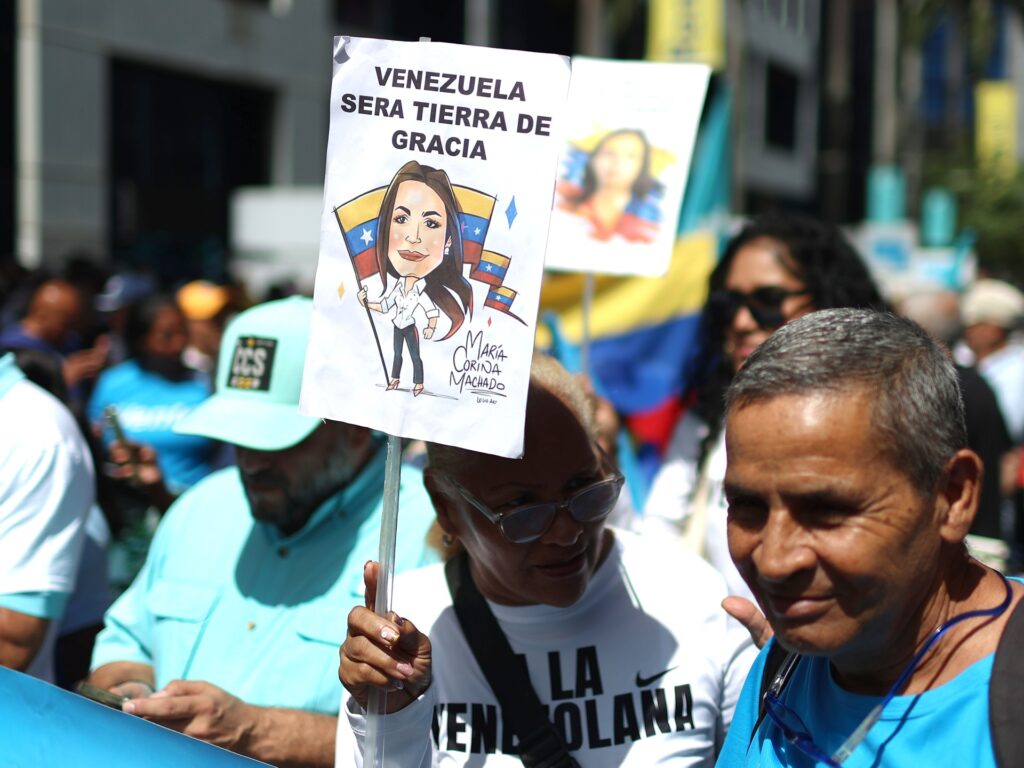
Venezuela’s government and opposition have agreed to hold talks aimed at establishing a pathway toward elections, marking a significant step in the nation’s ongoing political dialogue. The discussions, which will be led by former lawmaker Dinorah Figuera, seek to address key electoral and political challenges that have long impeded the democratic process in the country.
These talks come amid continued political tensions and economic difficulties that have plagued Venezuela for years. The opposition, which has faced various internal divisions and external pressures, aims to use these dialogues as a platform to push for transparent and credible elections.
Notably, opposition figure Maria Corina Machado has been excluded from the proceedings, highlighting ongoing fractures within the opposition coalition and raising questions about the inclusivity of the negotiations. Machado, a vocal critic of the government, has previously played a prominent role in opposition activism but will not be part of these talks.
Dinorah Figuera, who leads the opposition delegation, is known for her moderate stance and pragmatic approach, which may facilitate dialogue with government representatives. The talks are expected to focus on establishing clear electoral conditions, including voter registration processes, campaign rules, and guarantees for political freedoms.
The government, which has faced international criticism for its handling of elections and political dissent, appears to be signaling a willingness to engage in dialogue, potentially opening the door to easing political tensions. However, skepticism remains among various factions and international observers who question the sincerity and possible outcomes of such negotiations.
These developments occur against the backdrop of Venezuela’s deep economic crisis, migration exodus, and social unrest. Many citizens and international stakeholders see free and fair elections as critical steps toward national reconciliation and political stability.
The involvement of former lawmakers and established political figures in the talks underscores a serious attempt to find common ground. Yet, the exclusion of certain opposition leaders like Machado suggests challenges ahead in ensuring a truly inclusive and representative process.
Experts emphasize that the success of these negotiations will depend on the ability of both sides to compromise and commit to democratic principles. They also highlight the importance of international support and monitoring to ensure transparency and legitimacy in any agreed-upon electoral framework.
As dialogues progress, the international community watches closely, hoping for peaceful solutions to Venezuela’s complex political crisis. Upcoming weeks will be critical in determining whether these talks can pave the way for elections that reflect the will of the Venezuelan people and restore confidence in their political system.