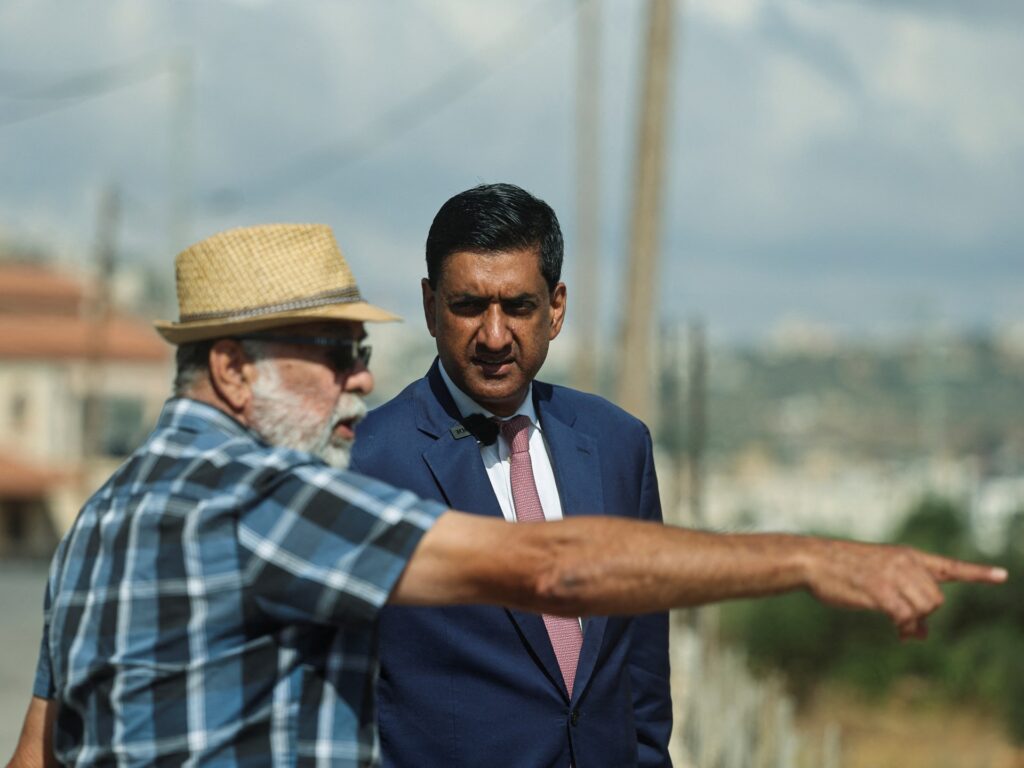
In a recent and tense development during his trip to Palestine, US lawmaker Ro Khanna has publicly condemned the actions of the Israeli army following his detainment by Israeli settlers. Khanna accused the soldiers of siding with the settlers rather than maintaining impartial security, describing the forces’ behavior as a serious error.
Khanna, who traveled to Palestine to observe conditions on the ground and advocate for peace, was detained by a group of Israeli settlers in a controversial incident. Witnesses and Khanna himself claim that instead of preventing the detainment or intervening, Israeli soldiers stood by passively—and in some instances, appeared to support the settlers’ actions.
This incident has reignited heated debates around the Israeli-Palestinian conflict, particularly concerning the role and responses of Israeli security forces in situations involving settlers and Palestinian civilians. The lawmaker’s statement stressed that the army’s failure to act neutrally constitutes a “huge mistake” that undermines efforts towards peace and fairness.
Lawmaker Khanna is known for his advocacy on Middle East peace and has frequently criticized policies and actions that contribute to the cycle of violence in the region. During his trip, Khanna aimed to highlight humanitarian issues faced by Palestinians and promote dialogue that includes all parties affected by the ongoing conflict.
His detainment by settlers, and the perceived complicity of the Israeli army, punctuates the challenges international observers face in areas marked by tension and systemic disputes. The appearance of partiality among security forces can exacerbate mistrust and incite further unrest in an already volatile environment.
Israeli settlements in Palestinian territories are widely regarded as illegal under international law, though Israel disputes this characterization. Settler activity and military protection remain flashpoints that intensify confrontation and criticism from the global community.
Following the incident, calls have emerged from various international figures urging for an impartial investigation and accountability to ensure that security forces uphold the rights and safety of all individuals regardless of ethnicity or nationality. The goal is to prevent such events from recurring and to foster a climate where peaceful dialogue and coexistence can be pursued earnestly.
Khanna’s experience sheds light not only on the immediate security dynamics but also on the broader political implications. It underscores the complex and often contentious intersection of military, civilian, and political interests in one of the world’s most protracted conflicts.
Observers believe that this episode will contribute to sustained international scrutiny of how Israeli forces manage settler-related incidents and their broader conduct in Palestinian territories. It also puts pressure on policymakers to address systemic issues within the framework of Israeli governance and its policies towards Palestinians.
This event serves as a reminder of the persistent volatility in the region and the urgent need for a comprehensive peace strategy that respects human rights, ensures security for all populations, and encourages cooperation instead of division.
As world leaders and organizations digest the implications of Khanna’s detainment and criticisms, the hope remains that such incidents prompt constructive discussions and reforms, rather than merely deepening the divide. The ongoing conflict requires sustained engagement and solutions that prioritize dignity, justice, and mutual respect for all peoples involved.