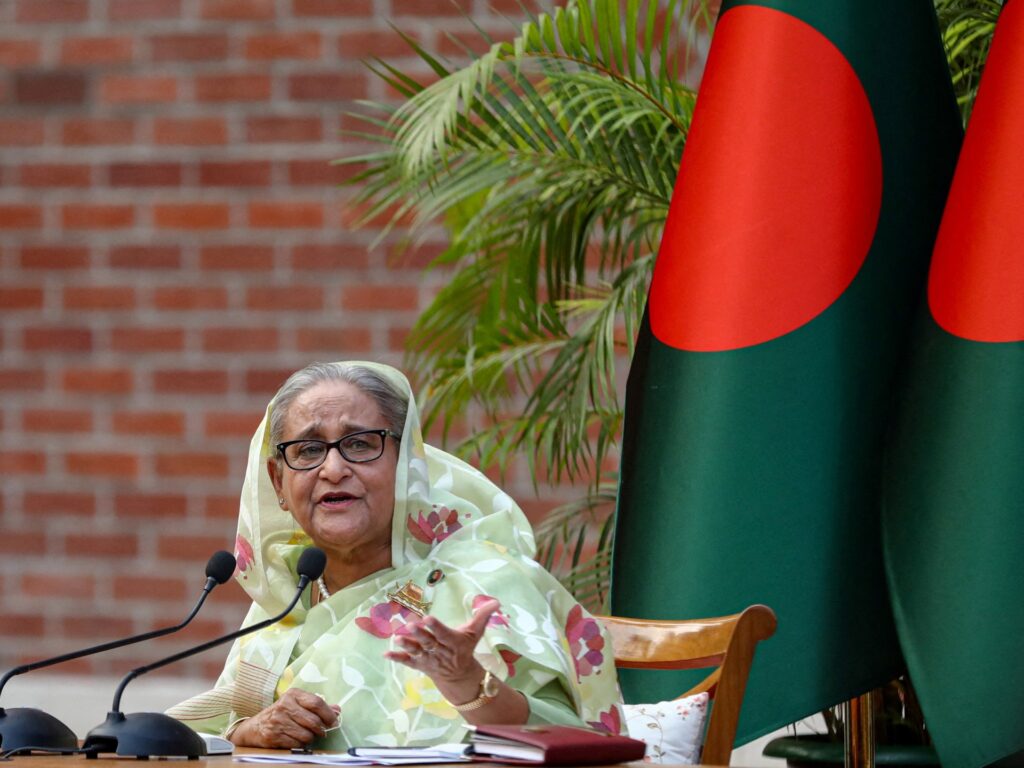
In a bold political move that has sent ripples through Bangladesh’s political landscape, exiled former Prime Minister Sheikh Hasina has declared her intention to return to her homeland in December. This declaration comes despite her facing a death sentence in absentia, a judgment that has left the nation divided and set the stage for a potential legal confrontation with Bangladesh’s current leadership.
Sheikh Hasina, who has been living in exile, remains a significant political figure due to her previous tenure as Prime Minister and her continued influence among her supporters. Her reported plan to return signifies not only a personal resolve but also a strategic maneuver to challenge the existing political status quo in Dhaka.
The death sentence against Hasina was issued by a court in Bangladesh, citing charges that her advocates describe as politically motivated. This verdict has been condemned internationally and viewed by many as a move to suppress opposition and silence dissenting voices within the country.
Hasina’s pledge to come back despite the risks underscores the intense political rivalry and the deep divisions within Bangladesh. The ex-PM’s return could trigger a range of scenarios—from legal battles and protests to potential negotiations between different political factions.
Political analysts suggest that her return might embolden her supporters and intensify confrontations with the current administration, which is keen on maintaining its grip on power. Conversely, it could also pave the way for renewed political discourse and potentially more transparent democratic processes, depending on the reactions from various stakeholders.
The government in Dhaka has responded cautiously to the announcement, emphasizing the rule of law and the need for all citizens, regardless of their political stature, to comply with judicial orders. Officials have heightened security measures in anticipation of Hasina’s return, indicating concerns about possible unrest.
This developing situation highlights the complex interplay of politics, law, and public sentiment in Bangladesh. Sheikh Hasina’s planned return could become a pivotal moment in the nation’s contemporary history, influencing not only its political trajectory but also its social cohesion.
International observers are closely watching the scenario, urging all parties to pursue peaceful solutions and respect for human rights. The unfolding events will undoubtedly demand careful navigation from Bangladesh’s leaders to avoid escalation and ensure stability.
As the December deadline approaches, the world waits to see whether Sheikh Hasina will successfully return and how Bangladesh’s political environment will adapt to this unprecedented challenge. The outcome of this confrontation may set significant precedents for governance and justice in the country moving forward.