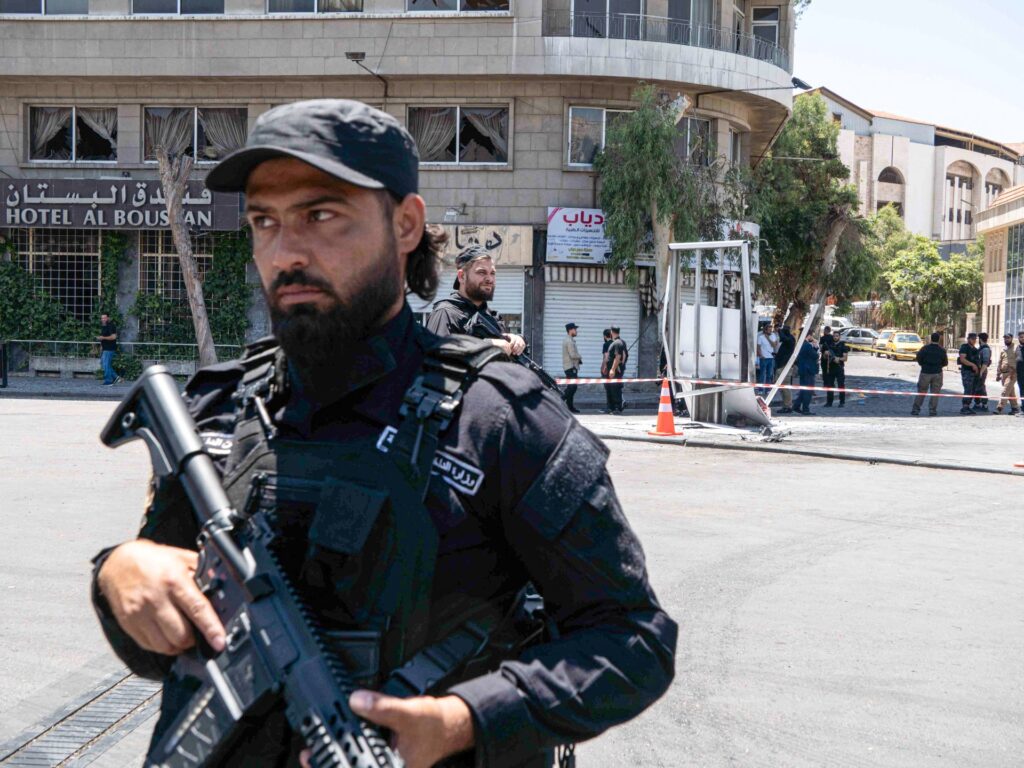
On a tense Tuesday in Damascus, the Syrian capital was shaken by explosions amid the official visit of French President Emmanuel Macron. The attacks marked a grave security breach during a high-profile diplomatic event, drawing immediate condemnation from Syria’s government and international onlookers alike.
Syrian authorities announced that they have successfully identified and arrested the cell responsible for the terrorist bombings. This operation underscores the ongoing challenges Syria faces with internal security and terrorism despite ongoing efforts to stabilize the nation.
The bombs detonated in strategic areas of Damascus, causing significant structural damage and casualties, although precise numbers have not yet been confirmed by health officials. These attacks appeared timed to coincide with President Macron’s visit, hinting at an intent to send a political message and disrupt the diplomatic dialogue taking place.
President Macron’s visit to Damascus was aimed at reviving dialogue and engagement in the war-torn country after years of conflict. The French delegation was focused on discussing humanitarian aid, reconstruction, and regional security dynamics. This bombing incident highlights the precarious security environment and the risk that terrorism poses to diplomatic efforts in Syria.
The Syrian government condemned the bombings as acts of terrorism designed to create chaos and undermine peace efforts. By apprehending those responsible, Damascus aims to demonstrate its control over domestic threats and its commitment to protecting foreign diplomats and the local population.
Security forces have reportedly stepped up patrols and strengthened surveillance around key locations in the capital to prevent further attacks. International allies and observers have expressed concern over the volatility of the situation and have urged all parties to engage in peaceful dialogue.
This event raises broader questions about the stability of Syria as it continues to recover from years of devastating civil war. The presence of extremist groups and unresolved tensions persist as significant hurdles to sustainable peace.
The international community closely watches the developments in Syria, recognizing that regional stability has implications beyond its borders. France’s active role and President Macron’s outreach illustrate a strategic attempt to foster diplomatic solutions and support recovery efforts in the Middle East.
As investigations continue, the detained cell members face charges related to terrorism and attempted disruption of a diplomatic visit. Syrian authorities have pledged to bring all perpetrators of such acts to justice, reinforcing the message that terrorism will not be tolerated in any form.
The bombings and their timely arrest represent a critical moment in Syria’s ongoing struggle against terrorism and its efforts to engage more effectively with global powers. While the scars of the bombings remain, the incident serves as a reminder of the resilience and determination needed to rebuild peace and stability in a country long shattered by conflict.