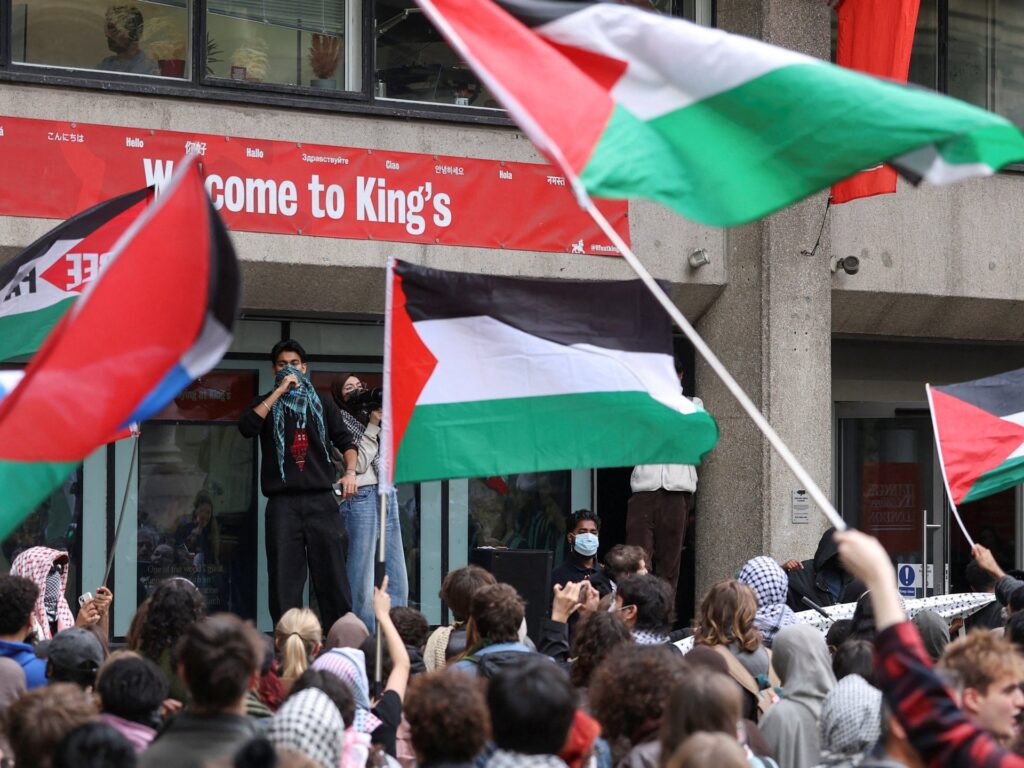
King’s College London (KCL), a prestigious institution with established ties to the defense industry, has recently been under scrutiny for its disciplinary actions against pro-Palestine students. Over the past two years, KCL has disciplined at least 26 students, a move that has sparked significant debate and controversy within academic and activist communities.
The university’s disciplinary measures appear to target students involved in pro-Palestinian activism, which critics argue is part of a broader attempt to suppress dissenting voices on campus. These actions have led to concerns about freedom of speech and the right to political expression in academic institutions.
King’s College London’s connections to the defense sector further complicate the issue, raising questions about possible conflicts of interest and the university’s stance on global political matters. Many students and activists see the disciplinary measures as a suppression of legitimate protest, while the institution asserts it is maintaining order and upholding its policies.
Over the two-year period, the nature of the disciplinary actions ranged from warnings and reprimands to suspensions, impacting students’ academic and personal lives. The university has defended its actions by citing breaches of conduct policies, including allegations of harassment, incitement, or disruptions to university activities.
Supporters of the pro-Palestine students argue that these findings are politically motivated and part of a wider trend of universities stifling activism on contentious international issues. They also claim that the discipline imposed on these students creates an environment of fear and discourages open dialogue.
The crackdown has drawn attention from international human rights groups and academic freedom advocates, who have called on KCL to reconsider its approach and ensure protections for free speech are upheld. They argue that universities should be spaces for open debate, where students can engage with and challenge diverse viewpoints without fear of retaliation.
Within the student body at KCL, reactions have been mixed. Some support the university’s efforts to maintain a respectful and safe environment, while others believe that the crackdown disproportionately targets specific political views and undermines the inclusive values universities strive for.
This situation at King’s College London reflects larger debates happening globally about the balance between free speech, activism, and institutional policies in academic settings. As the university continues to navigate this complex issue, the outcome will likely have significant implications for student activism and the boundaries of expression within higher education.
In conclusion, King’s College London’s disciplinary actions against pro-Palestine students highlight a critical and controversial intersection of politics, academic freedom, and institutional policy. How KCL resolves these tensions may set important precedents for universities worldwide grappling with similar issues of activism and free speech.