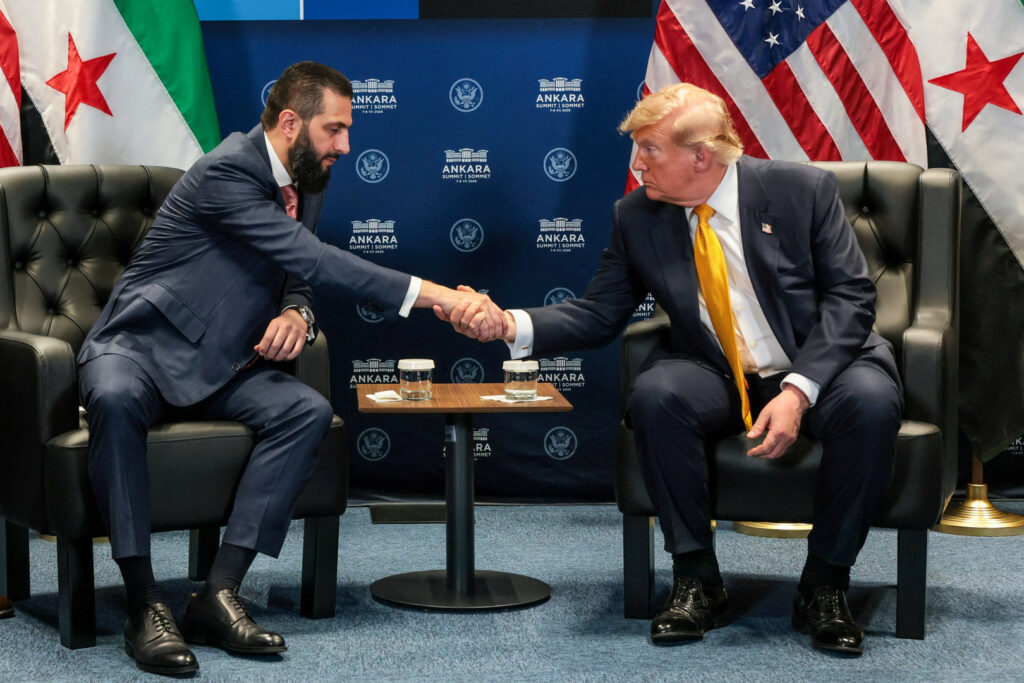
U.S. President Donald Trump shakes hands with Syrian President Ahmed al-Sharaa during a bilateral meeting alongside the NATO leaders summit at the Bestepe Presidential Compound in Ankara, Turkey, July 8, 2026. REUTERS/Jonathan Ernst TPX IMAGES OF THE DAY
In a significant development announced at the NATO summit, US President Donald Trump stated his intention to remove Syria from the United States’ state sponsor of terrorism list. This move marks a potential shift in the US foreign policy stance towards Syria, which has been designated as a state sponsor of terrorism for years. The status has imposed numerous sanctions on the Syrian government, aimed at curbing its alleged support for terrorist activities. Trump’s announcement comes against the backdrop of evolving geopolitical dynamics in the Middle East, with Syria playing a central role in regional conflicts and alliances.
The decision to reconsider Syria’s designation reflects ongoing discussions about the effectiveness and consequences of current sanctions and the broader US strategy in the region. Trump’s administration has been known for its unconventional approach to foreign relations, often pursuing direct engagement and reevaluation of long-standing policies.
Details about the timeline and specific conditions for Syria’s removal from the list were not provided in the statement. However, analysts suggest that such a move could open doors for diplomatic negotiations, economic opportunities, and potentially influence Syria’s internal political landscape.
Critics of the decision warn that lifting Syria’s designation too soon might undermine efforts to hold the Assad regime accountable for human rights abuses and alleged support for militant groups. Supporters argue that it could pave the way for constructive dialogue and stability in the war-torn country.
The international community’s reaction to this announcement is keenly awaited, as it may lead to shifts in alliances and diplomatic relations across the Middle East. NATO members and global powers will be closely monitoring the implications of the US’s policy change on their own strategic interests.
President Trump’s pronouncement signifies a possible recalibration of US priorities in the region, emphasizing a pragmatic approach to addressing terrorism and fostering peace. As developments unfold, stakeholders around the world will be assessing the impact of this decision on regional security and global counterterrorism efforts.