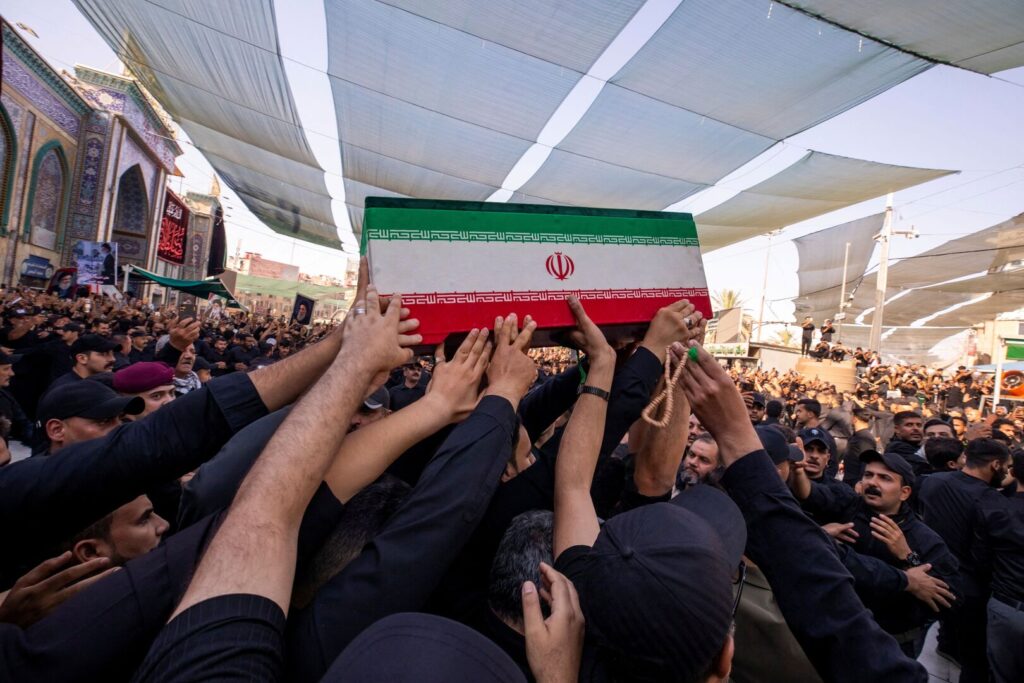
In a deeply poignant and historic event, millions of mourners gathered in the holy city of Karbala, Iraq, to pay their respects to Iran’s late supreme leader, Ayatollah Ali Khamenei. His coffin was brought to Karbala, regarded as one of the most sacred sites in Shia Islam, marking its last stop before being transported to his final resting place in Mashhad, Iran.
The city of Karbala witnessed an unprecedented outpouring of grief and reverence as devotees and followers flocked to the site, underscoring the immense influence Khamenei had across the region. Karbala, home to the shrines of Imam Hussein and Abbas, is a focal point of Shia pilgrimage, making it a poignant place for the leader’s final journey.
Hundreds of thousands gathered around the shrines and along the streets, creating a sea of black-clad mourners chanting eulogies and prayers in his honor. The atmosphere was marked by somber reflection and a strong sense of unity among the attendees, many of whom traveled from across Iraq and beyond.
Khamenei’s death marks the end of an era for Iran, where he had led the nation as the Supreme Leader since 1989. His tenure was characterized by significant domestic and international developments, and his passing is expected to have profound implications for the country’s political landscape.
The decision to bring his coffin to Karbala before burial in Mashhad reflects the spiritual significance of the site and the desire to connect his legacy with the broader Shia community. Mashhad, the capital of Iran’s northeastern province of Razavi Khorasan, is home to the shrine of Imam Reza, the eighth Shia Imam, and is the designated burial place for Khamenei.
Security measures were notably stringent, with Iraqi and Iranian authorities coordinating to ensure the safety of the mourners and the smooth progression of the funeral rites. The ceremonies included various religious rituals, recitations from the Quran, and speeches from prominent clerics and political leaders.
The gathering in Karbala served both as a tribute to a pivotal religious and political figure and as a moment of collective mourning for millions whose lives were shaped by his leadership. It highlighted the deep spiritual and cultural ties that bind the Shia communities of Iraq and Iran.
As the coffin proceeds to Mashhad for burial, the impact of Khamenei’s life and death continues to resonate across the region, opening a new chapter in the history of Iran and its relations with the neighboring states.
This historic funeral procession not only honors the legacy of Ayatollah Khamenei but also reaffirms the enduring significance of Karbala as a center of faith, mourning, and communal solidarity among Shia Muslims worldwide.