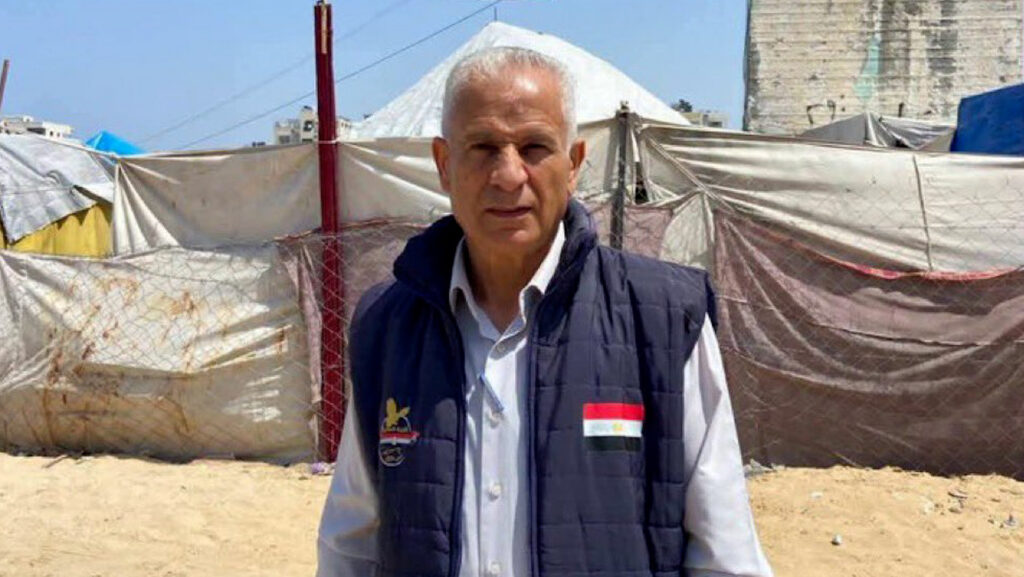
In a tragic incident, Mohammed al-Wahidi, a dedicated aid worker in Gaza, was killed in an Israeli strike just minutes before a World Cup screening event he had organized was set to begin. al-Wahidi, known for his commitment to humanitarian causes, had arranged the screening to provide a moment of relief and unity amidst the ongoing conflict in the region.
The screening was intended to be a gathering that could bring some joy and normalcy to the lives of those living in Gaza, who face constant hardship and danger. However, this hopeful event was abruptly shattered by the strike, resulting in the loss of al-Wahidi’s life.
Mohammed al-Wahidi’s role in the community extended beyond organizing recreational activities. He was a vital aid worker who tirelessly supported those affected by the conflict, providing essential assistance and care to vulnerable populations.
The timing of the strike, just before the public had assembled for the World Cup event, adds a layer of tragedy to the incident. Hundreds of people had been expected to attend the screening, which was more than just a sporting event — it was a symbol of resilience and solidarity.
The violent escalation that took al-Wahidi’s life underscores the dangerous reality faced by humanitarian workers in conflict zones who put their lives at risk to help others. Organizations operating in Gaza have repeatedly highlighted the threats these workers face amid ongoing military operations.
International observers and human rights groups have condemned the attack, calling for increased protection for aid workers in the region. The killing of al-Wahidi has drawn renewed attention to the perils faced by civilians and aid providers in Gaza.
The World Cup screening event, now forever marked by this tragedy, was seen as a beacon of hope and normalcy for the community. With al-Wahidi’s death, it also stands as a somber reminder of the cost of conflict and the human lives impacted daily.
Family, friends, and colleagues mourn the loss of Mohammed al-Wahidi, recognizing his selfless dedication and passion for bringing people together under extraordinarily difficult circumstances. His dream of uniting people through sport and compassion has been tragically cut short.
This incident raises urgent questions about the safety measures in place for aid work, as well as the broader humanitarian situation in Gaza. It highlights the need for greater international efforts to protect civilians and ensure that humanitarian aid can be delivered without fear of attack.
As word spread about al-Wahidi’s death, the community’s grief was magnified by the disrupted event and the continued instability in the region. Despite the sorrow, many pledge to continue his work and honor his memory by striving for peace and support for those affected by conflict.
The death of Mohammed al-Wahidi is a stark illustration of the perils facing those who serve in conflict zones, illustrating the human cost behind the headlines. It also demonstrates the enduring spirit of resilience and hope amid adversity, as communities seek moments of joy and unity even in the darkest times.
Efforts to provide aid and organize community events, like the World Cup screening, remain crucial. They offer a reprieve and a semblance of normal life in a place deeply scarred by violence. The loss of al-Wahidi, however, underscores how fragile and precious these moments are.
In conclusion, the tragic killing of Mohammed al-Wahidi just before the World Cup screening he organized highlights the dangerous conditions faced by aid workers in Gaza and the persistent challenges of providing humanitarian relief in conflict zones. His death is mourned widely and serves as a call for greater protection and humanitarian focus in the area.