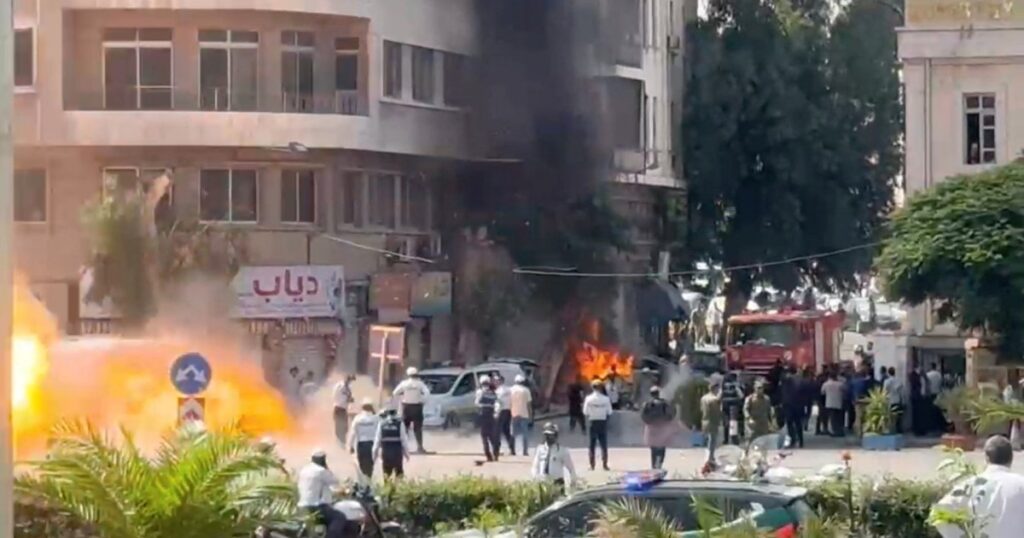
During French President Emmanuel Macron’s visit to Syria, the capital city of Damascus was rocked by multiple explosions, resulting in at least 18 people being wounded, including four police officers, according to Syria’s Interior Ministry. The blasts occurred amid heightened tensions and significant international attention due to Macron’s diplomatic trip.
The sudden violence during the high-profile visit underscores the fragile security situation in Syria, which has been plagued by conflict and instability for more than a decade. The explosions caused panic and chaos in parts of Damascus, disrupting the planned activities surrounding the President’s visit.
Authorities swiftly responded to the scene, providing medical assistance to the injured and initiating investigations to determine the perpetrators and motives behind the blasts. While no fatalities have been reported so far, the injuries highlight the ongoing risk faced by civilians and security forces in the region.
President Macron’s visit marks a controversial and significant moment in Syria’s international relations, aiming to engage diplomatically with Syrian officials despite the complex and often contentious backdrop of civil war and foreign involvement.
The attacks during his visit are likely to complicate diplomatic efforts and raise concerns over security measures in place for international dignitaries. It also draws attention to the persistent presence of militancy and unrest in parts of Syria.
The Syrian government has condemned the explosions, labeling them as acts of terrorism intended to destabilize the capital and derail the ongoing diplomatic initiatives. Security forces have increased their vigilance and presence in key areas to prevent further incidents.
This incident emphasizes the delicate balance between diplomatic engagement and security challenges in Syria, a country still struggling to recover from years of conflict. Macron’s visit, while aiming to foster dialogue and potential peace, now faces the added pressure of navigating an environment fraught with violence.
The international community continues to monitor the situation closely, recognizing the importance of Syria in broader regional stability and the impact of continued unrest on humanitarian conditions.
As investigations proceed, the exact nature of the explosions, including whether they were coordinated attacks or isolated bombings, remains under scrutiny. The Syrian Interior Ministry’s announcement of the wounded reflects the immediate human toll and the ongoing volatility in Damascus.
This event serves as a stark reminder of the dangers present in Syria and the complexities involved in attempting to restore peace and order in a country marked by years of civil war and external interventions. The focus now shifts to the aftermath of the explosions and the response by both Syrian authorities and international partners associated with Macron’s diplomatic visit.