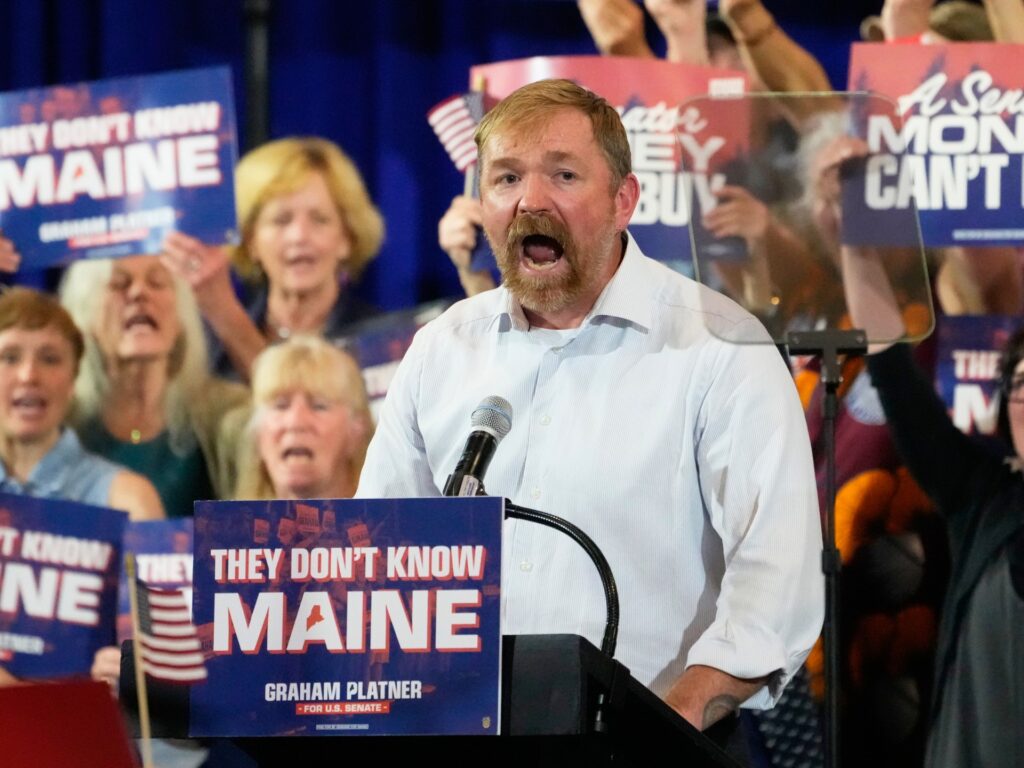
In a significant political development, prominent Democratic leaders across the United States have withdrawn their support for the Maine Democratic Senate candidate, Platner, following serious assault allegations made on Monday. These accusations mark the latest in a series of controversies that have plagued Platner’s campaign, raising questions about his suitability for office and prompting a swift backlash from senior party members.
Platner, who had been viewed as a rising star within the Democratic Party, now faces mounting pressures as allegations of assault threaten to derail his Senate bid. The initial reports surfaced early Monday and quickly gained traction, leading to an immediate response from the Democratic establishment.
Several leading Democrats condemned the alleged behavior, emphasizing their commitment to uphold standards of integrity and respect within their ranks. The withdrawal of support from key party figures signals a critical moment in the Maine Senate race, illustrating how allegations of personal misconduct can have profound political ramifications.
The controversy surrounding Platner is not an isolated incident but part of a broader pattern of difficulties encountered during his campaign. Previous allegations and contentious issues had already cast shadows over his candidacy, but the recent accusations seem to have been the tipping point for many supporters.
Party officials have reiterated their dedication to ensuring a safe and equitable political environment, pledging thorough investigations and transparency. They have called for all parties involved to respect the due process and emphasized that the Democratic Party does not condone any form of harassment or violence.
Platner has denied the allegations, stating that the claims are politically motivated and intended to sabotage his campaign. He vowed to cooperate fully with any investigations and expressed confidence that the truth will eventually clear his name.
In the wake of these events, the Democratic Party is facing the challenge of damage control amid an already contentious electoral atmosphere. Maine voters are now confronted with a complex situation that may influence their decision at the polls, as trust and character become central issues.
Political analysts suggest that the withdrawal of prominent party endorsements could significantly impact Platner’s chances in the upcoming election. The party’s reaction underscores the increasing intolerance for misconduct and the high stakes involved in contemporary political campaigns.
The situation remains fluid, with investigations ongoing and public sentiment evolving. Both the party and Platner will be closely monitored as the story develops, underscoring the critical intersection of personal conduct and political viability in the modern era.
This case highlights the broader dialogue about accountability and ethics in politics, as voters increasingly demand transparency and responsibility from their elected officials and candidates. The Democratic Party’s decisive response aims to reinforce these values, seeking to maintain public trust and uphold democratic principles.
As the Maine Senate race progresses, all eyes will be on how this controversy is resolved and what it signifies for the party’s future direction and electoral prospects. The coming weeks could prove pivotal not only for Platner but also for the wider political landscape in Maine and the United States.