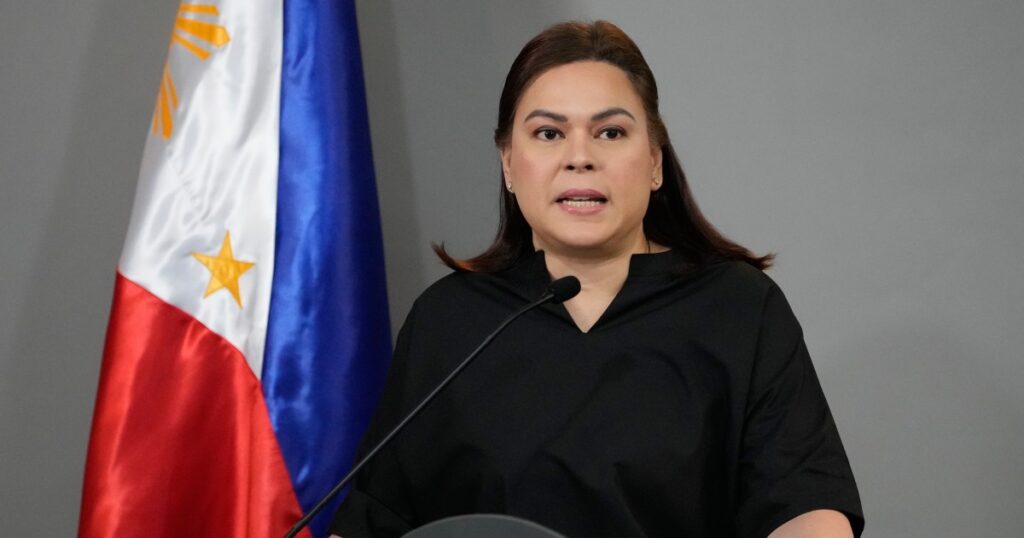
The impeachment trial of Philippine Vice President Sara Duterte has officially commenced, drawing significant attention from political circles and the public alike. The proceedings mark a critical moment in the nation’s political landscape, spotlighting alleged misconduct by the Vice President. Duterte faces serious charges, including mishandling government funds, which is a grave accusation that questions her financial management and transparency during her tenure. Additionally, she is accused of making threats amid a highly publicized rift with President Ferdinand Marcos Jr., adding layers of political tension and intrigue to the case. The conflict between the two high-ranking officials has been a subject of speculation, and these allegations have only intensified the scrutiny of their political relationship. The trial is set against the backdrop of a polarized political environment in the Philippines, where public opinion is sharply divided. Supporters of Duterte argue that the charges are politically motivated and an attempt to destabilize her position, while critics insist that accountability and justice must prevail regardless of political affiliations. The impeachment process follows a legal procedure outlined in the Philippine Constitution, emphasizing checks and balances within the government. As the trial unfolds, it is expected to reveal substantial evidence and testimonies that could determine the Vice President’s political future. Observers note that the outcome of the trial may have far-reaching implications for governance and political dynamics in the Philippines. It raises questions about the integrity of public officials and the mechanisms in place to address abuses of power. The impeachment also highlights the ongoing challenges of political rivalry and governance in the country, illustrating how personal and political conflicts can impact national stability. Analysts are closely watching the proceedings to gauge how this development will affect the administration of President Ferdinand Marcos Jr. and the broader political landscape. The trial also underscores the importance of transparency and accountability in public service, reinforcing democratic principles amid political turmoil. As the case progresses, both the prosecution and the defense are expected to present compelling arguments and evidence to support their respective positions. The Philippine public remains keenly interested, with media coverage intensifying as new details emerge throughout the trial. International observers are also monitoring the situation, recognizing its significance in Southeast Asian politics. The impeachment trial of Vice President Duterte is a significant event that encapsulates many of the challenges faced by the Philippine political system, including corruption allegations, political discord, and the struggle for power. It serves as a crucial test of the country’s legal and constitutional frameworks, and its impact will likely resonate beyond the immediate political realm. Ultimately, the outcome will shape the future trajectory of Philippine governance and influence public trust in political institutions. The trial’s proceedings, verdict, and subsequent political developments will be closely watched both domestically and internationally, marking a pivotal chapter in the nation’s history.