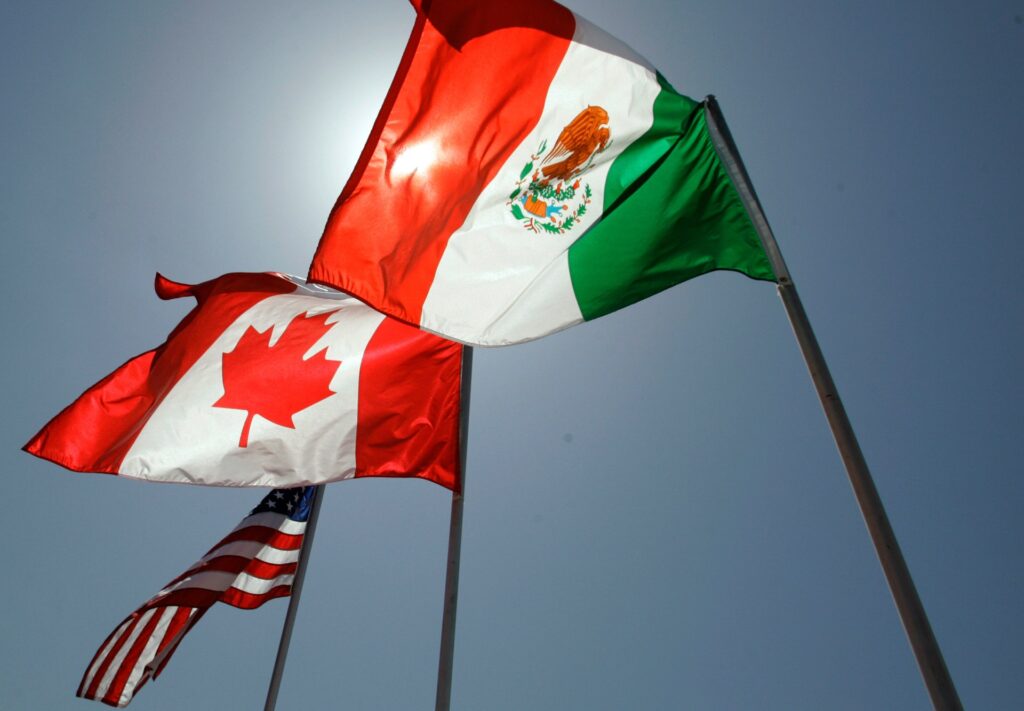
The Trump administration has opted not to renew the United States-Mexico-Canada Agreement (USMCA) in its current form, citing concerns that the trilateral trade deal does not adequately protect American interests. The U.S. Trade Representative has made it clear that the agreement will not receive approval unless significant changes are made, marking a notable shift in the administration’s trade policy.
The USMCA, which replaced the North American Free Trade Agreement (NAFTA) in 2020, was initially hailed as a positive step towards modernizing trade relations between the three countries. It updated provisions on digital trade, labor standards, and environmental protections, aiming to foster fairer competition and better market access. However, despite these improvements, the Trump administration has expressed dissatisfaction with several key aspects.
One of the primary reasons for the refusal to renew relates to issues surrounding labor and environmental enforcement mechanisms. The administration argues that current measures are insufficient to prevent outsourcing and to ensure fair wages and working conditions for American workers. Additionally, it claims that provisions related to intellectual property and dispute resolution favor Canada and Mexico too heavily and do not adequately incentivize manufacturing within the United States.
Moreover, the administration’s stance is influenced by broader concerns about trade deficits and the desire to leverage trade agreements to promote American manufacturing and job creation. The Trump administration repeatedly emphasized a protectionist trade agenda aimed at reducing dependence on foreign manufacturing and increasing domestic production.
The decision not to renew the USMCA as it stands will likely lead to renewed negotiations among the three countries to address American concerns. Failure to reach a satisfactory agreement could jeopardize the current trade framework and potentially result in economic uncertainty or disruptions in North American trade flows.
For businesses, the refusal to approve the USMCA in its current form introduces uncertainty, particularly for industries that depend on integrated supply chains across the U.S., Canada, and Mexico. Companies may face increased tariffs, regulatory barriers, or delays, which could affect costs and competitiveness.
In summary, the Trump administration’s refusal to renew the USMCA without substantial changes underscores its priority to reshape trade agreements to better serve American economic interests. However, it also signals potential challenges ahead for the trilateral trade relationship, with significant economic and diplomatic implications for North America’s future trade environment.