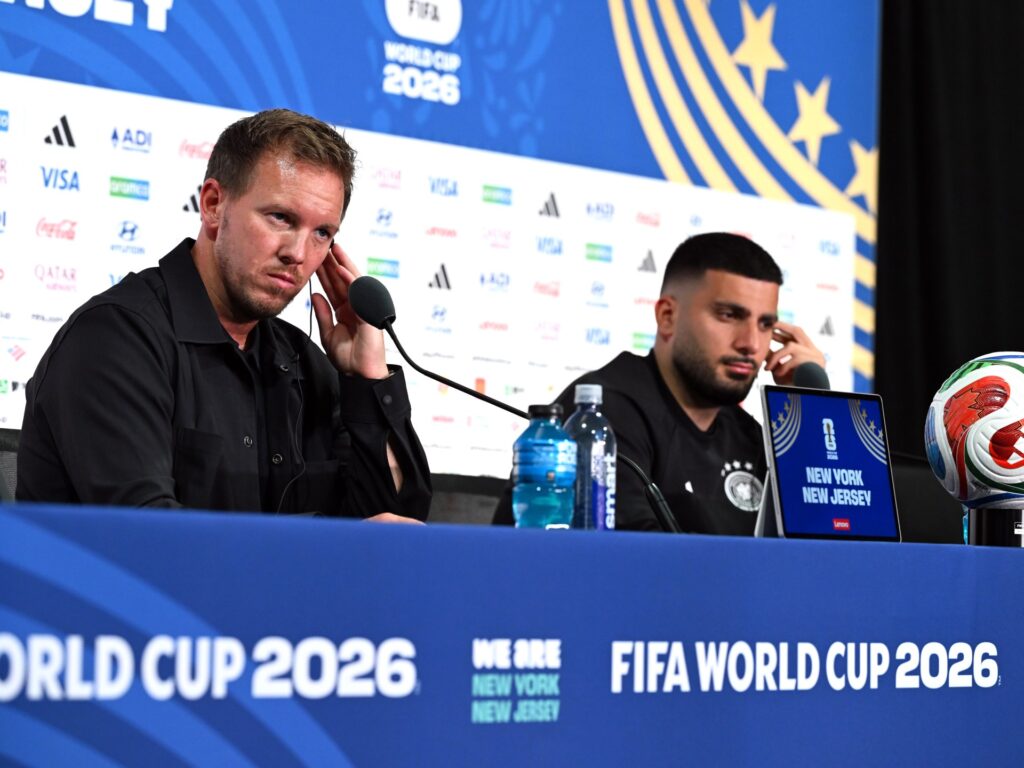
In the aftermath of another disappointing World Cup campaign, the German football scene is grappling with challenges that extend far beyond the pitch. While losses in major tournaments are always hard to swallow, the real problem lies in the recurring tendency to scapegoat players, particularly those with multicultural backgrounds. This pattern has raised serious questions about inclusivity and fairness in German football.
Eight years ago, the focus of such blame was on Mesut Ozil, a talented midfielder with Turkish roots. Despite his contributions to the national team, Ozil became the face of criticism following Germany’s failures in international competitions. The criticism often crossed into uncomfortable territory, touching upon his ethnic background rather than purely his sporting performance. This approach not only unfairly targeted Ozil but also revealed underlying tensions about identity within the sport.
Fast forward to the current period, the issue of scapegoating has re-emerged with a new figure: Deniz Undav, a player of Kurdish descent. Undav’s position in German football, both at the club and potentially the national level, has made him a focal point for blame after the team’s underwhelming performances. This echo of past scapegoating incidents highlights a persistent problem within the football community and media.
Scapegoating in sports, especially when it intersects with ethnic or cultural identity, does more damage than any defeat on the field. It creates divisions among fans, players, and stakeholders, undermining team spirit and unity. Furthermore, it imposes an unfair burden on individual athletes, many of whom strive to represent their country with pride and dedication.
The problem also reflects broader societal challenges. Germany, as a multicultural nation, has long embraced diversity in sports. Yet, the backlash against players like Ozil and Undav suggests that societal acceptance is still far from complete. These football controversies become mirrors reflecting issues of integration, belonging, and acceptance faced by immigrants and their descendants in Germany.
Critics argue that focusing on individual players as scapegoats deflects attention from deeper structural issues in German football. Problems like team strategy, management decisions, player development, and institutional reform remain unaddressed when blame is placed on single individuals. This misdirection prevents constructive conversations about how to evolve and improve the sport at all levels.
Moreover, the media plays a significant role in shaping public perceptions. Sensationalized reporting and biased narratives can amplify scapegoating tendencies, feeding into stereotypes and perpetuating prejudice. Responsible journalism should instead prioritize balanced critiques, celebrate diverse talents, and foster an environment of support for players irrespective of background.
In recent years, German football authorities have made strides toward inclusion and anti-discrimination policies. However, the cases of Ozil and Undav underscore the need for more proactive measures. Initiatives that educate fans, promote cultural understanding, and protect players from racial or ethnic abuse are crucial to creating a safer, more welcoming football community.
For fans, players, and officials, recognizing the harm caused by scapegoating is the first step toward change. Success on the football field is a collective effort that thrives on unity, respect, and mutual understanding. Blaming individuals based on heritage only weakens this foundation.
The World Cup losses are undoubtedly disappointing from a sporting perspective, but Germany’s larger challenge is social and cultural. Elevating the conversation beyond the scoreboard is essential to fostering lasting progress in both football and society. Embracing diversity as a source of strength rather than division will be key to Germany’s future in global football and beyond.
In conclusion, German football’s ongoing scapegoating issue highlights critical lessons about identity, inclusion, and the true meaning of sportsmanship. Only through awareness, education, and empathy can the community overcome these setbacks and build a better, more united future on and off the field.