The geopolitical landscape of the Middle East is once again at a crossroads, with Iran’s so-called ‘axis of resistance’ facing unprecedented challenges and transformations in a rapidly evolving post-war environment. As regional conflicts reshape power dynamics, questions arise about the durability and adaptability of Iran’s proxy network, which has long been a central pillar of its regional deterrence strategy.
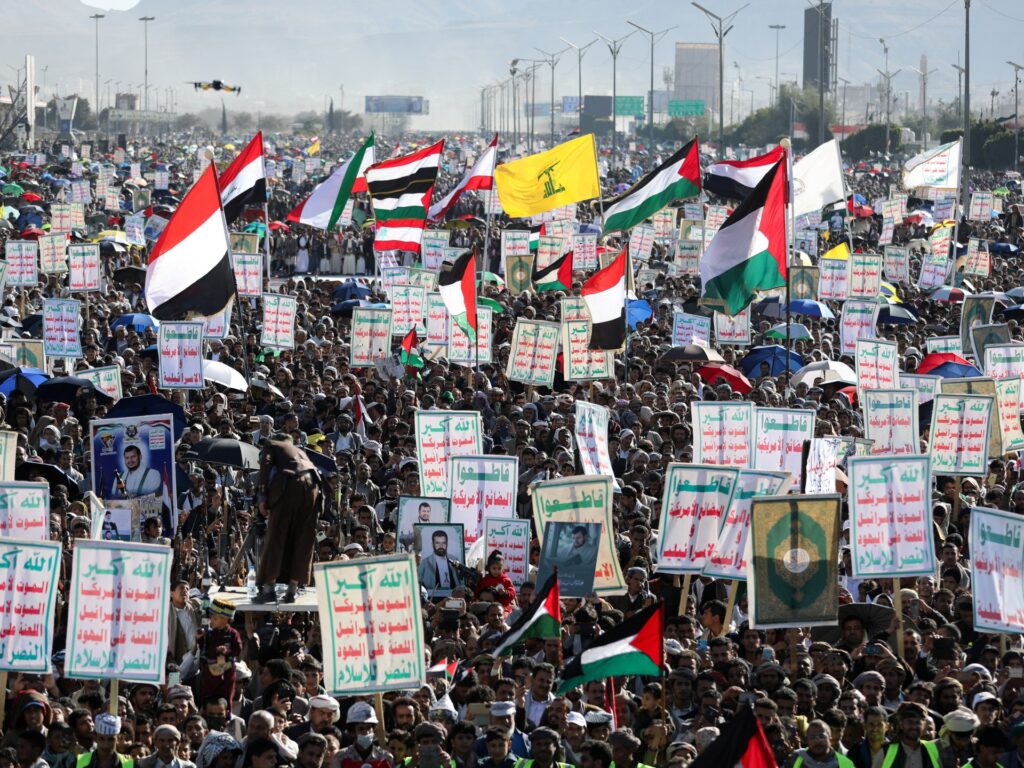
Historically, Iran’s ‘axis of resistance’ has encompassed a web of allied militant groups and political actors, including Hezbollah in Lebanon, various militias in Iraq and Syria, and the Houthi movement in Yemen. These groups have functioned not only as military proxies but also as strategic tools to extend Tehran’s influence and counterbalance the presence of US forces and allied regional powers.
The recent conflicts, notably the devastating wars in Syria and Yemen, have tested the resilience of this axis. Heavy casualties, territorial losses, and international sanctions have strained these networks. However, despite these setbacks, there is considerable evidence that Iran’s regional deterrence has not been permanently degraded but is instead undergoing significant transformation.
One key aspect of this evolution is the adaptation of proxy groups to new operational modes. Shifting from large-scale confrontations to guerrilla tactics and cyber warfare, these forces have become more flexible and harder to target. Additionally, with growing international scrutiny, Iran has diversified its support mechanisms, employing clandestine supply chains and decentralized command structures to sustain its proxies.
Furthermore, the ideological and socio-political narratives underpinning the ‘axis of resistance’ remain potent. Iran’s leaders continue to frame their struggle in terms of resistance against Western influence and regional adversaries, rallying support among diverse populations. This narrative acts as a glue, maintaining cohesion even as military fortunes fluctuate.
Analysts also note an emerging trend of proxy groups expanding their roles beyond military operations. In several territories, these groups have evolved into quasi-political entities, providing social services and governance in areas where state institutions are weak or absent. This integration enhances their legitimacy and embeds them more deeply within local societies.
However, the axis faces undeniable pressures. Economic hardships in Iran, intense countermeasures by rival states, and shifting alliances in the region pose significant hurdles. The normalization of relations between some Gulf countries and Israel, for instance, challenges the proxy network’s regional influence.
Despite these challenges, Tehran’s strategic patience and investment in its proxies suggest a long-term vision. It is increasingly apparent that rather than disintegrating, the ‘axis of resistance’ is mutating into a more resilient and diversified force.
In conclusion, Iran’s regional deterrence apparatus is not a relic of a bygone era but a living network adapting under fire. As the Middle East continues to oscillate between conflict and diplomacy, understanding this evolution is crucial for policymakers and analysts aiming to gauge the future trajectory of regional power balances.