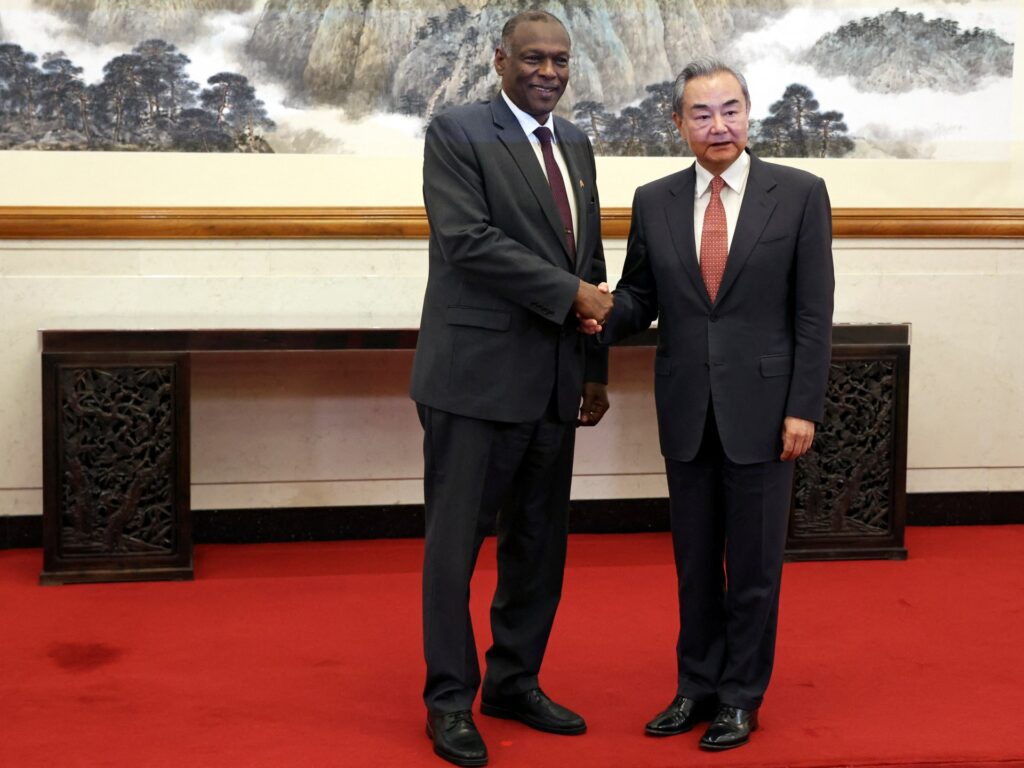
Sudan announced that China has waived a $50 million loan, a significant financial relief for Khartoum as the country grapples with escalating economic challenges. This development comes at a critical juncture, with Sudan’s military-led government seeking support amidst increasing Western sanctions that have strained the nation’s economy.
The waiver of the loan not only alleviates immediate fiscal pressures on Sudan but also signals deepening economic and diplomatic ties between Khartoum and Beijing. For Sudan, the loan waiver represents vital support in managing debt and sustaining key public expenditures, which are crucial under the current sanctions that restrict access to Western financial aid and investment.
From China’s perspective, this gesture underscores its strategic interest in maintaining influence in Sudan, a country rich in natural resources and geopolitically significant in Northeast Africa. By easing Sudan’s debt burden, China may be securing its long-term economic interests, including investments in infrastructure projects, oil, and mining sectors. Additionally, the move aligns with China’s broader Belt and Road Initiative, which aims to enhance connectivity and influence across Africa and Asia.
The debt relief comes as Sudan faces severe economic hardships, including inflation, shortages of essential goods, and declining foreign reserves. Western sanctions have further isolated Sudan from international financial systems, making external debt relief and aid critical for economic stability.
China’s loan waiver also reflects the country’s diplomatic approach of prioritizing partnerships with developing nations over Western-centric financial institutions. It highlights a growing trend where China offers economic incentives and political support as a means to deepen bilateral relations.
For Khartoum, the $50 million relief is more than just financial reprieve; it represents a bolstering of diplomatic ties that may translate into further Chinese investments and technical assistance. This could enhance Sudan’s infrastructure, energy, and agricultural sectors, which are vital for economic recovery.
Moreover, the waiver sends a message to other international players that China is willing to support Sudan’s sovereignty and economic independence amid Western pressure. It also positions China as a pivotal player in Sudan’s future development and international affairs.
However, this arrangement may raise concerns regarding Sudan’s increasing economic reliance on China, potentially leading to long-term strategic dependencies. Observers caution that while the loan waiver is beneficial in the short term, Khartoum must diversify its international partnerships to avoid overdependence on any single country.
Overall, China’s decision to waive the $50 million loan to Sudan is a multifaceted move, offering immediate economic relief to Khartoum while advancing Beijing’s strategic interests in Africa. It exemplifies the complex interplay of economics and geopolitics shaping contemporary international relations in the region.