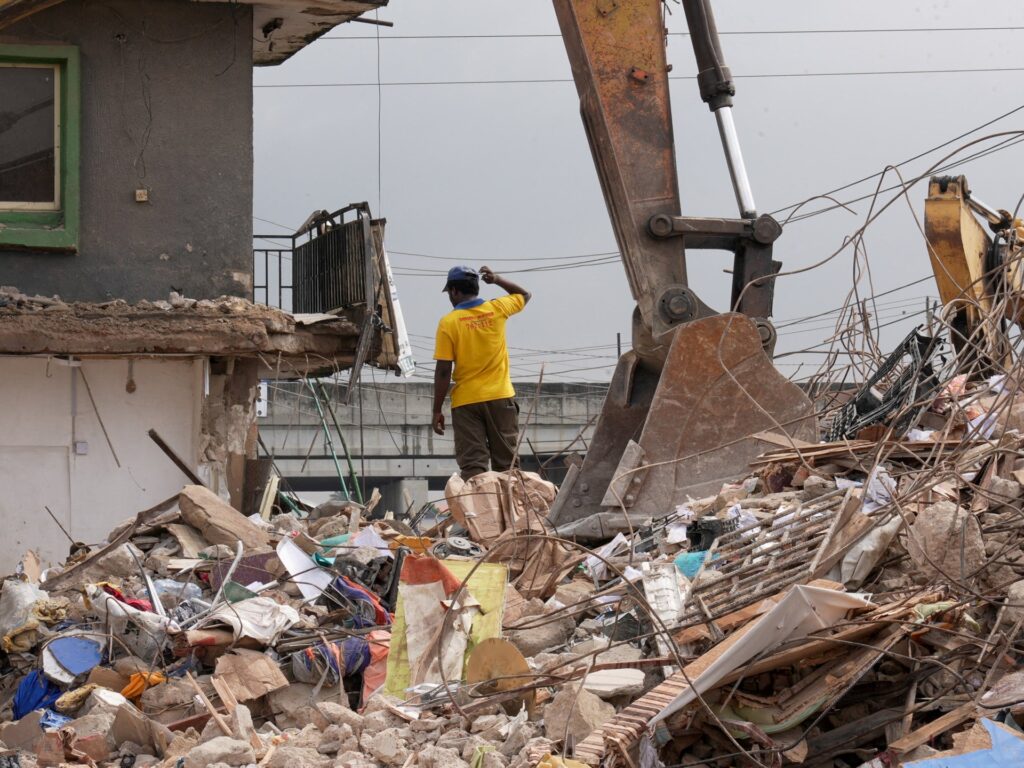
A tragic building collapse in Lagos, Nigeria, has resulted in the deaths of nine people and injuries to twenty-seven others. The incident occurred in a densely populated area, where the structure suddenly gave way, trapping many residents and passersby.
Rescue teams responded swiftly to the disaster, pulling twenty-seven individuals from the rubble alive, though all suffered injuries of varying severity. Emergency medical services provided immediate care, and the injured were promptly transported to nearby hospitals.
In response to the calamity, the Lagos state governor has ordered comprehensive safety inspections of the affected site and surrounding buildings to prevent further incidents. Authorities are focusing on ensuring the structural integrity of nearby properties, which might have been compromised.
Initial investigations are underway to determine the cause of the collapse, whether due to structural failure, construction flaws, or other factors. This tragic event has raised concerns about building safety standards in Lagos, highlighting the urgent need for stricter enforcement and regular inspections.
Rescue operations were praised for their speed and efficiency, although the disaster underscores the challenges urban centers face with rapid development and infrastructural pressures. Community leaders and families affected by the collapse are calling for increased oversight and support for those displaced or injured.
The governor’s directive includes a mandate for immediate safety audits across the city, aiming to identify and rectify potential hazards. This move is expected to involve collaboration between government agencies, construction authorities, and safety experts.
Residents in the area have been warned to be vigilant and report any signs of building instability to relevant authorities. Officials have also pledged to provide assistance to the victims’ families and to enhance public safety measures.
This incident serves as a somber reminder of the critical importance of construction quality and regulatory compliance in urban environments, especially in rapidly growing metropolises like Lagos. Continuous monitoring and proactive measures aim to prevent such disasters in the future.
Authorities and responders continue to work tirelessly to support the injured and investigate the incident fully, as the community mourns the loss of life and looks to rebuild safely and securely.