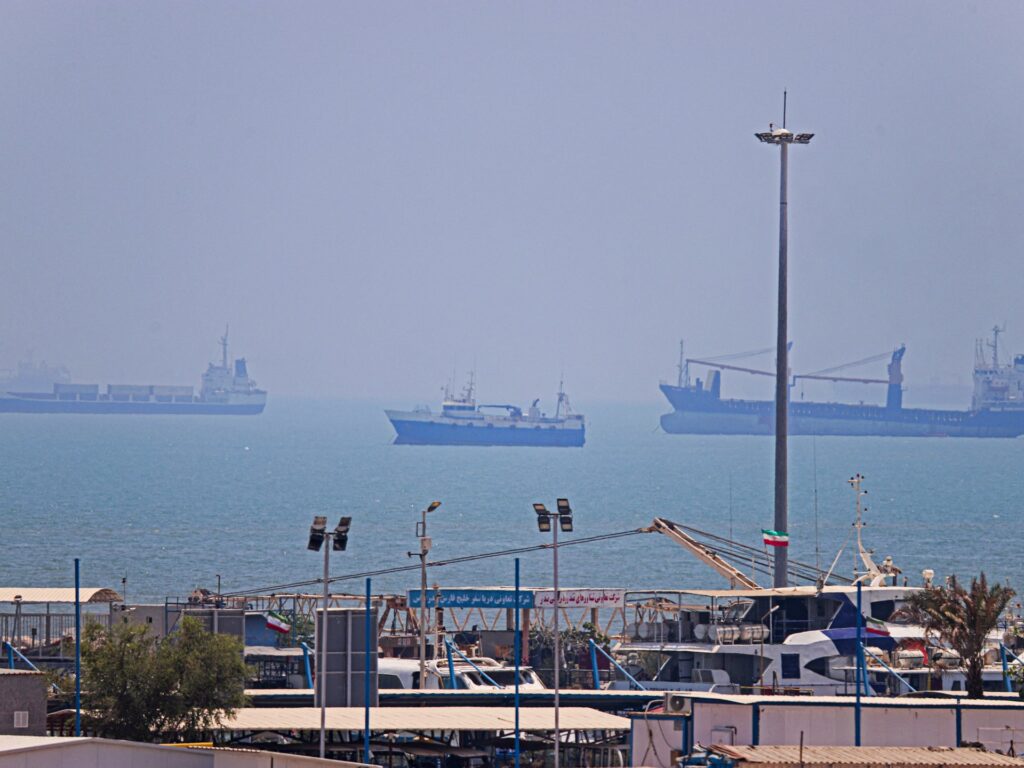
The United Nations has put on hold its plans to evacuate sailors from the strategically significant Strait of Hormuz following a recent incident that heightened tensions in the area. A cargo vessel was reportedly struck by a projectile near the coast of Oman, sparking concerns about maritime safety and security in the vital shipping lane. According to Iran, all ships passing through the Strait must do so with its explicit permission, a stance that has led to increased friction with international maritime communities and raised the risk of further confrontations.
The Strait of Hormuz, a narrow passage connecting the Persian Gulf with the Gulf of Oman and the Arabian Sea, is a critical chokepoint for global oil transport. Approximately a fifth of the world’s petroleum passes through the strait, making stability in this region crucial for the global economy.
The recent attack on the cargo vessel has brought renewed scrutiny to the ongoing geopolitical tensions between Iran and various international actors who oppose Tehran’s claim of controlling passage through the strait. Iran argues that its maritime jurisdiction extends to the strait, requiring ships to obtain permission to ensure safety and comply with national security policies.
In response to the incident, the UN had initially sought to organize an evacuation plan for sailors transiting through the strait, aiming to protect civilian maritime personnel from potential harm amid rising hostilities. The evacuation initiative was designed to safeguard lives and reduce risks as diplomatic efforts continue to mitigate conflict.
However, the UN has now paused these plans, largely due to the complex and volatile nature of the situation. The decision reflects concerns about escalating violence and the challenges in executing a safe evacuation operation within an area controlled and heavily monitored by Iranian forces.
Diplomatic officials emphasize that unilaterally proceeding with evacuation efforts could aggravate tensions further and potentially provoke military confrontations. Consequently, the UN is calling for dialogue and de-escalation, advocating for peaceful resolution and adherence to international maritime laws.
The incident underscores the fragile security environment in the Persian Gulf region, where political rivalries and territorial claims intersect with critical economic interests. Stakeholders worldwide are watching closely, as the stability of the Strait of Hormuz is vital for uninterrupted energy supplies and regional peace.
Efforts are underway to strengthen communication channels among regional powers and international maritime authorities to prevent misunderstandings and ensure freedom of navigation remains intact. The UN continues to monitor the situation closely, ready to resume evacuation or other protective measures if conditions stabilize.
In summary, the UN’s decision to pause evacuation plans for sailors near the Strait of Hormuz reflects the heightened risks following the cargo ship attack and Iran’s assertion of control over maritime passage. The focus now lies on diplomacy, security cooperation, and maintaining the crucial flow of commerce through one of the world’s most essential waterways.