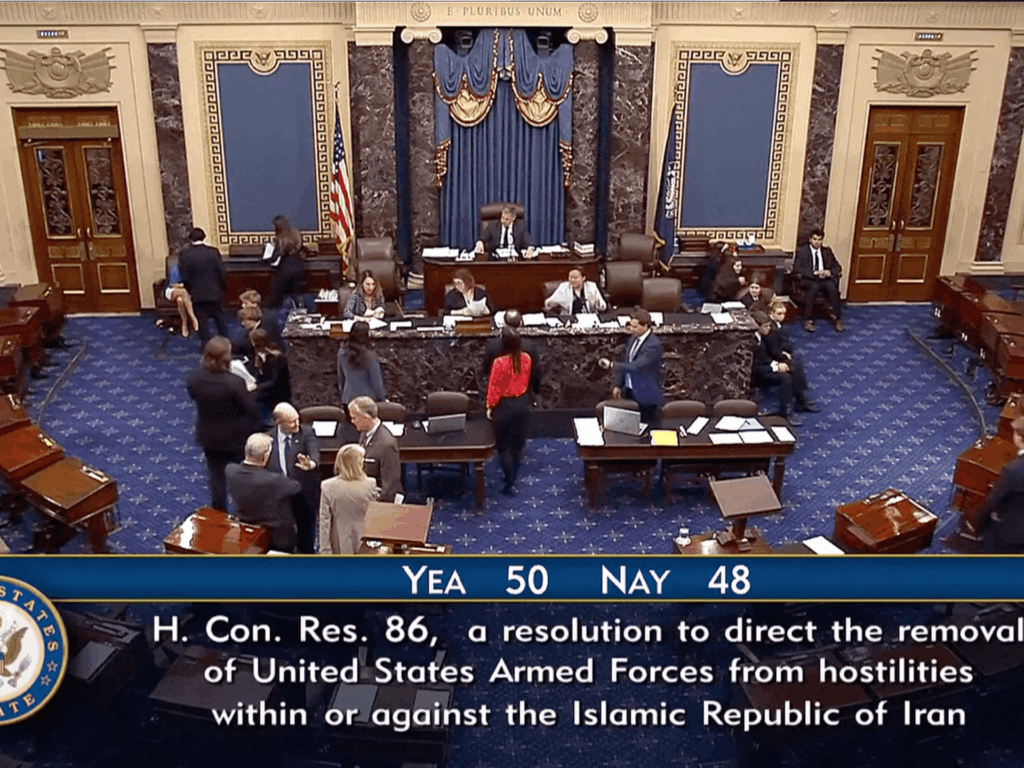
In an unprecedented move, the US Senate has voted to pause any military action against Iran, marking a rare rebuke to then-President Donald Trump’s administration. The vote reflects growing concerns among lawmakers about escalating tensions in the Middle East and the risks of an all-out conflict with Iran.
The Senate approved a measure that would restrict the President’s ability to undertake military action against Iran without Congressional approval. This legislative action aims to reassert Congressional authority over decisions of war, which some felt had been bypassed.
Lawmakers expressed fears that the Trump administration’s aggressive policies toward Iran could lead to unintended consequences, including destabilizing the region further and sparking widespread violence.
This Senate vote comes amid heightened tensions following a series of confrontations and attacks blamed on Iranian-backed groups. The vote demonstrates a rare bipartisan consensus, with members from both parties expressing the need for caution and diplomacy rather than immediate military intervention.
The motion to pause the war was hailed by many analysts as a critical step in avoiding escalation and encouraging dialogue. Critics of the administration applauded the Senate’s insistence that any military action must have clear objectives and oversight.
President Trump’s tenure was marked by a tough stance on Iran, including withdrawal from the Iran nuclear deal and imposition of stringent sanctions. However, this Senate decision signals a pushback against unilateral executive action in matters of war and peace.
International observers have also noted the significance of the vote, suggesting it could influence American foreign policy by emphasizing Congressional input.
Experts warn that while the Senate vote does not end the possibility of conflict, it introduces a check on executive power and represents a call for measured diplomacy.
The vote highlights the complexities of the US-Iran relationship and the challenges in balancing national security concerns with international stability.
Moving forward, the Senate’s decision could pave the way for renewed diplomatic efforts and a reassessment of strategies dealing with Iran.
As the world watches, the US Senate’s move reflects a cautious approach aimed at preventing war and fostering a more collaborative process for decisions of such magnitude.