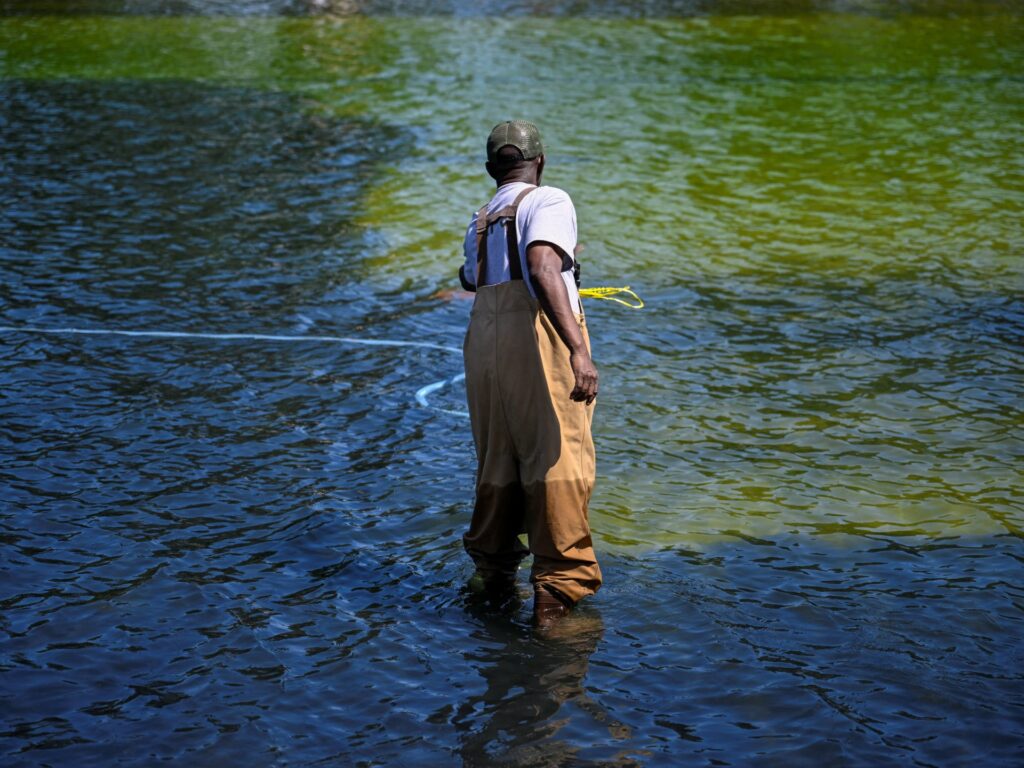
The Washington Reflecting Pool, an iconic symbol located between the Lincoln Memorial and the Washington Monument, has recently become the focus of environmental and political discourse due to its changing appearance. Traditionally known for its ‘US blue’ waters, the pool has unexpectedly turned an algae-infested green, raising questions about the causes and future maintenance of this historic site.
Historically, the pool’s pristine blue color has symbolized tranquility and national pride, mirroring the grandeur of the surrounding monuments and the clear skies above. This appearance was maintained through regular cleaning and relining efforts to prevent water buildup and algae growth.
In a significant intervention, former President Donald Trump allocated $14 million to reline the reflecting pool. This substantial investment aimed to restore the pool’s signature blue and preserve its status as a visual centerpiece of the National Mall.
Despite these efforts, the pool has still suffered from periodic green discoloration, which experts attribute primarily to environmental factors such as temperature fluctuations, nutrient runoff, and inadequate water circulation that encourage algae proliferation.
Trump, on the other hand, has expressed frustration over the condition of the pool, controversially attributing the damage to what he called ‘radical left lunatics,’ suggesting allegations of deliberate vandalism rather than natural decay or maintenance challenges.
Environmental specialists emphasize that these ecological changes require targeted interventions, including improved water quality management, biofilm control, and ongoing maintenance to suppress algae growth and sustain the pool’s clarity.
The reflecting pool’s algae issues reflect broader environmental challenges affecting water bodies across urban areas, including pollution, climate change, and ecological imbalances.
The National Park Service, responsible for maintaining the pool, has announced plans to enhance monitoring systems, increase cleaning schedules, and collaborate with environmental scientists to prevent future discoloration.
As the reflecting pool remains a significant national landmark, there is ongoing public interest and government commitment to preserving its appearance, which serves as both a historical icon and a testament to America’s dedication to its heritage.
In summary, the transition of the Washington Reflecting Pool from its traditional blue to algae green is a complex interplay of environmental factors and maintenance practices, compounded by political narratives. Efforts continue to ensure the pool reflects its best image — a clear, reflective surface epitomizing the nation’s ideals and history.