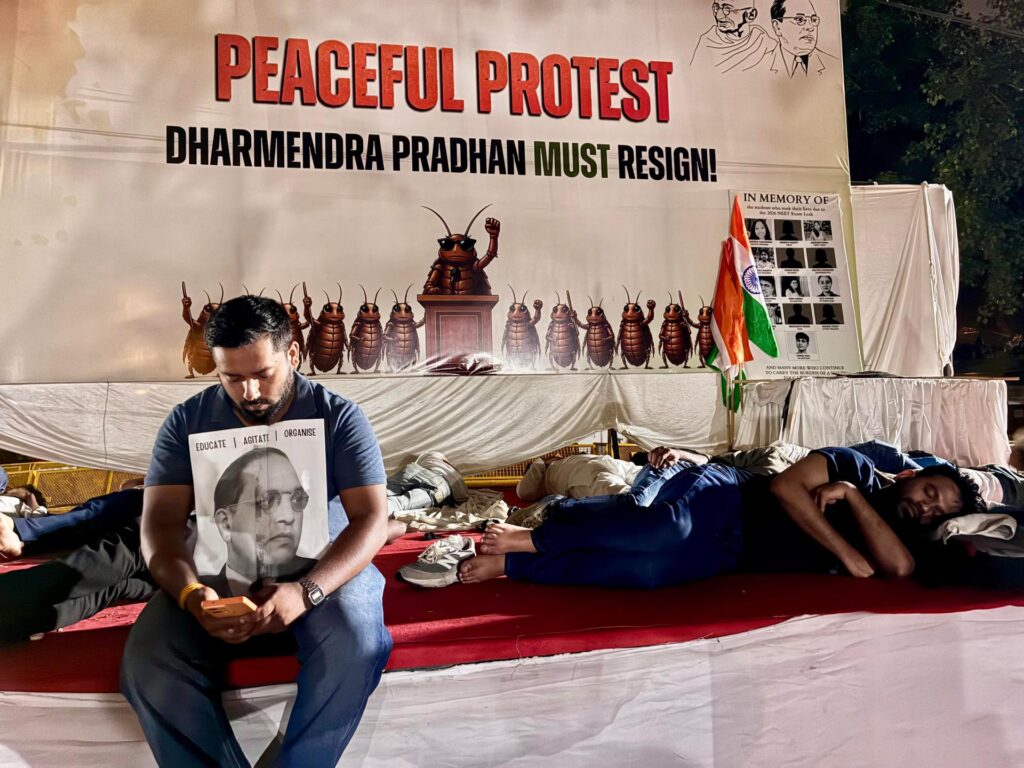
In a striking display of activism, the ‘Cockroach’ movement in India has intensified its protest, with supporters camped out at the designated protest site in New Delhi. The movement, which gained viral attention due to its unique symbolism and vigorous advocacy, has vowed to continue their occupation until the Education Minister steps down from office.
The protest site, located in the heart of the capital city, has become a hub of continuous demonstrations, with activists enduring harsh weather and logistical challenges. They are united by a common cause to hold the Education Minister accountable, citing issues that they feel have been neglected or mishandled under his tenure.
The ‘Cockroach’ movement, named symbolically to represent resilience and survival, has captured nationwide interest through social media and public discourse. Supporters argue that their persistence highlights systemic problems within the educational framework and seeks to bring these to the forefront of the national agenda.
Protesters have organized a range of activities from speeches, sit-ins, and cultural demonstrations to maintain visibility and raise awareness about their demands. The movement’s leadership stresses non-violent resistance and constructive dialogue as foundational principles.
Government officials have yet to issue a comprehensive response to the protests, though there have been brief statements urging calm and expressing willingness to engage with representatives of the movement. Meanwhile, public opinion remains divided, with some sympathizing with the protestors’ cause and others concerned about the disruption in the capital.
This ongoing standoff reflects broader socio-political tensions within the country, particularly regarding governance and reform in critical sectors like education. The ‘Cockroach’ movement’s insistence on the Education Minister’s resignation underscores a call for accountability and transparency in leadership.
As the days progress, the protest is likely to attract further attention from both national and international media, potentially influencing political discourse and decision-making processes. Observers are keenly watching how the government will navigate this challenge amidst growing public pressure.
The movement’s commitment to maintaining their presence until their demands are met signifies a new chapter in civic activism in India. It also raises questions about the efficacy of protest as a tool for political change in a democratic setup.
In conclusion, the ‘Cockroach’ movement’s encampment in New Delhi has not only spotlighted specific grievances against the Education Ministry but also highlighted the dynamic and sometimes contentious nature of public engagement in India’s democracy. As the situation evolves, it remains to be seen whether the Education Minister will resign or if negotiations will pave the way for a resolution.