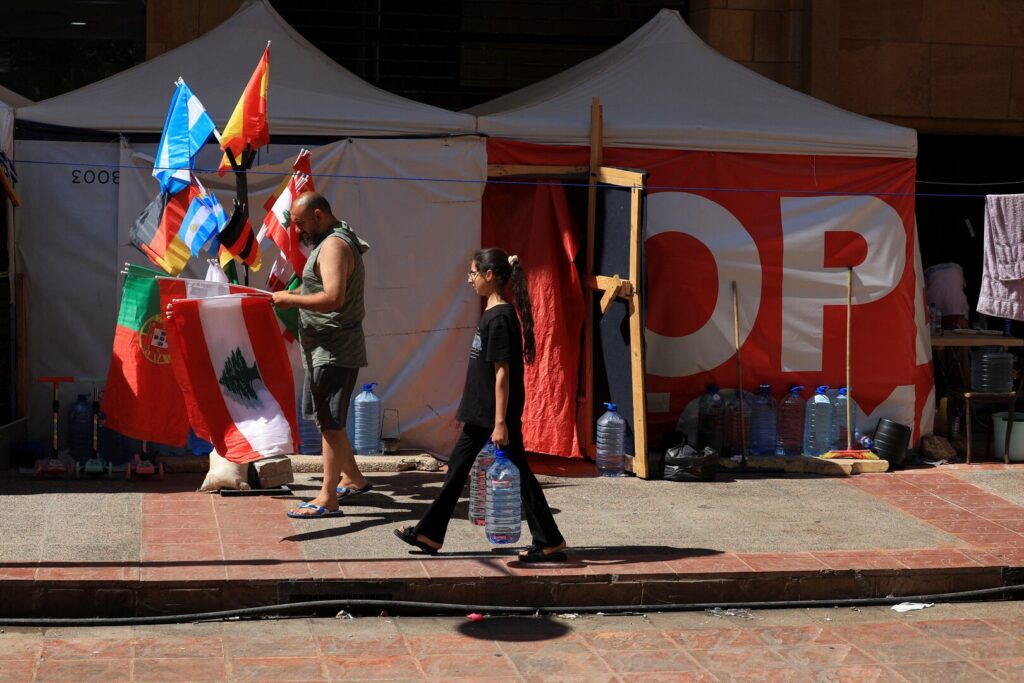
A girl carrying a container of water walks beside a tent where a man sells flags of countries participating in the 2026 FIFA World Cup, at a shelter hosting residents displaced from Beirut's southern suburbs, following a deal between the United States and Iran, in Beirut, Lebanon, June 16, 2026. REUTERS/Mohamed Azakir
As the conflict between Israel and Lebanon intensifies, a significant social event took place that brought hundreds of people together amid the ongoing turmoil. In Rmeileh, near Sidon Gate, a Lebanese influencer organized a public viewing event for the 2026 World Cup, attracting a large crowd despite the tense atmosphere caused by Israel’s military actions in Lebanon.
The region has been engulfed in conflict, with Israel launching attacks in Lebanon that have led to widespread concern and disruption across the country. Despite this, the event in Rmeileh showed a sense of resilience and a desire among Lebanese citizens to find moments of normalcy and unity in the face of adversity.
The choice of Rmeileh by Sidon Gate as the event location was significant. This area, known for its vibrant community and cultural significance, became a gathering point for football enthusiasts and residents looking to escape the fear and uncertainty brought by the conflict. The World Cup, a global sporting phenomenon, provided a temporary reprieve from the anxieties of war.
Organizing such an event in these challenging times required courage and dedication. The influencer behind the event managed to create a safe and welcoming environment where people could enjoy the excitement of the World Cup while still being mindful of the ongoing dangers around them.
Participants watched matches on big screens and shared the collective joy and tension of each game, united by their love for football and hope for peace in their homeland. The gathering underscored the powerful role of sports as a unifying force, even in the darkest of times.
This event highlights the resilience of the Lebanese people and their enduring spirit. Even as bombs fell and tensions flared, the passion for the World Cup and the sense of community remained unshaken. It served as a poignant reminder that, in times of hardship, cultural and social events can offer comfort and solidarity.
Amid the war and destruction, the World Cup event in Rmeileh stands as a testament to human endurance and the unyielding desire for normalcy and connection. It reflected the broader sentiment in Lebanon—a nation looking to the future with hope, even in the midst of crisis.
The World Cup, typically a celebration of international cooperation and friendly competition, gained new meaning in Rmeileh. It became a symbol of resistance against despair, a rallying point for unity, and a beacon of hope for a generation caught in conflict.
As the war continues to rage, stories like this underscore the importance of preserving moments of joy and togetherness. They remind us that even in the face of great adversity, communities can find ways to come together, celebrate human achievements, and maintain hope for a better tomorrow.
The event also caught the attention of international observers and social media followers, who praised the bravery and spirit of those involved. It brought global awareness to the situation in Lebanon while demonstrating the strength and resilience of its people.
In conclusion, the World Cup event organized by a Lebanese influencer amid Israel’s attacks on Lebanon was far more than just a football match viewing. It was a powerful act of cultural resistance, a beacon of hope, and a memorable example of the human spirit’s capacity to endure and unite in times of crisis. As Lebanon faces ongoing challenges, such moments will continue to be vital in sustaining community morale and solidarity.