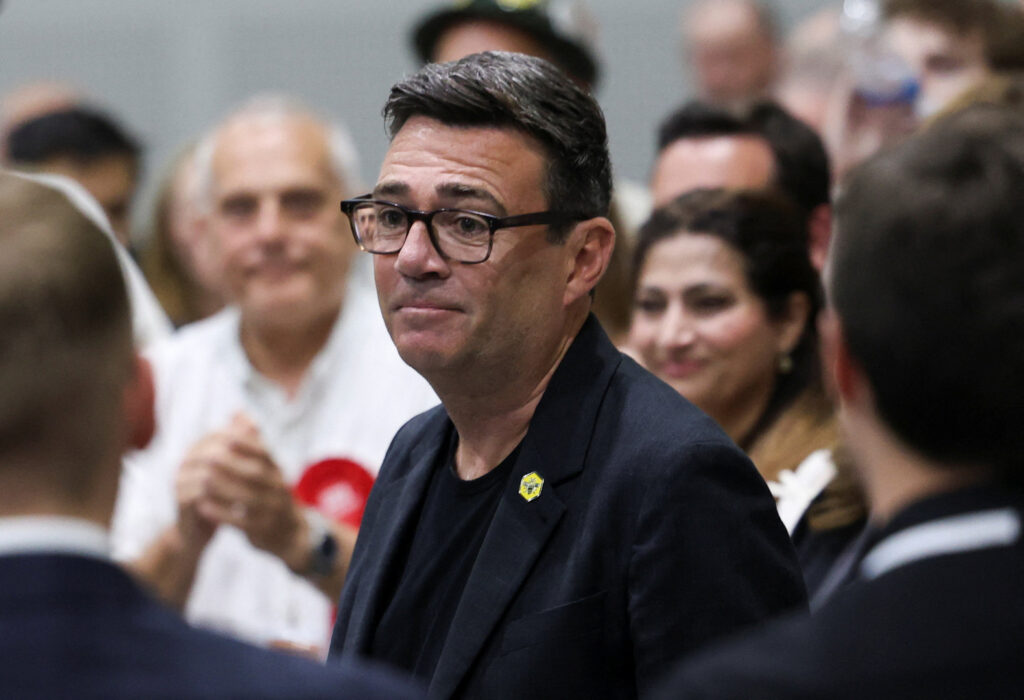
Greater Manchester mayor and Labour candidate Andy Burnham attends the vote counting for the Makerfield by-election, triggered by the resignation of Labour MP John Simons, in Wigan, Britain, June 19, 2026. REUTERS/Temilade Adelaja
The recent by-election in Makerfield has resulted in a significant victory for Andy Burnham, raising the political stakes for UK Prime Minister Keir Starmer. Burnham, a prominent figure and former Labour mayor, secured a win in this closely watched contest, which many political analysts had seen as a test of the Labour Party’s current popularity and direction under Starmer’s leadership.
The Makerfield by-election was prompted by a vacancy in the seat that has historically been a Labour stronghold, but recent shifts in voter sentiment had cast some uncertainty over whether the party could maintain its hold. Burnham’s triumph, therefore, is being viewed as a reinforcement of Labour’s grassroots support, but also a challenge to Starmer, who faces growing scrutiny and pressure to unify and energize the party.
Andy Burnham’s campaign focused heavily on local issues, resonating with voters who were concerned about healthcare, social services, and economic opportunities in the region. His appeal as a candidate with a track record of advocating for northern England’s development and his reputation for independent leadership have bolstered his standing among constituents.
This outcome is likely to lead to intensified discussions within the Labour Party about strategy and leadership. Critics within and outside the party may argue that Burnham’s approach, which sometimes diverges from the national party line, offers a blueprint for connecting more effectively with voters, especially in regions that have felt left behind by national policies.
For Prime Minister Keir Starmer, the Makerfield result is a mixed signal. While it confirms Labour’s overall strength in traditional territories, it also highlights the challenge of managing diverse voices within the party. Starmer, who has prioritized presenting a unified front, may now need to reconcile differing perspectives and strategies to ensure Labour remains competitive ahead of the next general election.
Political commentators suggest that Burnham’s victory could encourage other regional leaders to assert more independence, potentially reshaping the party’s approach to regional representation and policy focus. This dynamic might lead to a more decentralized Labour Party with greater emphasis on regional issues and identities.
The Makerfield by-election has drawn national attention not only for the immediate outcome but for its implications on Labour’s future direction, the cohesion of the party under Starmer, and the broader political landscape in the UK. As discussions unfold, both Burnham and Starmer face pivotal moments in defining their roles and influence within the party.
In conclusion, Andy Burnham’s by-election victory in Makerfield is a significant event that raises the stakes for UK Prime Minister Keir Starmer. It underscores the ongoing challenges and opportunities for Labour to unite diverse voices, address pressing local concerns, and build momentum for the upcoming general election. The political ripple effects of this victory will likely be felt across the UK’s political spectrum in the months ahead.