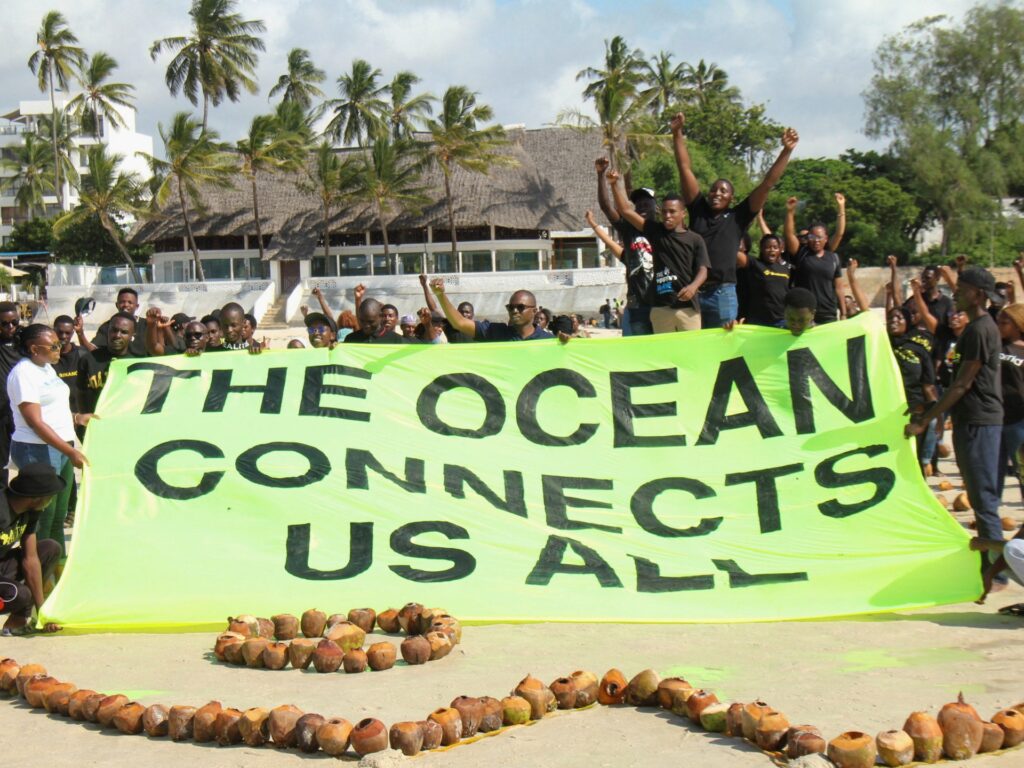
In a recent diplomatic controversy, Taiwan has accused Kenya of deporting its conference delegates at the behest of China. This incident has unfolded around the time Kenya hosted the prestigious Global Oceans Conference, making it the first African nation to do so.
The Global Oceans Conference, which draws participation from countries worldwide to discuss marine conservation and sustainability, was expected to be a landmark event symbolizing international cooperation. However, the deportation of Taiwanese delegates has cast a shadow over these objectives.
Taiwan’s government expressed displeasure and concern that the delegates, who traveled to Kenya for the conference, were denied entry and subsequently deported. The move was seen by Taiwan as an indication of China exercising undue influence over Kenya’s domestic and immigration policies.
Kenya, on the other hand, defended its actions by reiterating its ‘One China’ policy stance, which recognizes only the People’s Republic of China as the legitimate government of China. The Kenyan government stated that it adheres to international diplomacy norms and that its decision was based on national protocol and its foreign policy alignment.
The One China policy has long been a contentious issue, with China insisting that countries recognizing it must sever official ties with Taiwan, which it regards as a breakaway province. Many countries around the world, including Kenya, officially recognize Beijing to maintain diplomatic and economic relations.
The controversy emerged after Taiwanese delegates arrived in Kenya amid preparations for the Global Oceans Conference. Reports indicate that officials detained several Taiwanese participants without clear explanations before ultimately deporting them back to Taiwan.
This action has led to accusations from Taiwan of political pressure exerted by China on Kenya to exclude Taiwanese representation. Such incidents deepen geopolitical tensions in the region and reflect China’s growing influence in Africa, where it has increased diplomatic, economic, and infrastructural investments.
Kenya’s position highlights the delicate balancing act many countries perform between maintaining relations with China, a major global power and trading partner, and engaging with Taiwan, a robust economy with which some maintain unofficial ties.
Taiwan’s exclusion from significant international forums and events, often due to pressure from China, remains a contentious global issue. Taiwan continues to seek greater participation in international organizations, emphasizing its democratic governance and contributions to global issues including environmental protection.
The Global Oceans Conference itself was intended to foster collaboration in oceanic science, climate change mitigation, and sustainable fisheries management. However, diplomatic disputes such as this highlight the complex intersection of international politics and global cooperation efforts.
Experts note that incidents like the deportation of Taiwanese delegates could set back regional cooperation making it more challenging to address shared challenges like oceanic health and climate change.
The Kenyan government has urged the international community to respect its sovereign decisions and policies, while Taiwan’s government calls for international support to counter what it describes as China’s coercive tactics.
This diplomatic spat adds a new dimension to the ongoing sensitive relations between Taiwan, China, and countries navigating their diplomatic affiliations in a rapidly shifting global geopolitical landscape.
As Africa continues to grow as an arena for international diplomacy and investment, incidents involving Taiwan and China are increasingly likely to arise, challenging countries to balance competing interests and principles.
The deportation incident serves as a reminder of the persistent challenges Taiwan faces in securing international recognition and participation, alongside the expansive reach of China’s foreign policy objectives.
Both sides remain firm in their stands: Kenya affirming its allegiance to the One China doctrine, and Taiwan advocating for its right to participate in global conversations on equal footing.
How this situation will evolve and affect future international engagements, particularly those involving global environmental and oceanic governance, remains closely watched by diplomatic circles worldwide.