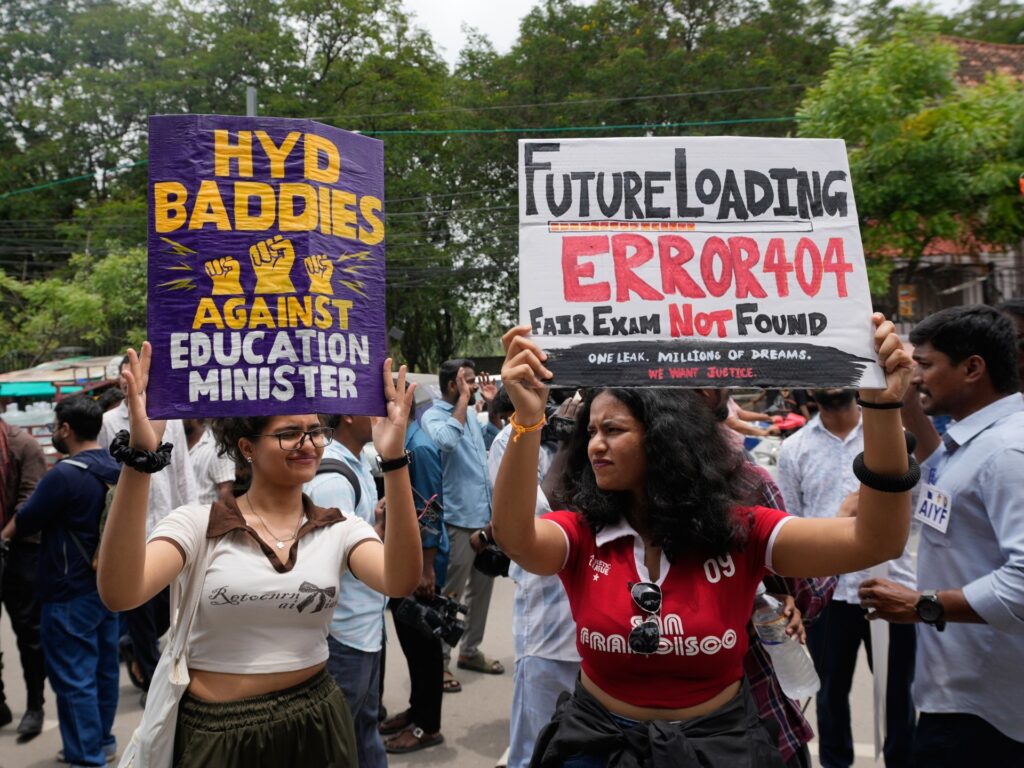
In a unique and satirical protest, India has witnessed the rise of the Cockroach Janta Party (CJP), a Gen Z-driven movement formed to challenge governmental accountability specifically targeting federal education policies. The party’s emergence marks a creative expression of public frustration, particularly after multiple exam paper leaks exposed vulnerabilities in the education system.
Over the past month, the CJP has grown from a small group of students and young activists into a nationwide phenomenon. They have been vocal about their demand for the removal of the federal education minister, whom they hold responsible for the repeated exam paper scandals and the consequent erosion of trust in academic institutions.
The movement has been marked by vibrant, youthful protests, creative campaigns on social media, and a satirical yet poignant critique of political inertia. This blend of humor and genuine concern has resonated strongly among India’s youth, who are directly affected by the disruptions in the educational sector.
The Cockroach Janta Party utilizes satire to highlight many issues beyond just paper leaks. They address broader themes such as educational reform, transparency, and the need for systemic change. Their satirical name and approach serve to mock the perceived corruption and inefficiency within the government while empowering Gen Z voices onto the national political stage.
Activists from the CJP have staged rallies across major cities, often incorporating playful elements such as cockroach-themed costumes and symbolic gestures that underline the idea of rooting out corruption. Their message is clear: they want accountability and a transparent, meritocratic education system.
Through viral videos, catchy slogans, and online debates, the party has succeeded in drawing significant media attention and public support. Many see the party as a refreshing change in political discourse, moving away from traditional methods of protest to embrace the digital-native generation’s tactics and sensibilities.
Critics argue that while the CJP’s approach is entertaining and accessible, it remains to be seen how much tangible policy change their activism will influence. However, supporters believe that the movement’s strength lies in its ability to engage younger demographics in political participation and highlight urgent issues through innovative means.
The education minister’s office has reportedly acknowledged awareness of the protests but has not yet issued formal comments on any potential policy reforms or administrative changes in response to the CJP’s demands.
The Cockroach Janta Party’s story so far is a testament to the evolving nature of political engagement in India, reflecting a new generation’s willingness to question authority through satire and activism. As the CJP continues to amplify their voices, their impact on India’s educational landscape and political culture remains a developing story, watched keenly by citizens, policymakers, and activists alike.
The coming months will be critical for the CJP to translate their momentum into concrete political influence, ensuring their satirical voice transforms from protest to policy. For now, the party proudly declares, “My voice is being heard,” symbolizing a fresh wave of empowered Indian youth demanding change and accountability.