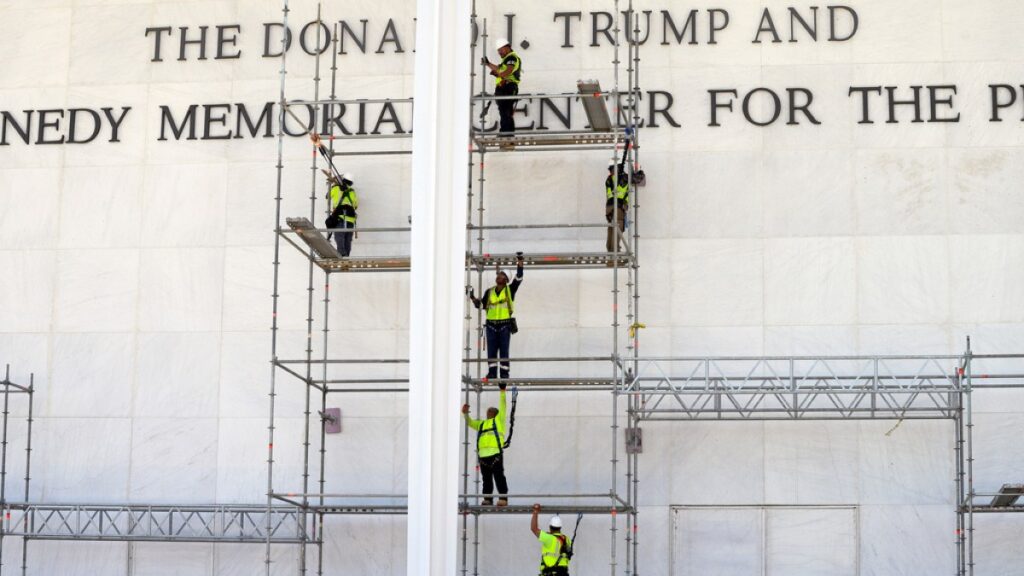
In a significant legal development, a judge has issued an order to remove former President Donald Trump’s name from the Kennedy Center. This decision is part of a broader context where the US president has been actively seeking to reshape the image and institutions of the nation’s capital, Washington D.C., through a series of plans and projects.
The Kennedy Center, a premier cultural institution in the United States, had previously been associated with Trump’s name, an affiliation that has now come under judicial scrutiny. The judge’s order aims to enforce a shift toward depoliticizing the institution and restoring its traditional identity as a hub for the performing arts, free from political influence.
The move to remove Trump’s name is emblematic of an ongoing effort by various stakeholders in the capital to redefine the city’s symbols and landmarks. These efforts are part of a larger vision to create a more inclusive and representative image of the city that reflects its diverse population and rich cultural heritage.
This judicial mandate falls within a sequence of actions initiated by city officials and federal agencies to revise the capital’s landscape. It signals a critical turning point in how public spaces and national monuments are named and contextualized in relation to contemporary political figures.
Critics of the measure argue that removing Trump’s name diminishes the recognition of his contributions and legacy, while supporters see it as a necessary correction to ensure that public institutions remain neutral and welcoming to all citizens.
The decision has sparked a debate across political and social spectrums, highlighting the complex interplay between politics, culture, and public memory in defining the identity of Washington D.C.
Observers note that this episode may set a precedent for how other cities and cultural institutions handle naming controversies linked to political figures, potentially influencing national conversations about history and recognition.
The removal process is expected to be carried out swiftly, with authorities ensuring compliance with the judge’s order. This will likely involve logistical coordination to update signage, marketing materials, and official references to the Kennedy Center.
Meanwhile, the administration continues to unveil new projects aimed at enhancing the capital’s infrastructure and cultural offerings, emphasizing a commitment to progress and modernization.
In summary, the judge’s order to remove Trump’s name from the Kennedy Center underscores a pivotal moment in Washington D.C.’s ongoing transformation. It reflects broader societal discussions about identity, heritage, and the role of public institutions in a politically diverse landscape.