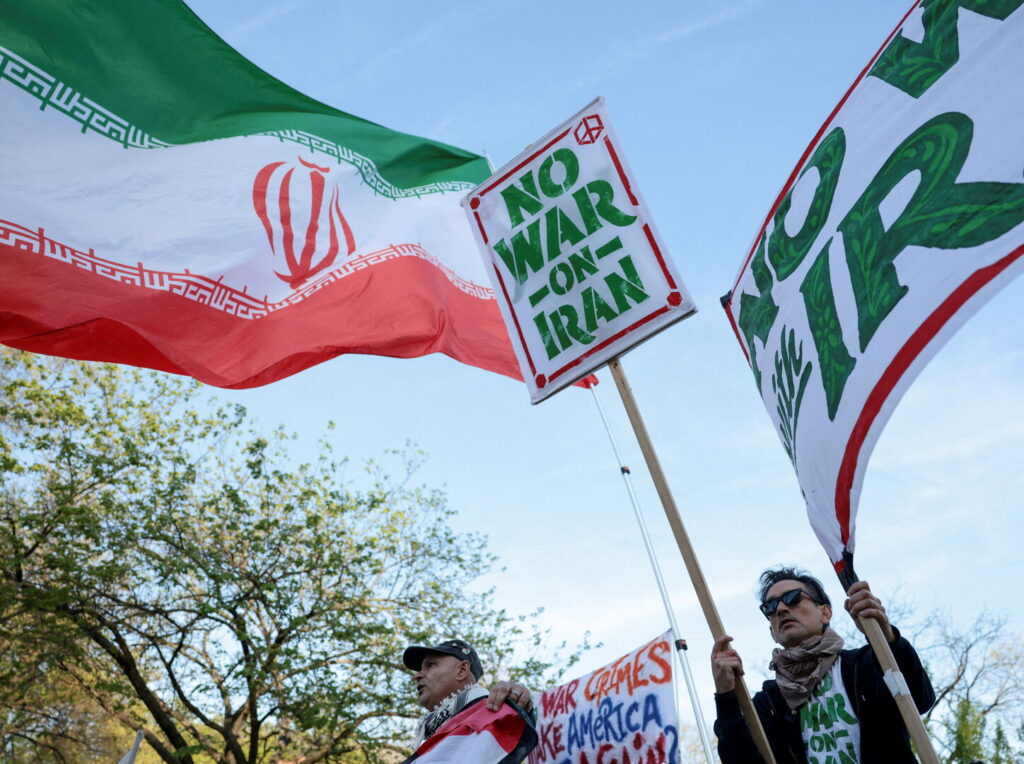
People protest against military action in Iran near the White House in Washington, D.C., U.S., April 8, 2026. REUTERS/Evelyn Hockstein REFILE - QUALITY REPEAT TPX IMAGES OF THE DAY
The United States has officially announced the commencement of nuclear talks with Iran following the signing of a framework memorandum of understanding. This development signals a renewed diplomatic effort to address ongoing concerns surrounding Iran’s nuclear program. The White House clarified that the document signed is a framework agreement, outlining the basis for negotiations rather than a final, comprehensive deal.
The framework memorandum serves as a preliminary arrangement aimed at setting the terms and conditions for detailed discussions between the two nations and involved parties. This approach allows for structured dialogue that could lead to an eventual agreement to limit Iran’s nuclear activities, which have been under international scrutiny for years.
Officials from the United States and Iran will engage in further negotiations to translate the framework into concrete commitments. These talks are crucial due to the complex geopolitical implications of Iran’s nuclear capabilities, especially concerning non-proliferation and regional security.
The framework agreement highlights mutual interest in resolving outstanding issues related to Iran’s nuclear program. However, it stops short of finalizing specifics, as the memorandum intends to outline key objectives and negotiation points. This stage of diplomacy underscores cautious optimism amid longstanding tensions.
Both parties have expressed readiness to work constructively to achieve a sustainable resolution. The United States’ statement emphasizes that while the framework is a positive step forward, significant challenges remain.
International stakeholders, including European nations and global regulatory bodies, have welcomed the initiation of talks. They view the framework deal as an opportunity to reduce nuclear risks and promote stability in the Middle East.
Historical attempts to curtail Iran’s nuclear program have met with varying success, making these fresh negotiations particularly important. Observers hope that the framework agreement will pave the way for a comprehensive accord that ensures Iran’s nuclear activities are exclusively peaceful.
The White House reaffirmed its commitment to diplomacy, indicating that the framework provides a foundation to explore practical solutions. This process will likely involve rigorous verification mechanisms and timelines designed to monitor compliance.
As talks proceed, attention will focus on critical issues such as uranium enrichment levels, inspection access for international agencies, and timelines for any sanctions relief. The framework act as a catalyst for detailed debate on these sensitive subjects.
Overall, the initiation of nuclear talks based on the framework memorandum marks a significant moment in US-Iran relations. It offers hope for reducing nuclear tensions and achieving a negotiated settlement grounded in transparency and mutual understanding.
The international community continues to watch closely, recognizing the potential global impact of these discussions. Success depends on sustained diplomatic engagement, political will, and constructive cooperation from all sides involved.
In summary, the US announcement about the Iran nuclear talks beginning after the signing of a framework agreement represents a vital step in the quest to address nuclear non-proliferation challenges. The path ahead remains complex, but the framework opens the door to dialogue aimed at securing long-term peace and security.