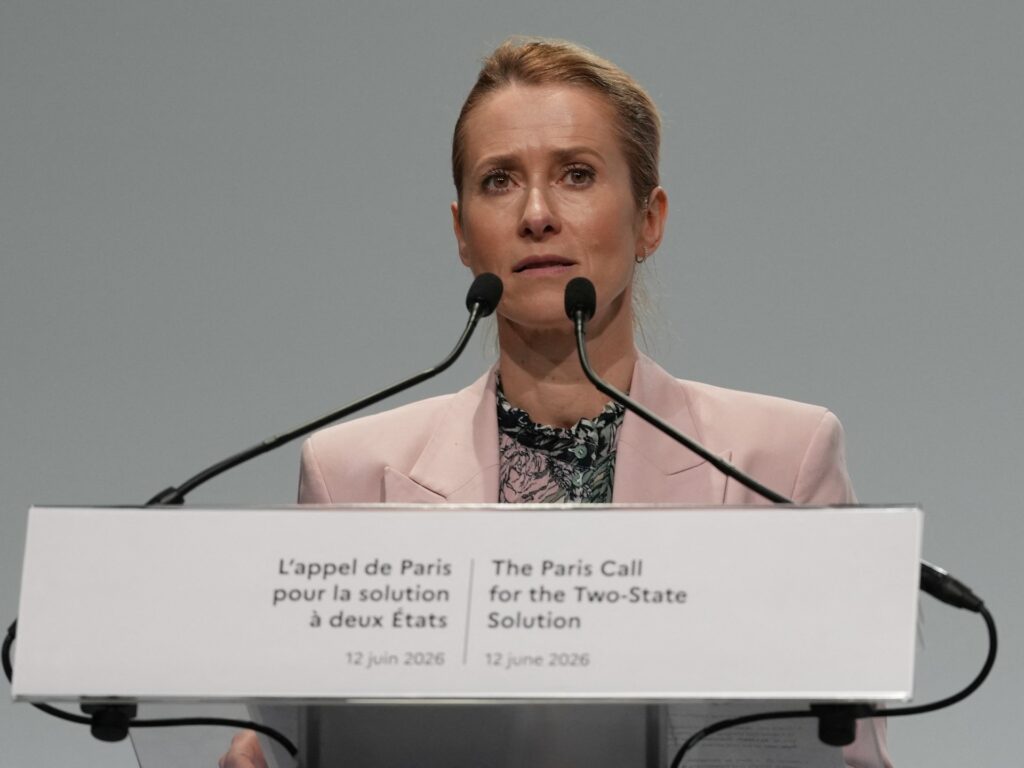
The European Union remains deeply divided over the prospect of imposing sanctions on Itamar Ben-Gvir, a far-right Israeli minister whose policies and actions have sparked controversy across the bloc. EU diplomacy chief Kaja Kallas recently confirmed that member states have not been able to achieve an agreement on whether to sanction Ben-Gvir, reflecting the complex and sensitive nature of EU-Israel relations.
Itamar Ben-Gvir, known for his extremist positions and hardline stance on security, has become a polarizing figure not only within Israel but also internationally. His appointment to the Israeli government has raised concerns among many European leaders about potential impacts on peace efforts in the region and human rights standards.
Kallas highlighted that while some member states advocate for strong punitive measures against Ben-Gvir in response to what they view as provocations and inflammatory rhetoric, others caution against actions that could destabilize diplomatic ties with Israel.
The division within the EU underscores broader geopolitical complexities, with countries weighing their strategic and economic interests against human rights considerations. Several nations emphasize the importance of dialogue and cooperation with Israel, whereas some Nordic and Western European members push for a more assertive stance.
Analysts point out that the lack of consensus is symptomatic of the EU’s challenges in formulating a unified foreign policy, especially when it comes to the Middle East. The bloc’s diverse membership includes countries with varying historical relations and perspectives on the Israeli-Palestinian conflict.
This impasse follows a series of developments in Israel, where Ben-Gvir’s far-right faction has gained influence within the current coalition government, raising alarms among international observers about a shift towards more nationalist policies.
The EU’s inability to finalize sanctions may signal to Israel that certain controversial policies could proceed without facing immediate European repercussions. However, it also reflects the EU’s cautious approach to maintaining a delicate balance between condemnation and engagement.
Experts suggest that in the coming months, diplomatic efforts will likely continue to bridge differences within the EU, as the bloc attempts to present a coherent position that upholds its values while managing complex bilateral relationships.
The standoff on sanctions comes amid ongoing debates within the EU regarding its role and influence in the Middle East peace process, particularly as tensions fluctuate and conflict risks persist.
In summary, the EU’s failure to agree on sanctioning Itamar Ben-Gvir highlights the challenges of unified foreign policy making in a diverse political union. With diplomacy chief Kaja Kallas acknowledging the division, focus will now turn to ongoing negotiations aimed at reconciling member states’ contrasting priorities regarding Israel and regional stability.