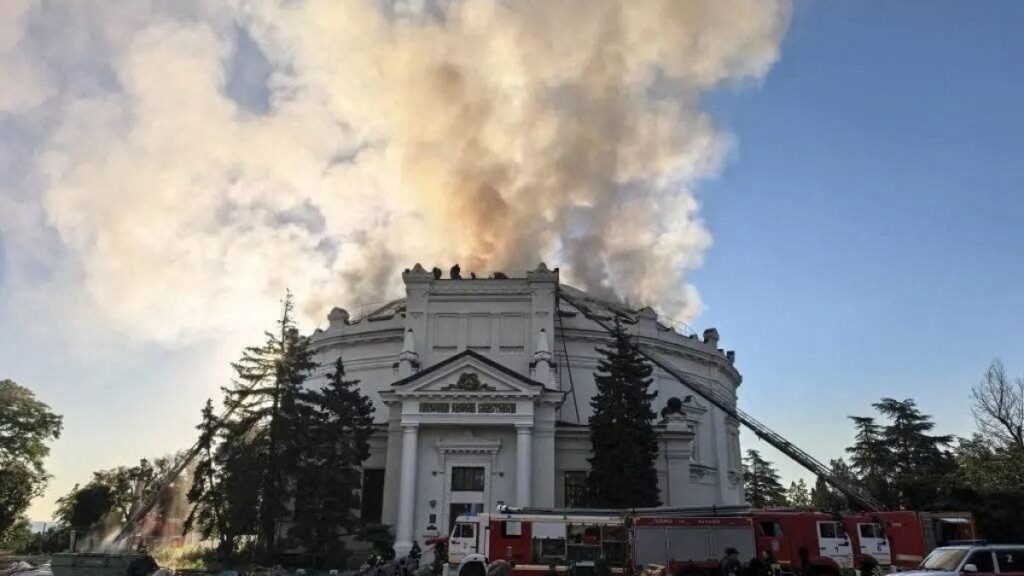
The annexed Crimean Peninsula is currently facing a crisis that has left its residents in a state of panic and uncertainty. The region, annexed by Russia in 2014 but still internationally recognized as part of Ukraine, finds itself in the midst of escalating tensions and conflict. Recent Ukrainian military attacks have triggered widespread fear among Crimean inhabitants, who describe their home as an ‘island surrounded by war.’
Fuel shortages have become one of the most immediate concerns for Crimeans. With Kyiv launching attacks on key infrastructure throughout the peninsula, supply lines have been severely disrupted. Gas stations have reported long queues, and many vehicles have been forced off the roads due to lack of fuel. This shortage not only impacts day-to-day commuting but also threatens critical services and emergency responses in the region.
The psychological atmosphere in Crimea is deteriorating rapidly as residents grapple with the realities of living amid a conflict zone. Many express a deep sense of isolation, describing how the peninsula feels cut off from the rest of Russia and the world. This sentiment has led to growing anxiety over the future, as citizens worry about the possibility of intensified military action and prolonged economic hardship.
Kherson, a Ukrainian region nearby, has also experienced conflict spillover effects, intensifying the regional instability. The strategic importance of Crimea means that it remains a focal point for both Ukrainian counter-offensives and Russian defensive operations. As Kyiv’s forces continue to strike critical targets, including energy infrastructure, the overall situation on the ground remains tense.
International observers and humanitarian organizations have raised concerns about the escalating humanitarian crisis in Crimea. Aside from fuel shortages, residents face difficulties accessing food, medical supplies, and other essentials due to disrupted supply chains and restrictions imposed by the ongoing conflict.
In response to the attacks, Russian authorities have increased military presence and tightened security measures across the peninsula. This militarization further complicates life for ordinary Crimeans, who are caught in the crossfire of geo-political rivalries.
The conflict in Crimea highlights the broader struggle between Russia and Ukraine, reflecting the complex geopolitical dynamics playing out in Eastern Europe. For the civilian population, however, the implications are deeply personal and immediate, involving daily struggles for survival and safety.
As the situation develops, efforts to provide humanitarian aid and find diplomatic solutions are critical. The international community watches closely as the residents of Crimea navigate an increasingly precarious existence, hoping for de-escalation and peace in a region overshadowed by war.