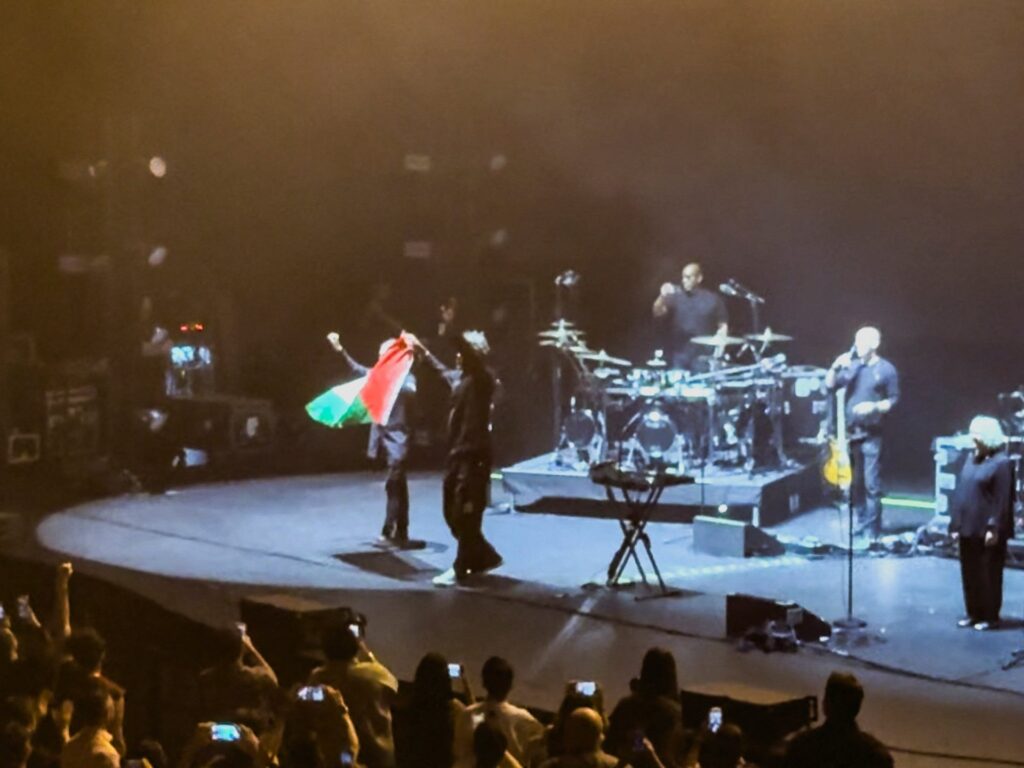
British music group Massive Attack recently faced an unexpected confrontation when some of its members were briefly detained by authorities in Singapore. The incident occurred after the band unfurled a pro-Palestine flag during a concert, an act which was described by the group as an “impromptu expression” of solidarity with Palestine.
The members of Massive Attack expressed pride in their gesture, which was a spontaneous display of support amidst increasing global attention on the Palestinian cause. The band’s public support highlights how artists sometimes use their platforms to voice political opinions and advocate for human rights.
Singaporean authorities, however, did not view the incident favorably. It led to the temporary detention of the involved band members, signaling the country’s strict policies on public demonstrations and political statements at events. This reaction underscores Singapore’s cautious approach to politically sensitive topics, especially in public forums.
Massive Attack’s action took place during their concert, which gathered a large crowd of music enthusiasts. The flag unfurling moment was brief but impactful, capturing media attention and sparking discussions on artistic freedom and the intersection of entertainment and activism.
The band has released a statement affirming their stance and explaining their actions as a personal, emotional response to ongoing conflicts affecting Palestinian people. They expressed hope that their gesture would encourage dialogue and empathy towards humanitarian issues globally.
The incident in Singapore forms part of a broader trend where musicians and artists increasingly participate in political and social discourse through public performances. While such demonstrations can enhance awareness, they may also invite legal and social consequences depending on the country and context.
Massive Attack’s pro-Palestine display reignites conversations about freedom of expression, the role of artists in activism, and the balance between local laws and global solidarity movements. It raises questions about how artists navigate political expressions while respecting national regulations during international events.
Overall, the band’s brief detention in Singapore serves as a reminder of the diverse challenges faced by artists advocating for causes in different parts of the world, and the varying receptions their messages may encounter.