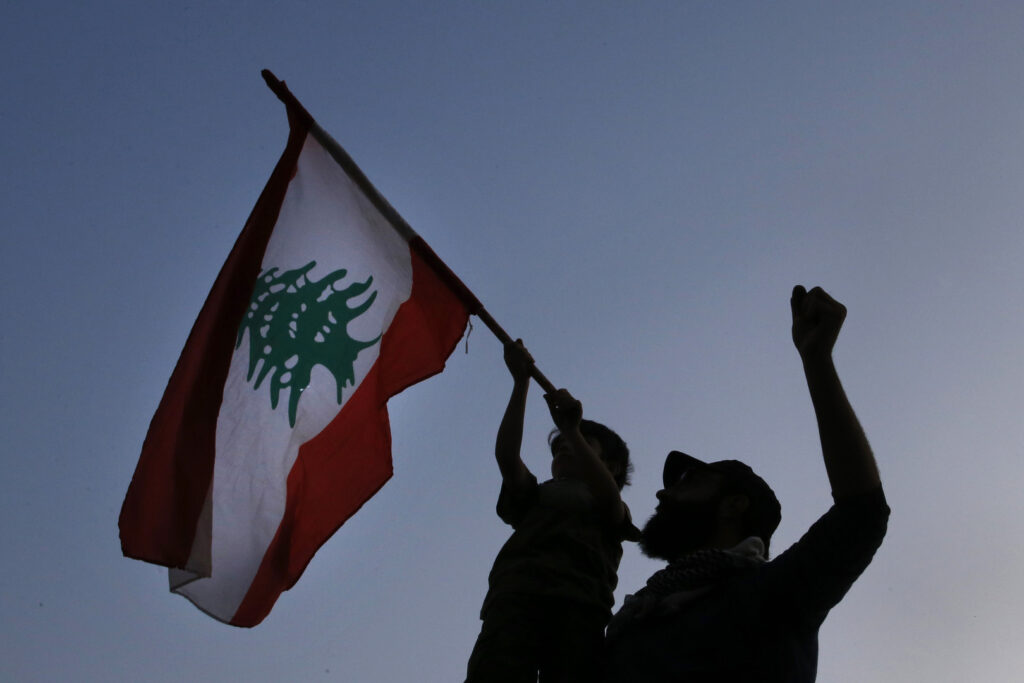
A protester chant slogans as his son waves the Lebanese flag during ongoing protests against the government, in front of the government palace in Beirut, Lebanon, Saturday, Nov. 9, 2019. Lebanon's president is meeting with several Cabinet ministers and top banking officials in search for solutions for the deepening financial and economic crisis. (AP Photo/Bilal Hussein)
The recent announcement of a ceasefire between the United States and Iran has generated cautious optimism in Lebanon, a country deeply affected by regional tensions. The ceasefire marks a potential de-escalation in one of the Middle East’s most protracted conflicts, with hopes that it could bring stability to the surrounding regions, including Lebanon.
Despite the hopeful news, many Lebanese citizens and political analysts remain skeptical about the ceasefire’s longevity and impact. Lebanon, which has often been a proxy battleground for regional powers, understands the complexity of US-Iran relations and the fragile nature of ceasefires in the region.
The announcement was met with mixed reactions in Beirut. Some see it as a positive step towards reducing hostilities and averting further conflict, which could improve Lebanon’s security situation. Others, however, question whether the ceasefire agreement addresses the root causes of tensions between the US and Iran or if it is merely a temporary pause before renewed confrontation.
The Lebanese government has called for continued dialogue and diplomacy to ensure lasting peace and stability. Officials have emphasized the importance of support from both regional and international actors to reinforce the ceasefire and encourage constructive engagement.
Social media and public forums in Lebanon have reflected this divide, with conversations ranging from hopeful debates about peace prospects to wary discussions about past failed agreements and ongoing regional intervention.
Economically and socially strained by its own internal challenges, Lebanon views any reduction in regional conflict as potentially beneficial. A prolonged ceasefire could help ease the pressure on Lebanese security forces and reduce the risk of spillover violence that has previously destabilized the country.
Analysts note that while the ceasefire could create a window for diplomatic progress, many obstacles remain. Sustained peace will require addressing broader geopolitical issues, including Iran’s regional influence and the US’s strategic interests in the Middle East.
In summary, the US-Iran ceasefire announcement has opened a dialogue of cautious hope in Lebanon. While the optimism is tempered by skepticism, there is a collective desire among many Lebanese for peace and stability after years of conflict and uncertainty. The path forward will demand careful diplomacy, regional cooperation, and sustained commitment from all parties involved.