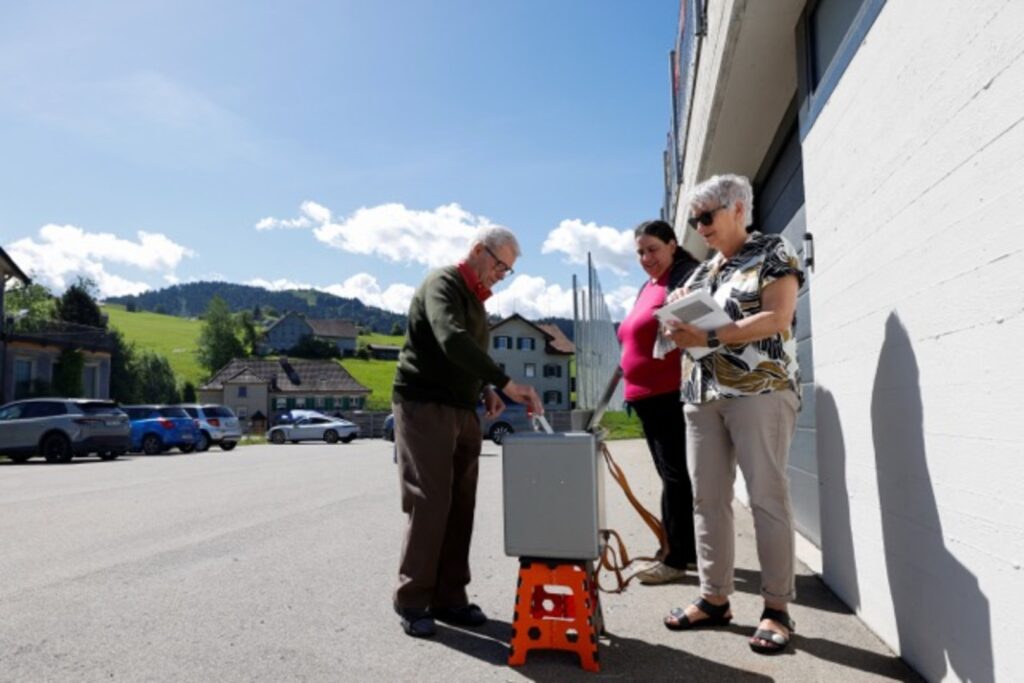
People vote in front of the school on a plan backed by the right-wing Swiss People's Party (SVP) to limit population growth to 10 million inhabitants, in Hundwil, Switzerland, June 14, 2026. REUTERS/Michaela Stache
In a closely contested referendum, Swiss voters have rejected a right-wing initiative aimed at capping the country’s population at 10 million. The proposal, which sparked a heated debate across Switzerland, was narrowly defeated by a slim margin, reflecting a nation divided on how to manage growth and immigration.
The initiative was introduced by conservative groups who expressed concerns about the rapid increase in population and its impact on infrastructure, housing, and the environment. Supporters argued that controlling population growth was essential to preserve Switzerland’s high quality of life and natural resources.
Opponents, however, criticized the plan as overly simplistic and potentially damaging to the country’s economy and multicultural society. They highlighted Switzerland’s need for skilled workers and the benefits of immigration in sustaining economic development and innovation.
The population cap proposal was seen by many as a response to rising immigration and urbanization trends. Switzerland, known for its robust economy and attractive living conditions, has experienced steady population growth over recent decades, driven in part by immigration from neighboring countries and beyond.
The referendum result was very close, indicating a polarized electorate. While the majority rejected the cap, the narrow margin suggests significant public concern about managing growth sustainably.
Experts have pointed out that Switzerland’s population growth poses challenges but also offers opportunities. Urban areas face pressure on housing and transport networks, while rural regions struggle with aging populations and labor shortages.
Government officials have indicated that, despite the referendum outcome, addressing population and immigration issues remains a priority. They may pursue alternative policies to balance economic needs with social and environmental sustainability.
The rejection of the population cap reflects Switzerland’s ongoing struggle to find consensus on immigration and demographic policies. It underscores the complexity of balancing economic vitality, social cohesion, and environmental stewardship in a diverse and prosperous society.
This referendum is part of a broader European context where many countries are grappling with demographic changes, migration, and their social implications. The Swiss vote adds to ongoing debates about national identity, economic competitiveness, and sustainable development.
As Switzerland moves forward, policymakers are expected to engage with stakeholders from business, civil society, and immigrant communities to develop nuanced approaches that address the country’s demographic challenges without resorting to rigid caps.
The narrow rejection signals the need for continued dialogue and innovative solutions to ensure Switzerland’s future growth is inclusive, balanced, and sustainable.