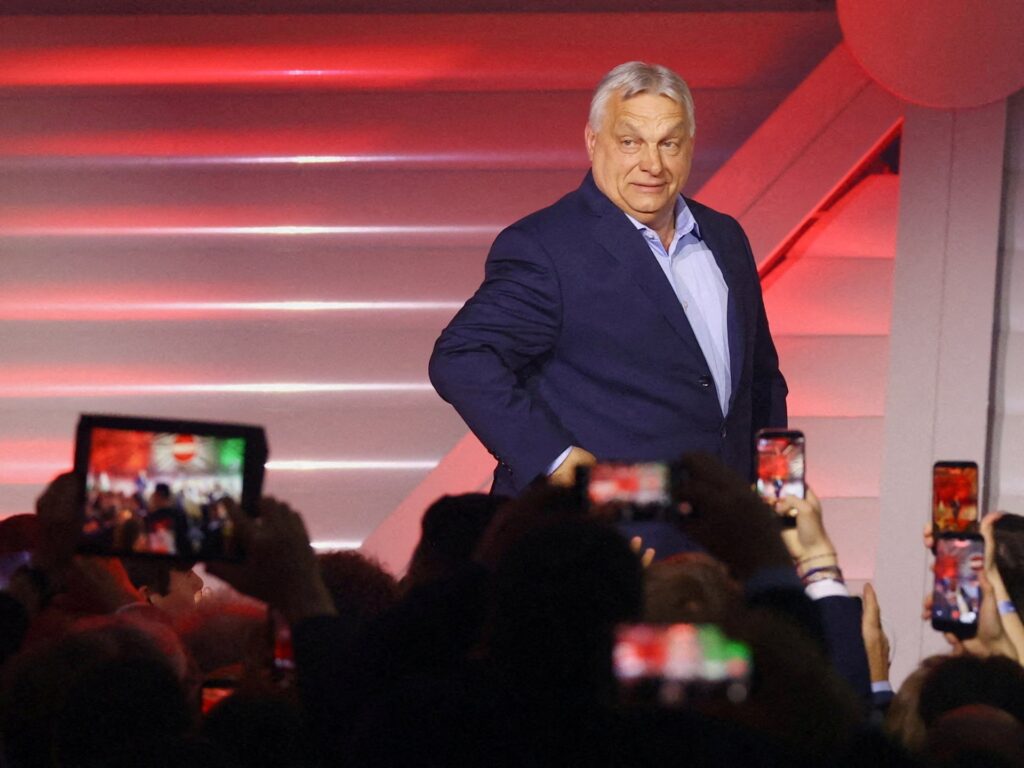
In a recent party leadership election, Hungary’s former Prime Minister Viktor Orban was re-elected as the leader of the Fidesz party, despite the party’s defeat in the April general elections. Running unopposed, Orban accepted full responsibility for the disappointing electoral outcome, which saw his pro-Russian Fidesz party lose ground.
Orban, a dominant figure in Hungarian politics, has led Fidesz for years, steering the party with a strong nationalist and pro-Russian orientation. However, the recent election results marked a significant challenge to his leadership and the party’s influence on the country’s political landscape.
The reelection as party leader secures Orban’s continued influence in shaping Fidesz’s policies and strategies moving forward. Analysts interpret this move as a strong signal from within the party ranks that despite the election loss, they continue to trust Orban’s leadership and vision.
Orban’s acknowledgment of responsibility suggests a willingness to reflect on the party’s recent strategies and perhaps consider adjustments to regain voter support in future elections. The defeat may serve as a catalyst for internal reforms or shifts in policy emphasis as Fidesz seeks to restore its standing.
The April election loss has not only political but also strategic implications, considering Fidesz’s alignment with Russia, a stance that has been increasingly scrutinized amid shifting geopolitical tensions in Europe. Orban’s leadership is pivotal in balancing national interests with international diplomatic challenges.
Debate within Hungary and among international observers continues about the direction of the Fidesz party under Orban’s continued leadership. Some see the re-election as a reaffirmation of his political vision; others view it as a potential delay in necessary political renewal.
Moving forward, the Fidesz party under Orban’s command will likely focus on rebuilding its base, addressing concerns raised by voters in the recent elections, and strategizing for future electoral contests. Orban’s personal political capital remains considerable, giving him substantial leverage in shaping Hungary’s political future.
The re-election also highlights the dynamics of internal party politics in Hungary, where leadership contests can reflect broader national political sentiments. Orban’s unopposed run may indicate a consolidation of support or a lack of viable alternatives at this time within Fidesz.
In summary, Viktor Orban’s re-election as Fidesz party leader, despite the party’s April electoral defeat, marks a critical juncture for Hungarian politics. It underscores Orban’s enduring authority while spotlighting the challenges Fidesz faces in regaining voter trust and effectively navigating Hungary’s political and international landscape.