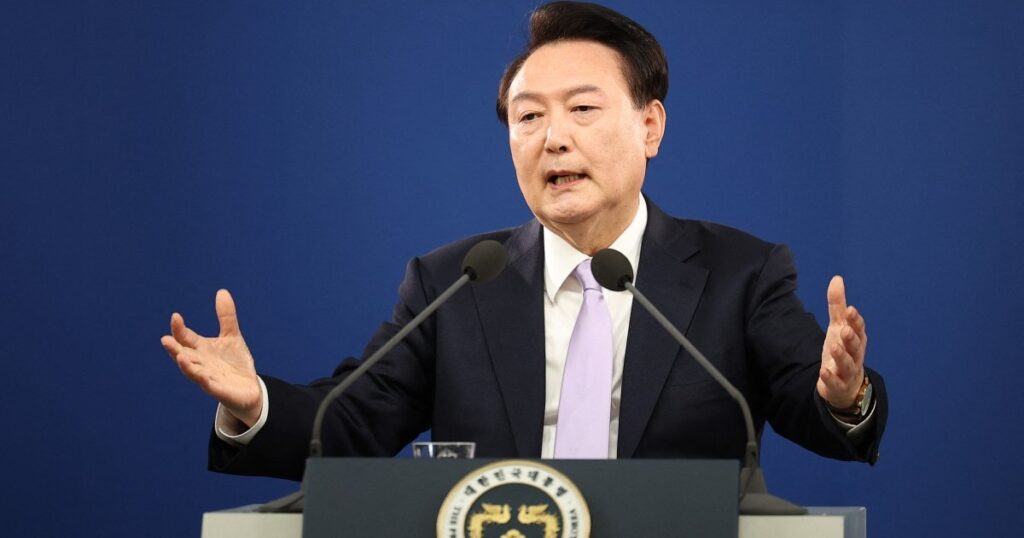
In a landmark ruling, South Korea’s former President Yoon has been sentenced to 30 years in prison for his involvement in covert drone operations conducted over North Korean territory. The Seoul court found Yoon guilty of orchestrating missions that sent military drones into North Korea, actions that were deemed illegal and escalatory.
The case centered around operations authorized during Yoon’s tenure, which involved deploying surveillance and intelligence-gathering drones across the heavily fortified border. The court ruled that these drone flights breached international norms and heightened tensions between the two Koreas, violating agreements aimed at maintaining peace on the peninsula.
Prosecutors argued that the former president acted without proper oversight, exposing the nation to unnecessary risks and potentially undermining diplomatic efforts with North Korea. The evidence presented included classified documents and testimonies from military and intelligence officials, illustrating a coordinated campaign spearheaded by Yoon’s administration.
The sentencing is one of the most severe ever handed down to a South Korean head of state and signals a firm stance against unauthorized military actions that could provoke conflict. Experts suggest this decision will have far-reaching implications for future administrations and military policy.
Public reaction in South Korea has been mixed, with some expressing relief and support for holding leaders accountable, while others worry about political instability and its effects on inter-Korean relations. International observers have noted the ruling as a critical moment emphasizing transparency and adherence to international law.
Yoon’s defense team has indicated plans to appeal the verdict, asserting that the drone operations were a necessary response to security threats and conducted within presidential powers. Meanwhile, government officials have stated that the judicial process should be respected as part of South Korea’s robust democracy.
This historic sentencing underscores the complexities of leadership in a divided peninsula and highlights ongoing challenges in balancing national security with diplomatic engagement. As South Korea moves forward, this case will likely serve as a precedent in defining the limits of military action and executive authority.