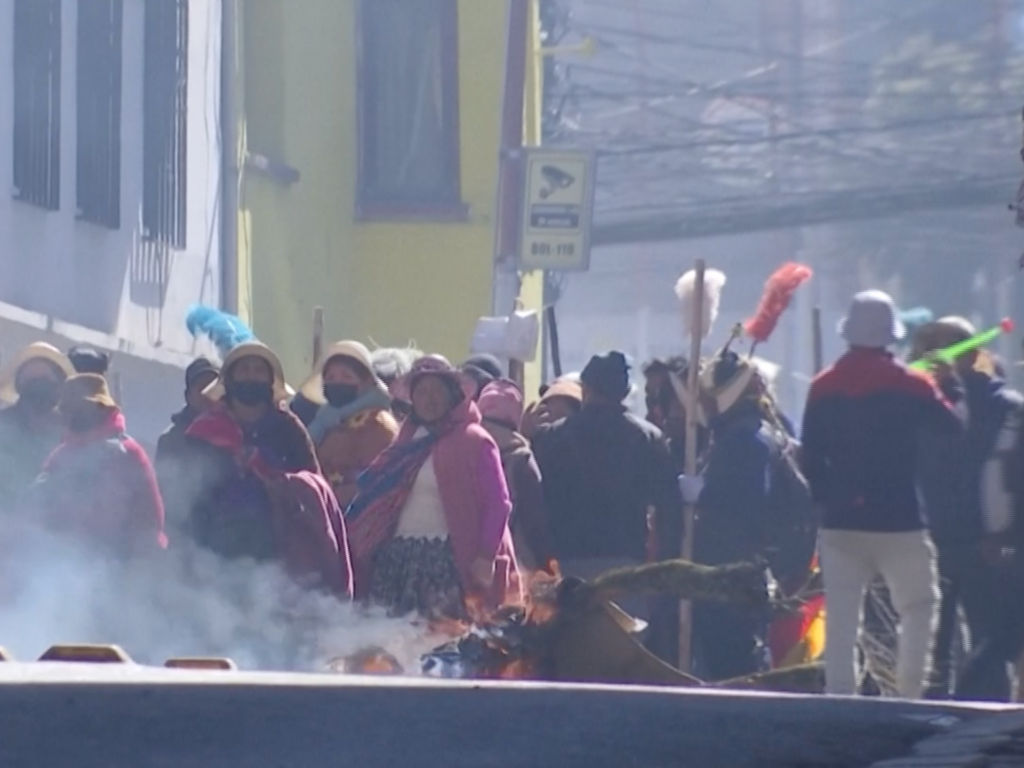
In a tense escalation of social unrest in Bolivia, farmers have clashed violently with police forces amidst growing political turmoil. The confrontations erupted following contentious government policies that have deeply divided the rural population, traditionally the backbone of Bolivia’s agrarian economy.
Farmers have expressed strong discontent over land reforms and subsidy adjustments that they claim threaten their livelihoods. Protests began peacefully but turned confrontational after attempts by law enforcement to disperse large gatherings using force. Reports indicate several injuries on both sides, reflecting the volatile nature of the dispute.
Amid the unrest, former Bolivian President Evo Morales has emerged as a vocal critic of the current administration’s handling of the crisis. Morales, a prominent figure with strong rural support, has vowed to resist the government’s approach, calling for national dialogue and more inclusive policy-making.
The ex-president’s call to action has galvanized supporters and intensified the already charged atmosphere. Morales’s rhetoric emphasizes a defense of indigenous rights and rural communities, echoing longstanding grievances that fuelled his previous terms in office.
Government officials, meanwhile, have condemned the clashes and insisted on maintaining order. They argue that reforms are necessary for Bolivia’s economic stability and development, urging protestors to engage through legal and peaceful means.
International observers have expressed concern over the situation, urging restraint from all parties to prevent further violence. The Organization of American States (OAS) and United Nations have called for dialogue and respect for democratic processes.
The clashes highlight the broader challenges Bolivia faces in balancing economic modernization with social justice, especially in rural sectors deeply affected by policy shifts. As tensions continue, the government’s ability to negotiate with diverse stakeholders remains critical.
With Morales’s resistance campaign gaining momentum, the potential for prolonged unrest looms. The international community watches closely, hoping for a peaceful resolution that upholds Bolivia’s democratic institutions and addresses the needs of its rural population.
As the situation evolves, the Bolivian government and opposition forces face the urgent task of bridging divides to restore stability and promote inclusive growth. The upcoming weeks will be crucial in determining the trajectory of Bolivia’s political and social landscape amid these challenging times.