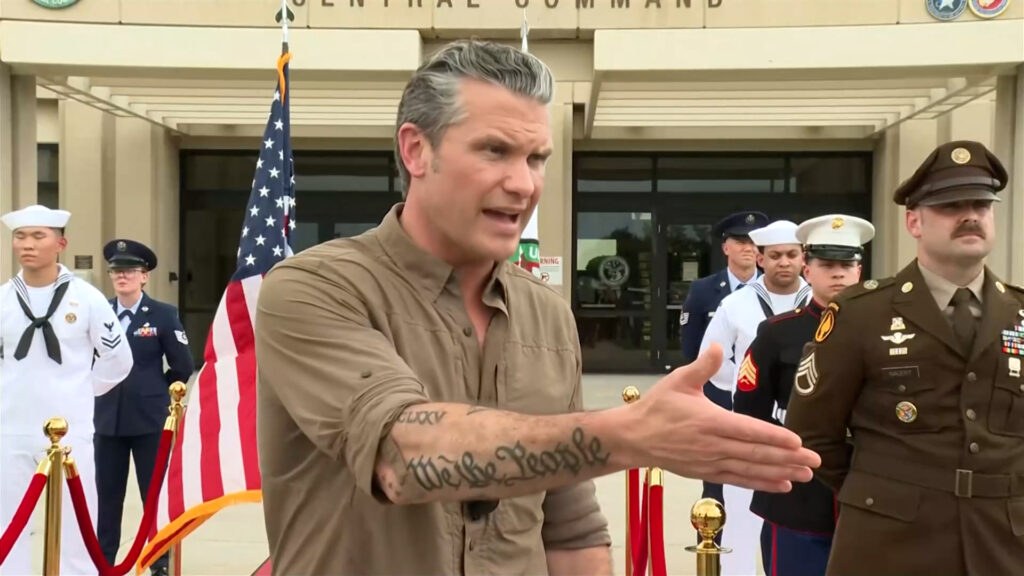
In a controversial statement, US Defense Secretary Pete Hegseth has declared that prisoners held at Guantanamo Bay should have been executed. This bold assertion revives long-standing debates over the treatment and legal status of detainees at the notorious military detention center.
Guantanamo Bay, located in Cuba, has been used by the United States as a detention facility for suspected terrorists and enemy combatants since the early 2000s. The facility has drawn widespread criticism over allegations of human rights abuses, indefinite detentions without trial, and the use of enhanced interrogation techniques.
Hegseth’s comments reflect a hardline position on how the US should have dealt with those captured in the so-called ‘War on Terror.’ According to him, executing these prisoners would have been a more appropriate measure to address the threats they were perceived to pose to national security.
This statement comes amid ongoing discussions in Washington about the future of Guantanamo Bay, with many activists pushing for its closure. The facility currently holds a reduced number of detainees compared to its peak years but remains a symbol of contentious US counterterrorism policies.
Critics of Hegseth’s stance argue that execution without due process contravenes both domestic and international law. They emphasize the importance of legal rights, fair trials, and adherence to the Geneva Conventions, even for individuals accused of terrorism.
Supporters, however, contend that the detainees represent a unique threat and that traditional legal frameworks are insufficient to deal with acts of global terrorism. They argue that swift and severe punishment serves as both a deterrent and a necessary means of protecting national security interests.
The debate also ties into the broader discourse on human rights versus security priorities in the post-9/11 era. Guantanamo Bay has become emblematic of this tension, highlighting the challenges governments face in balancing these often conflicting imperatives.
Hegseth has been known for his outspoken views on military and defense matters, often advocating for tough, uncompromising policies. His remarks have sparked significant discussion among policymakers, human rights groups, and the general public.
The future of Guantanamo Bay remains uncertain. While some call for its permanent shutdown and the transfer or trial of remaining detainees, others, influenced by views like those expressed by Hegseth, support maintaining the facility under strict conditions or even escalating punitive measures.
As the US continues to grapple with its counterterrorism legacy, statements such as Hegseth’s underscore the complexities and divisiveness inherent in decisions about justice, security, and human rights on the global stage.