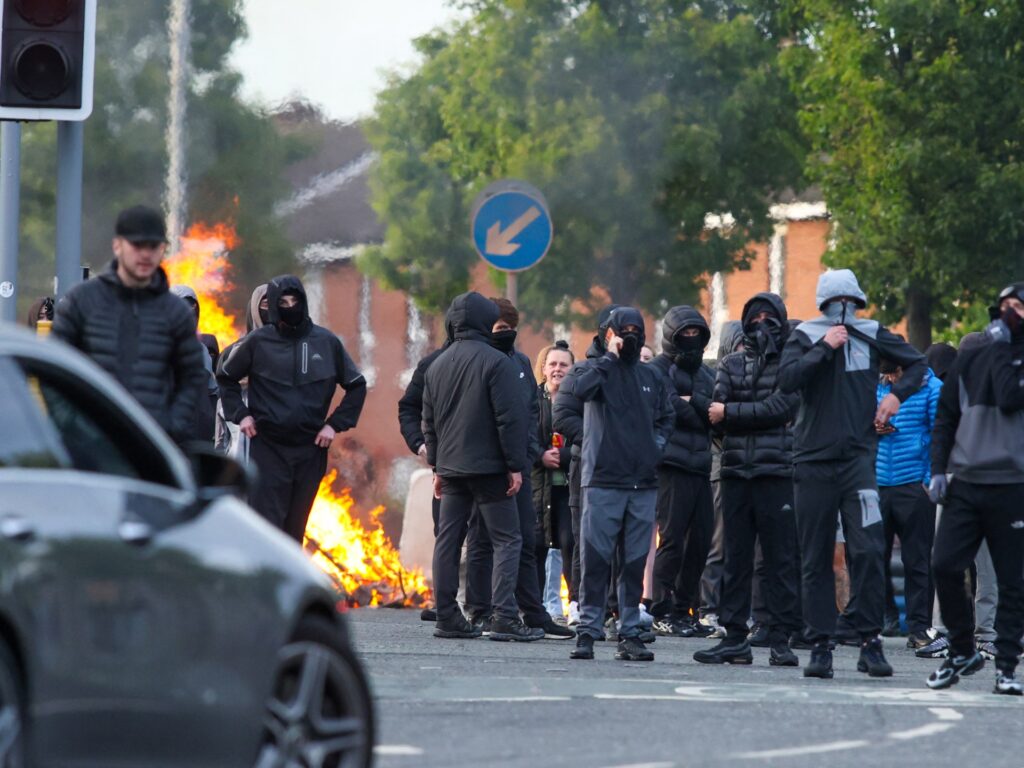
Belfast, the capital of Northern Ireland, recently witnessed a surge in anti-immigrant violence, which has alarmed communities and authorities alike. This unrest followed a knife attack that acted as a catalyst for escalating tensions between local residents and immigrant populations. Officials and ministers have pointed fingers at far-right online agitators who they claim have exploited the incident to incite racial hatred and violence.
The knife attack, which initially raised concerns about public safety, involved an immigrant as the alleged assailant. Although investigations are still ongoing, this single violent act quickly became a spark for deep-seated frustrations and prejudices to surface publicly. In the aftermath, social media platforms were flooded with inflammatory posts, some of which appeared to be orchestrated or amplified by far-right groups aiming to radicalize and mobilize angry individuals against immigrants.
Authorities have highlighted that these far-right agitators used online channels to spread misinformation and provoke fear among communities, misrepresenting the overall peaceful coexistence between locals and immigrants. The incendiary rhetoric not only heightened racial tensions but also contributed to outbreaks of violence in certain areas of Belfast, including attacks on immigrant individuals and properties.
Community leaders have expressed concern over the fragility of social harmony and emphasized the importance of rejecting hate-driven narratives. They advocate dialogue and cooperation as means to address underlying social issues without resorting to scapegoating immigrant groups for isolated violent incidents.
Ministers have responded by condemning both the knife attack and the subsequent wave of anti-immigrant violence. They underscore the necessity to confront hate speech and extremism head-on while promoting policies that foster integration and mutual respect within the diverse fabric of Belfast’s population.
Security forces are increasing patrols in vulnerable neighborhoods to deter further violence and protect all citizens, regardless of their background. Law enforcement is also working closely with community organizations to monitor online hate speech and take action against those who incite violence.
This incident in Belfast underscores the volatile nature of racial and social dynamics when compounded by the influence of extremist groups exploiting digital platforms. It serves as a reminder of the ongoing challenge to maintain community cohesion in an era where misinformation and hate speech can spread rapidly, often with devastating consequences.
The hope remains that through collective efforts by government, law enforcement, civic organizations, and the wider public, Belfast can overcome this period of tension and work towards a more inclusive and peaceful future for all its residents.